
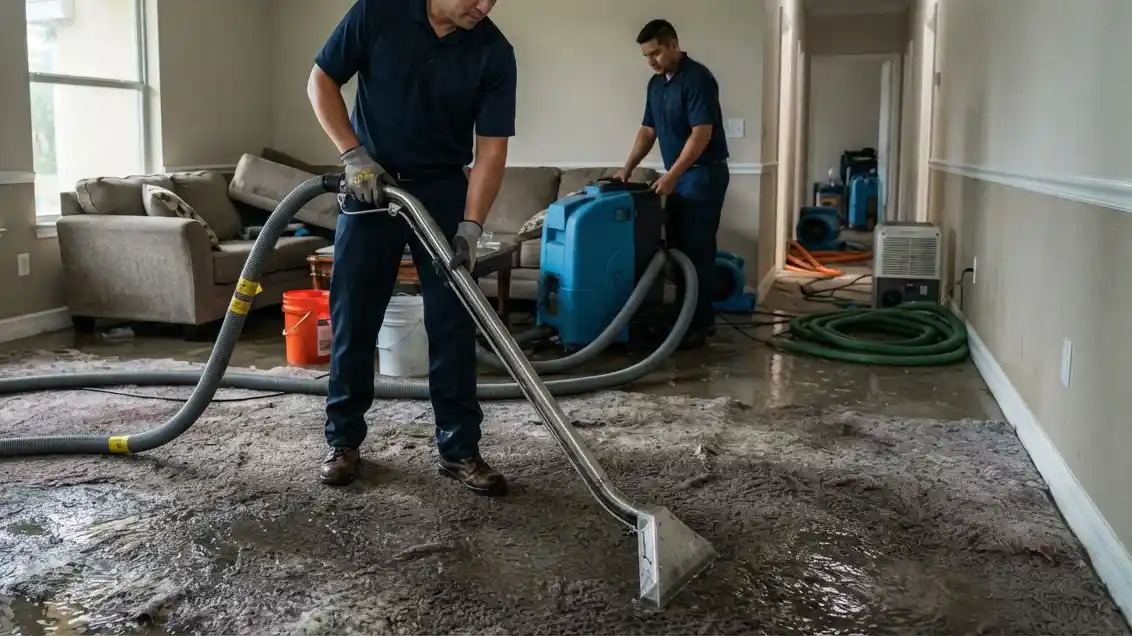
A tropical downpour can turn a roof leak, clogged drain, failed sump system, or low entry point into a property loss. Visible water may collect in one room while moisture travels under flooring and into wall cavities.
Your first decision is not whether the space looks dry. It is whether the water has stopped moving and whether hidden materials remain wet.
Emergency water removal and water damage restoration are related, but they are not interchangeable.
Removal controls the immediate spread. Restoration handles drying, cleaning, material decisions, repairs, and verification. Knowing the order helps you avoid re-wetting, lingering moisture, odor absorption, warping, corrosion, and finish failures.
What Happens First After a Tropical Downpour?
The safest first move depends on the water source, electrical conditions, contamination risk, and how far moisture has traveled.
Safety Comes Before Cleanup
Do not enter standing water when electrical equipment, outlets, cords, or building systems may be wet. Avoid contact with outdoor floodwater or stormwater because it may contain debris, waste, or other contaminants. The CDC floodwater safety guidance recommends staying out of floodwater.
If you can stop an indoor source without entering a dangerous area, shut off the supply. A plan to prepare your property for flooding can reduce confusion when conditions change quickly.
Assessment Defines the Scope
A proper assessment identifies where the water entered, which rooms and levels are affected, and whether porous materials absorbed moisture. It should also account for crawl spaces, wall assemblies, flooring transitions, built-ins, and utility areas.
The source matters. Wind-driven rain is different from an appliance leak, roof failure, drain backup, or water that crossed exterior surfaces. Contamination level changes the cleaning approach, material handling, protective equipment, and access plan.
Emergency Water Extraction Starts Control
When standing water is present, emergency water extraction services usually come before full restoration. Pumps and extraction equipment remove bulk water so drying can begin. Contents may need to be moved, elevated, protected, or evaluated.
At The Best Restoration, we provide 24/7 emergency service for residential and commercial water damage. Call 352-505-3321 when a downpour leaves standing water, active migration, or wet materials that cannot be safely managed.
Emergency Water Removal Stops the Immediate Spread
Extraction reduces water volume, but it does not prove that floors, walls, or structural materials are dry.
Removing Standing Water
Water removal controls the active loss. The immediate goals are to stop ongoing entry when possible, extract pooled water, protect unaffected areas, and reduce continued absorption.
This phase may be enough for a limited event when water stayed on a nonporous surface, and the area can be verified dry. After a tropical downpour, water often reaches seams, edges, underlayment, carpet pad, baseboards, and wall cavities.
Hidden Moisture Changes the Job
A surface can feel dry while moisture remains below it. Wet subfloors can swell. Wood flooring can cup. Drywall paper and insulation can hold moisture. Metal components may corrode. Paint, coatings, and adhesives can fail later.
The EPA moisture and mold guidance centers moisture control as the key to limiting mold growth. Carpet padding and backing can remain wet even when the face fibers feel dry. Steps to reduce the risk of carpet mold after water damage begin with complete moisture removal.
Water Damage Restoration Finishes the Recovery
Restoration continues until affected materials are dry, clean, repaired, and documented.
Structural Drying and Dehumidification
Extraction removes liquid water. Drying removes moisture held in materials. Air movement and dehumidification may be used based on the materials, room layout, weather, and access.
Equipment placement should support a defined drying plan. Saturated insulation, cabinetry, multiple floor layers, and high indoor humidity can slow progress. Re-wetting from an unresolved roof or drainage problem can reset the process.
Cleaning and Material Decisions
Not every wet material should be treated the same way. Hard, cleanable surfaces may be dried and cleaned. Porous materials may require removal when they cannot be cleaned, accessed, or dried reliably. Stormwater exposure may change the decision.
Upholstered items, wood furniture, documents, rugs, and electronics respond differently to water. Guidance on how to restore water-damaged furniture shows why salvageability depends on material, exposure, contamination, and condition.
Repairs, Reassembly, and Finish Work
Repairs should follow drying and cleaning, not cover unresolved moisture. Depending on the loss, restoration may include replacing drywall, insulation, trim, flooring, coatings, or other finishes.
Premature painting, flooring installation, cabinet reset, or wall closure can trap moisture. The result may be peeling finishes, swelling, persistent odor, or renewed damage.
Monitoring and Documentation
A complete process tracks affected areas, moisture conditions, equipment changes, material removal, and progress. Property managers may also need occupancy coordination, tenant communication, phased access, and records for internal reporting.
Good communication explains what is wet, what may be saved, what remains inaccessible, and what must happen before repairs begin.
How to Choose the Right Help After a Tropical Downpour
Choose the response level by risk and complexity, not by the amount of water you can see.
- Scope: Ask whether moisture has reached more than the visible room or floor.
- Contamination: Clarify whether water crossed soil, drains, exterior surfaces, or sewage-affected areas.
- Material complexity: Consider layered flooring, insulation, cabinetry, drywall, wood, and specialty finishes.
- Access: Identify concealed spaces, occupied units, equipment areas, and multi-tenant boundaries.
- Time sensitivity: Escalate when water is still entering, materials remain saturated, odors develop, or operations are disrupted.
A focused guide to choose the right restoration company can help you compare scope, communication, credentials, and emergency capability without relying on price alone.
Common Mistakes That Turn Extraction Into a Bigger Loss
Problems often begin after visible water is gone but the drying plan is incomplete.
- Stopping after the puddle disappears. Bulk water removal does not address moisture beneath floors or inside walls.
- Using household fans without assessing contamination. Air movement can spread particles or odors when the water source is not clean.
- Closing walls or installing finishes too early. New materials can hide moisture and fail later.
- Ignoring the entry point. Roof, drainage, window, door, plumbing, or HVAC defects can cause re-wetting.
- Discarding everything immediately. Some contents may be salvageable. Document condition before irreversible decisions when it is safe.
From First Call to a Dry, Stable Space
The right sequence controls the emergency first, then resolves the remaining moisture and material damage.
Emergency water removal is the first operational step when standing water is present. Water damage restoration is the broader recovery process that follows.
It includes assessment, extraction, structural drying, cleaning, material decisions, repairs, monitoring, and communication.
Across older homes, multi-tenant properties, commercial corridors, mixed-use districts, and surrounding rural communities, tropical rain can expose different weaknesses. The response should match the source, contamination level, materials, access, and disruption.
At The Best Restoration, we begin with the immediate water problem and build the next steps around actual property conditions.
Frequently Asked Questions
What happens first, emergency water removal or restoration?
Emergency water removal usually comes first when standing water is present. Extraction controls the active spread and creates conditions for drying. Water damage restoration then addresses hidden moisture, cleaning, material removal, repairs, and documentation.
Is water extraction the same as water removal?
The terms are often used together because both involve removing liquid water. Extraction usually refers to pumps, vacuums, and related equipment used to remove bulk water. Neither term, by itself, means the structure has been fully dried or restored.
Can I use a shop vacuum after a tropical downpour?
Only use electrical equipment when the area and power source have been determined safe. Do not stand in water while operating tools or switching power. Large losses, uncertain electrical conditions, or contaminated water require qualified professional help.
What if the stormwater looks clean?
Appearance does not confirm water quality. Water may cross roofing, soil, exterior surfaces, drains, or building materials before entering your property. The source and travel path should guide protective measures, cleaning, and material decisions.
How can I tell whether water is trapped behind walls?
Warning signs include swelling, staining, soft drywall, lifting trim, musty odor, cool areas, and changes in flooring. Some trapped moisture produces no immediate visual sign. A moisture-focused assessment can help determine whether concealed assemblies need access or monitoring.
Does removing standing water prevent mold?
Removing standing water reduces continued absorption, but it does not complete moisture control. Materials, cavities, carpet padding, and subfloors may remain wet. The source must also be corrected so the area does not become wet again.
Can wet carpet be saved after heavy rain?
Salvageability depends on the water source, contamination, saturation, padding, backing, installation, and material condition. Carpet may feel dry on top while the pad or subfloor remains wet. Avoid assuming that surface drying proves the entire system is recoverable.
When should repairs begin?
Repairs should begin after affected areas have been dried, cleaned, and evaluated. Installing drywall, flooring, cabinets, paint, or coatings too early can trap moisture. The repair scope should follow the verified condition of the materials beneath the finish.
What should a property manager document?
Document the source, affected units, visible damage, access limitations, tenant reports, and the time the loss was discovered. Keep photos, work scopes, moisture records, equipment notes, material decisions, and communication logs organized for operational and insurance discussions.
Will property insurance cover tropical rain damage?
Coverage depends on the policy, cause of loss, entry path, exclusions, endorsements, and deductibles. Wind-driven rain, plumbing leaks, drain backups, and exterior flooding may be treated differently. Report the loss promptly and confirm coverage directly with your insurer.
Why can an odor remain after the water is gone?
Odor may come from damp porous materials, trapped moisture, contaminated water, wet carpet backing, insulation, or affected contents. Deodorizing without correcting the moisture source may only mask the problem. The affected materials and concealed spaces should be evaluated.