
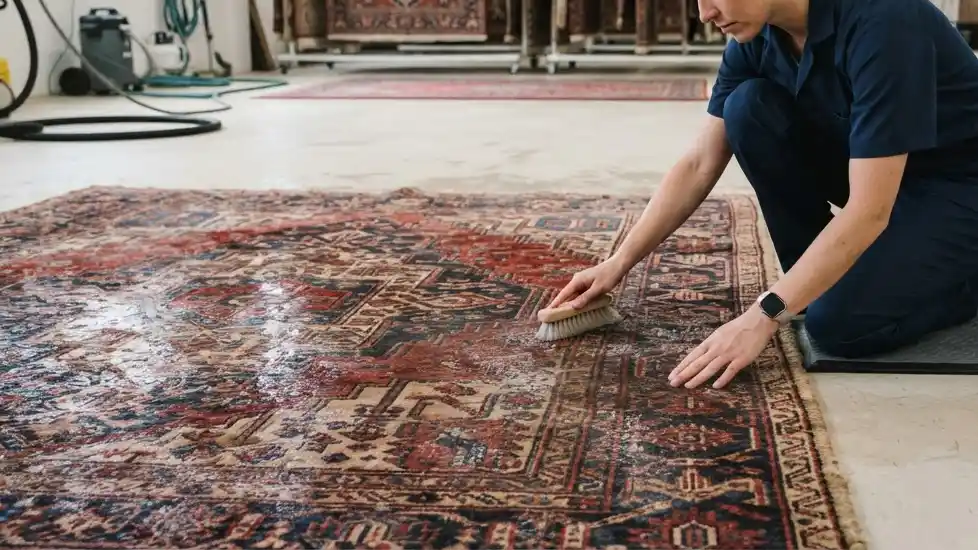
A storm can soak an area rug in minutes. The harder part begins after the water recedes. A rug may look washable, yet its dyes, fringe, backing, and the flooring beneath it may already be changing.
The right decision depends on the water source, fiber, construction, exposure time, visible damage, and whether the rug can be cleaned and dried without spreading contamination. Here is how to separate cleaning candidates from rugs that need restoration or replacement.
First, Identify What Touched the Rug
The water source and its path through the property shape every salvage decision.
Rainwater Is Not Always Clean Water
Rain entering through a roof opening differs from runoff that crossed soil, pavement, drains, garages, or exterior debris. Clear-looking water may still collect contaminants as it moves. Follow floodwater safety guidance and avoid contact when the source is uncertain.
Inspect the surface below the rug. A saturated rug can keep flooring wet after visible puddles disappear. Photograph the rug, water line, and nearby damage before moving anything.
Exposure Time and Depth Matter
A lightly damp rug discovered quickly presents a different recovery question from a rug submerged overnight. Longer exposure lets water move through the pile, foundation yarns, backing, fringe, dyes, and floor below.
Repeated wetting also causes problems. Wind-driven rain, a temporary roof patch, blocked drainage, or an unresolved doorway leak may soak the rug again. Preparing to protect your property before flooding can reduce rushed handling during the next storm.
What to Do Before You Move a Wet Area Rug
Careful handling protects you and reduces avoidable stretching, tearing, and dye transfer.
Control Hazards and Support the Rug
Do not enter water near outlets, cords, appliances, or electrical equipment until qualified help addresses the hazard. Wear appropriate protection when stormwater may be contaminated. Keep occupants away from the affected area.
Wet rugs become heavy and vulnerable. Do not pull a saturated rug by a corner or fringe. The National Park Service guidance for wet textiles recommends supporting wet textiles from underneath and minimizing folds when dyes may bleed.
Separate the Rug From the Wet Floor
Move the rug only when you can safely support its weight. Avoid placing it on finished flooring, furniture, or another textile. Do not roll a contaminated rug through unaffected rooms without containing it.
At The Best Restoration, we provide 24/7 emergency service, water damage restoration, water removal, and area rug cleaning. Call 352-505-3321 when a storm-exposed rug is part of a larger water loss or cannot be handled safely.
Which Area Rugs May Be Cleaned?
Cleanability depends on contamination, construction, color stability, condition, and controlled drying.
Synthetic and Machine-Made Rugs
Many synthetic rugs tolerate moisture better than delicate natural fibers, but construction still matters. Latex, adhesive, foam, or secondary backings may soften, separate, crack, or hold odor.
A synthetic rug may be cleanable when contamination is limited, the backing is intact, dyes are stable, and complete drying is possible. A care label does not account for stormwater contamination, so it should not be the only decision point.
Wool, Oriental, and Hand-Knotted Rugs
Wool rugs often justify professional evaluation because the fibers, dyes, knots, fringe, and foundation require coordinated handling. Wet wool is vulnerable to distortion and mechanical damage. Unstable dyes may migrate, especially if the rug is folded or stacked while wet.
Professional area rug cleaning services can include inspection, process selection by rug type, dry-soil removal from both sides, pretreatment, fringe preparation, washing, extraction, controlled drying, grooming, and delivery.
Cotton, Silk, Viscose, and Plant-Fiber Rugs
Cotton may shrink or release dye. Silk and viscose can show water marks, pile distortion, or loss of sheen. Jute, sisal, and similar fibers may develop browning, stiffness, odor, or weakness after saturation.
These rugs need cautious evaluation. Scrubbing, high heat, improvised chemicals, or edge-hanging can worsen the damage.
When Restoration Means More Than Washing
Restoration addresses structural and appearance changes that ordinary cleaning cannot correct.
Dye Migration, Fringe Damage, and Distortion
Restoration may address color bleed, rippling, shrinkage, torn edges, damaged fringe, weakened seams, or an out-of-square shape. Antique, handmade, or sentimental rugs may warrant specialist care despite higher costs.
Define the expected result before approving work. Some staining, texture change, or dye movement may be permanent. A clear assessment should separate cleaning goals from repair or conservation goals.
Odor, Mold, and the Floor Below
Odor may come from the rug, backing, pad, subfloor, wall base, or trapped debris. Treating only face fibers can leave the moisture source untouched.
Guidance on how to reduce carpet mold risk after water damage also applies to the surrounding floor system.
Visible growth, prolonged dampness, or uncertain contamination calls for professional evaluation. Fragrance or surface spraying does not prove readiness for reuse.
When Replacement Is the Practical Choice
Replacement makes sense when safe cleaning, complete drying, or stable performance is unlikely.
Consider replacement after severe sewage or runoff contamination, chemical or oil exposure, extensive mold, persistent odor, major dye migration, backing separation, brittle latex, severe shrinkage, or structural tears.
It may also be reasonable when repair costs exceed the rug’s practical or sentimental value. Document the front, back, label, dimensions, condition, water source, and surrounding loss before disposal.
Policy terms vary, so confirm documentation requirements with your insurer or property owner first.
How to Choose the Right Help for a Storm-Exposed Rug
Five questions can reveal whether the proposed scope goes beyond surface cleaning.
- Will you identify the fiber, construction, backing, and dye stability first?
- How will you account for the water source and contamination path?
- Will the rug be supported, cleaned appropriately on both sides, and dried in a controlled setting?
- How will you evaluate the floor or pad beneath it?
- Which stains, odors, distortions, or repairs may remain?
Guidance on how to choose restoration help can help you compare scope, communication, and emergency capability.
What Good Area Rug Restoration Looks Like
A sound outcome includes a stable rug, a dry underlying surface, and clear expectations.
Good work begins with inspection and a documented condition. The process should match the fiber, dyes, construction, contamination, and damage. The rug should not return to the room until it is dry and the floor beneath it is ready.
You should receive clear updates about salvageability, color movement, odor, fringe or backing damage, and recommended repairs. The final decision may be cleaning, restoration, specialist referral, or replacement.
Prevent Re-Wetting and Protect the Rest of the Room
Resolve the entry point and dry connected materials before resetting the space.
Correct roof, door, window, drainage, plumbing, or HVAC issues before returning the rug. Check baseboards, flooring transitions, furniture legs, pads, and nearby contents. Water-damaged furnishings may need separate evaluation, as outlined in guidance for restoring water-damaged furniture.
Across low-lying neighborhoods, older homes, rural properties, commercial corridors, and multi-tenant buildings, storm losses can affect several materials at once.
At The Best Restoration, our process can combine water removal with professional rug inspection and cleaning. Call 352-505-3321 for help deciding whether your rug should be cleaned, restored, or replaced.
Frequently Asked Questions
Can an area rug be saved after stormwater exposure?
Some rugs can be saved, but appearance alone cannot confirm salvageability. The decision depends on the water source, exposure time, fiber, dyes, backing, existing condition, and whether complete cleaning and drying are possible. Contaminated or structurally unstable rugs may require replacement.
Is rainwater considered clean enough for ordinary rug cleaning?
Not automatically. Rain may cross roofing materials, soil, pavement, drains, or exterior debris before reaching your rug. The path of the water matters as much as its appearance, so uncertain stormwater exposure should be evaluated before choosing a cleaning method.
Should I roll up a wet area rug?
Rolling may make transport easier, but it can also trap moisture, transfer unstable dyes, and spread contamination. Support the rug’s full weight and avoid folding delicate or bleeding textiles. A contaminated rug should be contained before it moves through unaffected rooms.
Can I hang a saturated rug outside to dry?
Hanging a heavy wet rug from one edge can stretch its foundation, distort its shape, and stress fringe or binding. Sunlight may also affect dyes and does not replace proper cleaning. Controlled drying with even support is usually safer for valuable or delicate rugs.
How do I know whether rug dyes are bleeding?
Look for color movement into lighter areas, staining on towels, or transferred color where the rug was folded. Avoid scrubbing or applying household chemicals when bleeding appears. Delicate or handmade rugs should be tested and handled by someone familiar with dye stability.
Can a wool rug be restored after flooding?
A wool rug may be restorable when its structure remains sound, and the contamination can be addressed. Wet wool requires careful support because agitation and uneven drying may cause distortion. Dye stability, fringe condition, odor, and foundation damage also affect the decision.
What happens to the rug pad after stormwater exposure?
A pad can hold water, contaminants, and odor even when the rug surface begins to dry. It may also keep the subfloor or finish wet. The pad and underlying surface should be evaluated separately rather than assuming that cleaning the rug resolves the entire loss.
Does a musty odor mean the rug must be replaced?
Not always, but odor signals that further investigation is needed. The source may be the rug fibers, backing, pad, floor, trapped debris, or lingering moisture. Replacement becomes more likely when the source cannot be cleaned, accessed, or dried reliably.
Can household carpet cleaner be used on a storm-wet rug?
A household machine may not account for contamination, unstable dyes, delicate fibers, fringe, or specialty backing. It may also leave excess moisture behind. Improvised cleaning is especially risky for wool, silk, viscose, handmade, antique, or plant-fiber rugs.
Should I keep a storm-damaged rug for an insurance inspection?
Photograph the rug before moving or disposing of it whenever conditions are safe. Record the front, back, label, dimensions, water line, damage, and affected room. Confirm documentation and disposal instructions directly with your insurer because policy requirements vary.
Can the rug return once its surface feels dry?
A dry surface does not confirm that the foundation, backing, fringe, pad, or floor is dry. The rug should return only after its full construction and the underlying surface have been evaluated. Resetting it too soon may trap moisture and create odor or finish problems.