
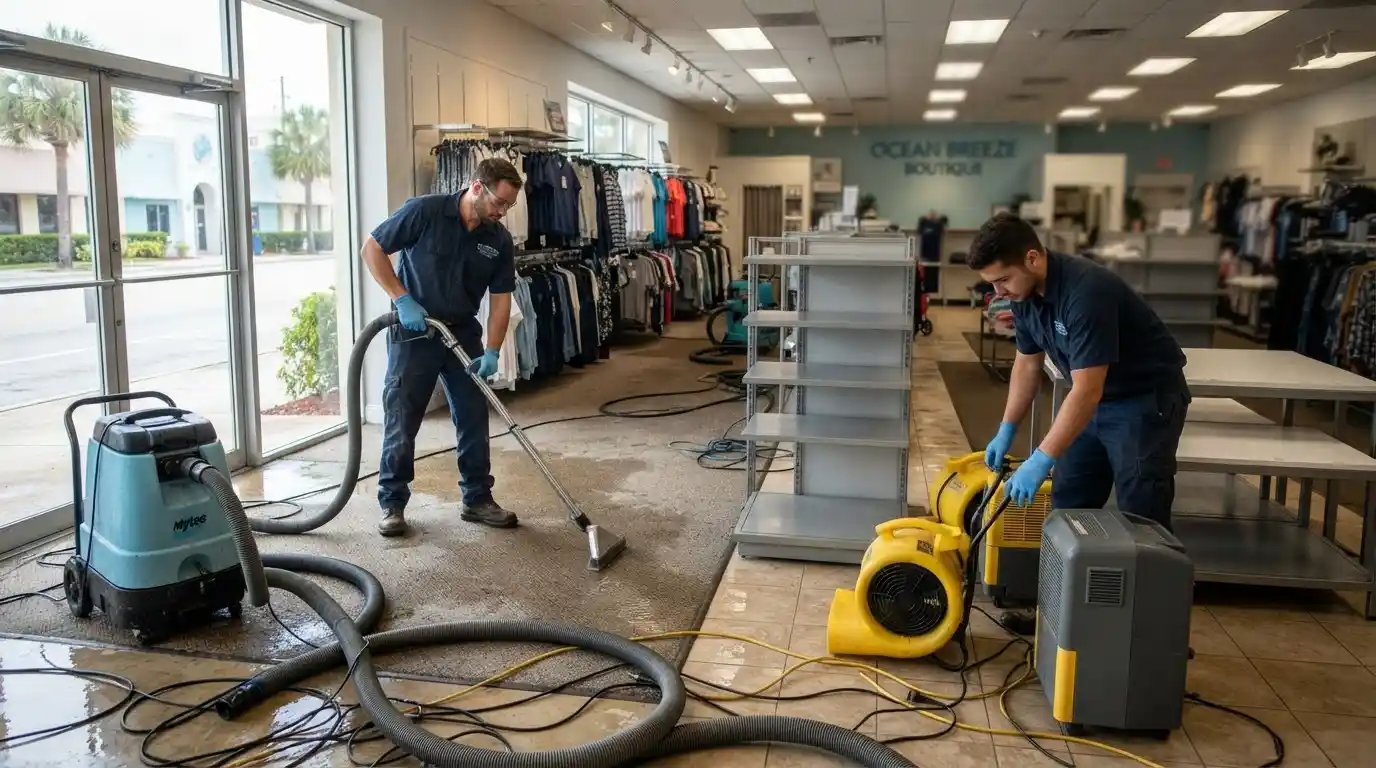
A pipe break before opening, an overflowing appliance during lunch service, or wind-driven rain after closing can disrupt an entire commercial property.
Visible water may cover one room, yet moisture can travel beneath flooring, behind baseboards, through wall cavities, and into neighboring tenant spaces.
Restaurants, offices, and retailers face different reopening pressures, but the decision process should remain disciplined. A faster reopening does not mean skipping drying, sanitation, electrical review, or documentation.
It means organizing recovery work so safety checks, extraction, drying, repairs, and operational testing happen in the right order.
Stabilize the Building Before Planning Reopening
Isolate Hazards and Stop the Source
Keep people away from standing water near outlets, panels, appliances, machinery, or damaged ceilings. Do not energize wet equipment or enter areas with suspected sewage, chemicals, gas leaks, or structural instability. Qualified trades should address electrical, plumbing, roofing, HVAC, and structural hazards.
Once access is safe, shut off the water source when practical. Place barriers around affected zones. In multi-tenant properties, inspect shared walls, plumbing chases, ceiling voids, and units below the reported loss.
Document Conditions Before Cleanup Changes Them
Photograph the source, visible water line, affected finishes, equipment, inventory, and adjoining dry areas. Record the discovery time, shutdown decisions, weather conditions, and staff observations. Mark wet, suspected, and unaffected zones.
Documentation supports repair planning and clearer discussions with landlords, tenants, contractors, insurers, and regulators. Coverage and reporting duties vary, so confirm requirements directly with the relevant parties.
Build the Reopening Plan Around Drying Milestones
Operational deadlines should follow verified moisture conditions rather than appearance, odor masking, or a preferred opening date.
Extract Water and Map Its Full Path
Standing water should be removed before controlled drying begins. Professional water removal and extraction can include locating concealed moisture, using extraction equipment, and applying dehumidification and airflow.
Extend the inspection beyond the puddle. Check drywall, insulation, flooring systems, cabinets, fixtures, carpet padding, and rooms across shared walls. The water damage restoration process may involve assessment, extraction, drying, cleaning, repairs, and follow-up monitoring.
Dry Assemblies, Not Just Walking Surfaces
A floor can feel dry while moisture remains in adhesive, underlayment, wall bases, or subflooring. Wet porous materials can also keep humidity elevated and transfer moisture into replacement finishes.
Compare moisture readings from affected and unaffected areas. Follow building moisture-control guidance when evaluating roofs, walls, foundations, plumbing, HVAC systems, and concealed assemblies as one connected system.
Protect Contents Without Spreading Moisture
Move dry contents through a clean route and separate them from wet or questionable items. Do not stack damp boxes in an unaffected room.
Paper records, upholstered seating, wood furniture, electronics, and packaged inventory require different decisions. Material type, exposure, and structural condition shape the options for water-damaged furniture.
Restaurants Need a Separate Food-Safety Track
Food service can resume only when the building and the systems required for safe preparation are ready.
Separate Building Recovery From Food Decisions
Identify the water source and any areas where water contacted food, packaging, utensils, prep surfaces, ice machines, beverage lines, storage, or refrigeration. Do not assume sealed-looking packaging is salvageable after contaminated water exposure.
Confirm potable water, drainage, handwashing, refrigeration, ventilation, and waste handling before resuming service. The FDA reopening guidance for restaurants and grocers covers inspection, food disposal, equipment, sanitation, utilities, and regulatory considerations.
Test the Complete Operation
Clean appearance alone does not establish readiness. Inspect wall and ceiling finishes above preparation areas, replace affected filters as appropriate, and evaluate equipment that was wet or de-energized.
Confirm required authorization with the applicable regulatory authority before reopening after a closure-triggering event.
Offices Can Reopen in Phases
Phased occupancy can protect business continuity when dry areas remain separate from restoration work.
Prioritize People, Records, and Technology
Protect servers, workstations, paper records, and communications equipment from moisture and construction dust. Do not power wet electronics. Coordinate inspection with qualified IT, electrical, and equipment specialists.
Create a critical-functions list. Identify which departments require on-site access, which can work remotely, and which files or systems must be restored first.
Control Air and Traffic Between Zones
Do not route employees through wet areas or active demolition. Keep debris, odors, and dust from moving into occupied rooms. HVAC decisions should reflect the location of contamination and moisture.
Before approving duct-related work, use these questions for professional duct cleaners to define inspection findings, included components, containment, and verification.
Retail Spaces Need Inventory and Customer-Flow Controls
Reopening a storefront requires dry finishes, stable fixtures, protected stock, and a safe customer route.
Sort Inventory by Exposure
Separate dry stock from wet, splashed, humid, or odor-affected merchandise. Photograph packaging damage and shelf locations before disposal or relocation. Pay close attention to cardboard, textiles, wood products, electronics, cosmetics, and items stored at floor level.
Water-damaged carpet can conceal wet padding and residues. Guidance on reducing carpet mold after water damage reinforces the need to inspect below the face fibers.
Rebuild the Customer Route Last
Do not reopen simply because the entrance is dry. Check fitting rooms, stockrooms, restrooms, checkout wiring, display bases, wall panels, and emergency exits. Temporary barriers must not interfere with required egress or create trip hazards.
Prevent Secondary Damage After Visible Water Is Gone
Re-wetting, odor, warping, corrosion, and finish failure can appear after the initial cleanup seems complete.
Watch for Returning Moisture and Odor
Reinspect after HVAC operation, rain, plumbing use, and overnight closure. Warning signs include darkening stains, cool flooring, musty odor, swollen baseboards, loose adhesive, cloudy finishes, and rusting fasteners.
Moisture control is central to efforts to prevent black mold growth. Avoid disturbing widespread growth or unknown contamination. Qualified assessment may be appropriate when the source is hidden, or the affected area is extensive.
Delay Cosmetic Repairs Until Drying Is Confirmed
Paint, flooring, sealant, and cabinet repairs can fail when installed over damp materials. New finishes may also hide an unresolved leak. Require a dry, stable substrate before rebuilding.
Use a Final Reopening Gate
A documented final check helps decision-makers distinguish operational pressure from actual readiness.
Confirm Seven Conditions
- The water source has been repaired or controlled.
- Electrical, structural, plumbing, HVAC, and fire-safety concerns have been reviewed as needed.
- Standing water and unsalvageable affected materials have been removed.
- Remaining assemblies meet the project’s drying criteria.
- Cleaning and sanitation match the water source and property use.
- Required equipment, exits, utilities, and operational systems function correctly.
- Reopening approvals and internal documentation are complete.
Commercial water damage recovery moves faster when each task supports the next one. Stabilize the building, map hidden moisture, protect contents, dry complete assemblies, and use sector-specific reopening checks.
That sequence reduces rework while protecting customers, employees, tenants, inventory, and finished repairs.
Frequently Asked Questions
What should a business manager do immediately after discovering water?
Keep employees and customers away from the affected area. Identify the source only when it can be approached safely, and do not enter water near electrical equipment. Photograph the damage and notify the appropriate property, maintenance, and risk-management contacts.
Can part of a commercial property remain open during drying?
Possibly, when the occupied area is dry, functional, and properly separated from restoration activity. Customer and employee routes must avoid wet surfaces, debris, equipment, dust, and contamination. HVAC operation should not distribute moisture or particles from the work zone.
How do you know whether a commercial floor is dry?
Surface appearance and touch are not enough. Moisture may remain beneath tile, vinyl, carpet, wood flooring, adhesive, or underlayment. Compare readings from affected materials with suitable dry reference areas before installing finishes.
Should wet carpet in an office or retail space be cleaned immediately?
First identify the water source and determine whether padding or subflooring is wet. Cleaning the carpet face will not remove moisture trapped beneath it. Contamination, odor, backing damage, and the condition of the pad affect whether materials can remain.
What makes restaurant water damage different?
Water may affect food, packaging, preparation surfaces, utensils, refrigeration, beverage systems, and ventilation. Potable water, drainage, handwashing, temperature control, and sanitation must function properly. Required regulatory authorization should be confirmed before reopening after a qualifying closure.
Can wet office electronics be turned on after the surface dries?
No equipment should be energized merely because its exterior looks dry. Water may remain inside power supplies, wiring, outlets, data equipment, or battery systems. Use qualified electrical, IT, or equipment specialists to evaluate affected devices.
What should happen to wet retail inventory?
Separate dry stock from wet, splashed, humid, or odor-affected goods. Document packaging condition, shelf location, and exposure before moving or discarding inventory. Material type and contamination determine whether an item can be cleaned, evaluated, or replaced.
Why can musty odors return after cleanup?
Moisture may remain inside walls, carpet padding, cabinets, insulation, or HVAC components. Odor can also return when humidity rises, or the air-conditioning system begins operating.
Trace the odor to its source rather than masking it with fragrance or new finishes.
When should drywall or ceiling materials be removed?
Removal decisions depend on contamination, material damage, structural condition, and the ability to dry concealed spaces. Sagging, crumbling, heavily stained, or contaminated materials require careful evaluation. Qualified professionals should address uncertain structural or hazardous conditions.
What documentation supports a commercial reopening decision?
Maintain photographs, moisture records, repair notes, equipment evaluations, cleaning documentation, and utility checks. Restaurants may also need sanitation, food-disposal, water-supply, and regulatory records. A dated reopening checklist creates a clearer operational handoff.
Does insurance automatically cover commercial water damage?
Coverage varies by policy, cause, exclusions, endorsements, maintenance history, and deductible. Flooding, plumbing failures, roof leaks, sewage backups, and repeated seepage may be treated differently. Confirm notice, documentation, and mitigation requirements directly with the insurer.