
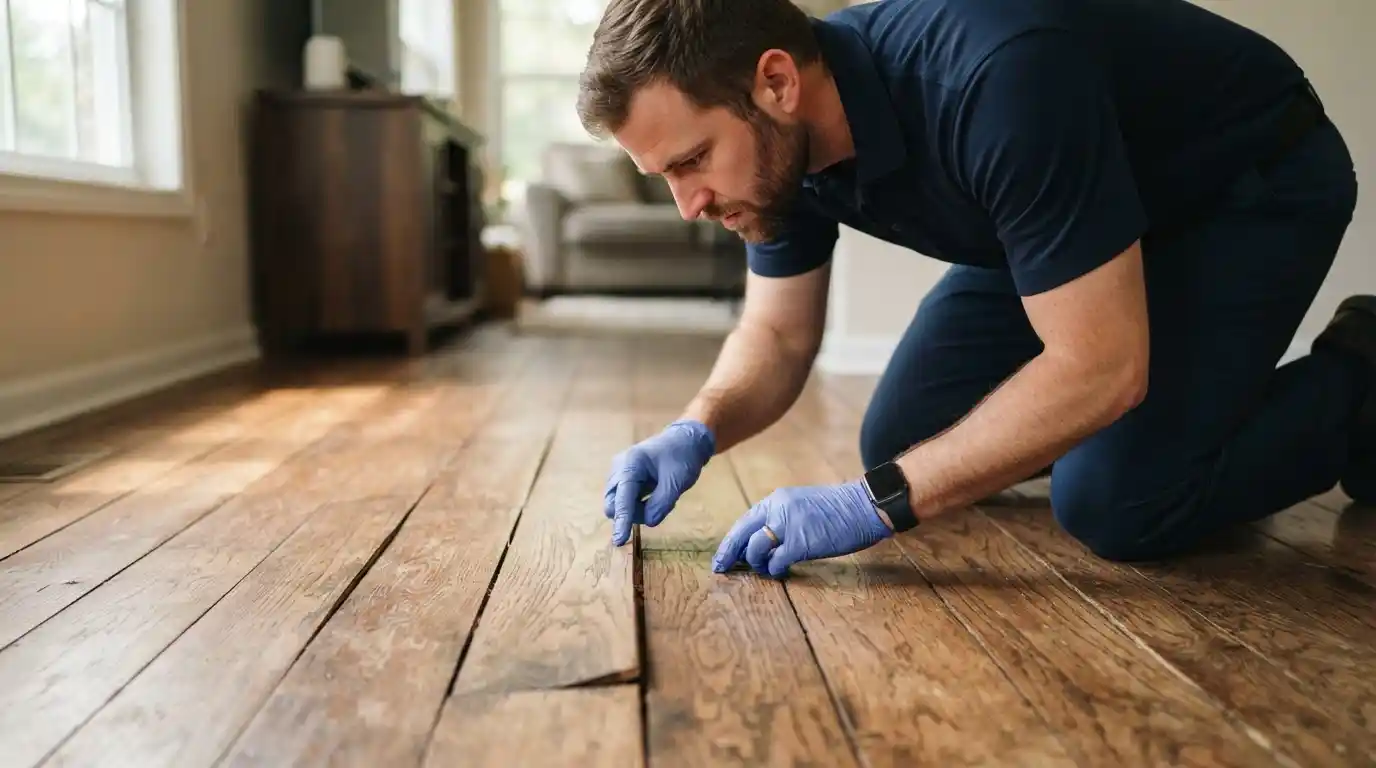
During wind-driven rain and long cooling cycles, a roof leak can leave one ceiling mark while water travels through framing, walls, and flooring.
An overflowing AC drain pan can create a similar problem from inside the building. Across older homes, rural properties, commercial corridors, and multi-tenant buildings, both events may wet the underside of hardwood while the finished surface looks almost normal.
That imbalance matters. Wood absorbs and releases moisture as conditions change. When the underside becomes wetter than the top, board edges may rise above the center.
This is cupping. Early action should stop the source, locate the moisture path, and dry the full floor assembly without creating new damage.
Why Hardwood Floors Cup After Water Intrusion
Understanding the moisture pattern helps you separate temporary movement from damage that may require repair.
Moisture Moves Beyond the Leak Point
Roof water can follow decking, rafters, fasteners, insulation, and wall framing before reaching the floor. An AC overflow can spread beneath equipment platforms, baseboards, underlayment, or adjacent rooms. The visible puddle may represent only part of the affected area.
Wood-floor movement often reflects a difference between the top and bottom of each board. Practical wood-floor moisture management begins with correcting the source and stabilizing surrounding conditions, not flattening the surface immediately.
Cupping Is Not Crowning or Buckling
Use the board profile to describe what you see:
- Cupping: Edges sit higher than the center.
- Crowning: The center sits higher than the edges.
- Buckling: Boards lift or release from the subfloor.
- Finish failure: Coating clouds, peels, cracks, or loses adhesion.
- Staining: Dark areas appear around seams, fasteners, or grain.
A floor that feels springy or moves underfoot needs closer assessment because the subfloor or attachment system may also be affected.
Take Safe First Steps After the Leak
The first response should limit exposure, preserve evidence, and keep water from spreading.
Stop the Source Without Entering a Hazard
Do not walk through standing water near outlets, appliances, panels, or damaged wiring. Keep occupants away from sagging ceilings and unstable materials.
Arrange roof, HVAC, plumbing, or electrical repairs through the appropriate qualified trade. Once access is safe, move rugs, boxes, and furniture from dry approach routes.
Guidance on restoring water-damaged furniture can help separate contents decisions from the flooring assessment.
Document and Remove Water
Photograph the source, wall or ceiling stains, floor seams, baseboards, thresholds, and nearby rooms. Note whether rain or AC operation changes the condition.
Surface wiping is not enough when water reaches seams or the subfloor. Water removal and extraction may be needed before dehumidification and targeted airflow address hidden moisture.
Avoid intense heat directed at one section. Rapid surface drying can increase the moisture difference within the boards. The goal is controlled drying of the flooring, subfloor, walls, and surrounding air.
Map Hidden Moisture Before Repairing the Floor
Moisture mapping reveals whether the problem is localized, spreading, or returning after visible water disappears.
Compare Wet and Dry Reference Areas
Do not rely on one reading. Compare the affected zone with nearby flooring that was not exposed. Extend checks toward walls, doorways, cabinets, closets, and adjoining rooms.
Use building moisture-control guidance to consider the complete pathway, including roofing, ceilings, plumbing, HVAC equipment, drainage, finishes, and concealed assemblies.
Check Materials Connected to the Floor
Inspect:
- Baseboards and shoe molding.
- Underlayment or vapor-control layers.
- Wood or concrete subfloors.
- Cabinets resting on the floor.
- Carpet or rugs in adjoining rooms.
- Drywall and insulation near the leak route.
Wet carpet can keep a shared hardwood edge damp. Steps for reducing carpet mold after water damage reinforce the need to check padding and concealed surfaces, not only the carpet face.
Avoid Repairs That Trap Moisture
Cosmetic work should wait until the floor assembly has dried and stabilized.
Do Not Sand a Wet, Cupped Floor
Sanding removes raised edges while boards are still swollen. As the underside dries and shrinks, the profile can reverse and leave the center higher. Premature sanding may turn cupping into a lasting crowning problem.
Do not use a screen and recoat service as a moisture repair. Screen and recoat work addresses surface wear and light blemishes. Consider it only after the source is corrected, the assembly is dry, and the remaining issue is limited to the finish.
Do Not Seal Odor or Staining Under Finishes
A musty odor, recurring dark seam, or cloudy coating may indicate moisture below the surface. Paint, rugs, or a new finish can conceal the warning sign while the condition continues.
Moisture control remains central when you need to prevent black mold from growing. Avoid disturbing widespread growth or uncertain contamination. Qualified assessment may be appropriate when mold is extensive, hidden, or connected to contaminated water.
Decide Whether to Monitor, Refinish, Repair, or Replace
The decision depends on moisture stability, board condition, subfloor integrity, and finish damage.
Monitor Drying, Structurally Stable Floors
Minor cupping may reduce as the flooring and subfloor return to stable conditions. Keep rugs and furniture off the area when they restrict observation or airflow. Record changes in shape, odor, staining, and moisture readings.
Do not declare the floor dry because the surface feels normal. Concealed layers may remain damp.
Escalate Severe or Persistent Damage
Professional evaluation is prudent when:
- Boards buckle, split, or release.
- Cupping increases after the source is stopped.
- The subfloor feels soft or unstable.
- Staining or odor returns during humid periods.
- Water reached electrical or contaminated materials.
- Damage crosses rooms or tenant spaces.
General water-damage planning considerations can help owners organize extraction, cleaning, repair, and restoration without treating every affected material the same way.
Prevent Repeat Cupping in Humid Properties
Routine roof, HVAC, and interior checks reduce the chance that a small leak becomes a flooring failure.
Maintain Roof and AC Drainage
Inspect accessible roof drainage, flashing, penetrations, ceilings, and upper-wall stains after heavy rain. Keep AC drain pans clean, confirm drain lines flow, and check flooring around air handlers. Watch for rust, wet insulation, or recurring condensation.
Control Everyday Moisture
Use exhaust ventilation where moisture is generated. Address plumbing drips and appliance leaks promptly. Avoid wet mopping hardwood or leaving damp rugs on the surface. Track indoor humidity trends and investigate persistent condensation.
Hardwood cupping is a moisture signal, not merely a cosmetic defect. Stop the source, map the pathway, dry the complete assembly, and wait for stability before refinishing or replacing boards. That sequence reduces re-wetting, odor, mold risk, corrosion, and finish failure.
Frequently Asked Questions
Can slightly cupped hardwood flatten after drying?
Minor cupping may lessen after the moisture source is corrected and the floor assembly stabilizes. Recovery depends on the wood, installation, exposure, subfloor condition, and depth of moisture. Do not sand the raised edges while the boards are still drying.
How can I tell whether the floor is still wet underneath?
A dry surface does not confirm that the subfloor or underside of the boards is dry. Moisture readings should be compared across affected and unaffected areas. Odor, cool spots, returning stains, or increasing distortion may also indicate lingering moisture.
Should I open windows to dry a wet hardwood floor?
Open windows only when outdoor conditions are suitable and doing so will not introduce more humid air. In a humid environment, uncontrolled outdoor air can slow drying or increase condensation. Controlled dehumidification and targeted airflow may provide more consistent conditions.
Can I use a household fan on a cupped floor?
A household fan may move surface air, but it cannot verify drying beneath the flooring. Do not use electrical equipment near standing water or an uncertain electrical hazard. Avoid directing intense airflow at one small area when uneven drying could increase distortion.
Why did cupping appear after the visible water was removed?
Water may remain beneath boards, inside the subfloor, or near an exterior wall after the surface dries. The top can begin shrinking while the underside remains swollen. This uneven moisture condition makes the raised edges more visible.
Can a screen and recoat correct cupping?
No. A screen and recoat addresses worn finishes and light surface blemishes. It does not remove hidden moisture, stabilize a subfloor, or correct active board distortion. Consider finish work only after the cause is repaired and the floor is dry.
What does a musty odor near hardwood flooring mean?
A musty odor may indicate damp wood, wet underlayment, affected baseboards, or moisture inside a nearby cavity. The source may be hidden even when no growth is visible. Avoid masking the odor with fragrance, paint, or a new coating.
When should boards be replaced instead of refinished?
Replacement may be considered when boards remain buckled, split, detached, deeply stained, or structurally damaged. Subfloor deterioration can also affect whether boards can remain in place. The final decision should follow complete drying and evaluation of the entire assembly.
Can an AC overflow damage flooring in another room?
Yes. Water can travel beneath walls, along underlayment, through seams, or into adjoining floor assemblies. Inspect closets, thresholds, cabinets, and rooms beside or below the air handler.
Map beyond the visible puddle before defining the affected area.
Should rugs and furniture remain on a drying floor?
Remove them when doing so is safe and will not spread contaminated water. Rugs and furniture can hide damage, restrict observation, and slow evaporation from the surface. Do not place them back until the flooring and connected materials are dry.
What should a property manager document after a leak?
Record the source, discovery time, affected rooms, board distortion, stains, odors, and visible ceiling or wall damage. Photograph adjoining units, mechanical closets, and shared walls when relevant. Keep moisture records, repair notes, and contractor documentation with the property file.