
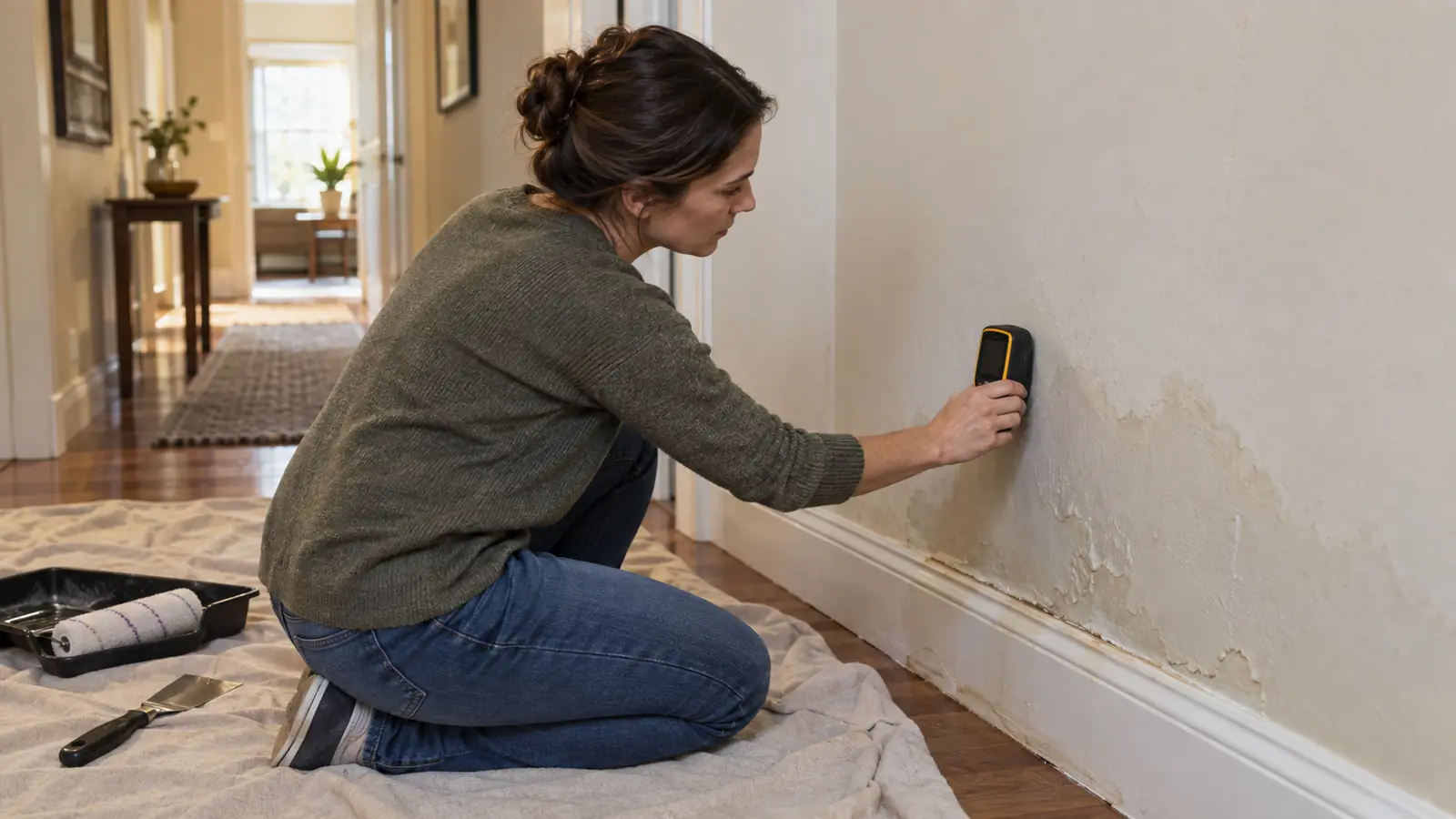
Wind-driven rain, HVAC water damage, a plumbing leak, or a rushed tenant turnover can leave a wall looking better before it is actually dry. That is where many DIY repairs go wrong. If the wall still feels damp, the safest answer to can you fix water-damaged walls by yourself is: not yet.
A damp wall is still in the water-damaged stage. Paint, joint compound, trim, or wallpaper can hide moisture rather than solve it. Across older homes, multi-tenant properties, and commercial corridors, the decision depends on where water traveled and which materials are wet.
Can You Repair a Water-Damaged Wall While It Still Feels Damp?
A wall that feels damp needs moisture control and inspection before patching, priming, or painting.
Why touch is not a reliable moisture test
The painted face of drywall can change faster than the gypsum core, insulation, framing, or baseboard area behind it. A slightly damp surface may still connect to wetter material out of sight.
That is why hidden moisture after water damage matters. Watch for soft drywall edges, bubbling paint, loose tape joints, swollen trim, recurring musty odor, or a cool patch that returns after ventilation.
Why repairing too early causes repeat problems
If you skim-coat, prime, or paint before the assembly is dry, finishes can peel, blister, stain, or lose adhesion. Damp insulation can slow drying, and wet wood or fasteners can deteriorate.
The EPA advises fixing the water problem and drying water-damaged areas promptly. It also warns against painting or caulking moldy surfaces before the moisture problem is resolved. Moisture and mold guidance treats dryness as a prerequisite, not a cosmetic judgment.
What to Do First When a Wall Still Feels Damp
Your first job is to stop new water, protect people and property, and determine how far moisture traveled.
1. Stop the source when it is safe
Identify whether moisture came from plumbing, a roof or window opening, HVAC condensation, an appliance, or exterior water.
Do not open walls around wet electrical components, sagging materials, or uncertain structural conditions. If floodwater or sewage may be involved, avoid ordinary DIY cleanup and follow flood cleanup safety guidance.
2. Check beyond the visible stain
Inspect the wall base, adjoining room, floor edge, cabinets, trim, and ceiling. A simple moisture map can help you mark active wet spots, intermittent warning areas, and dry reference areas. This is useful when rain, HVAC operation, or plumbing use makes the stain return.
3. Separate water removal from drying
Removing visible water does not prove a wall cavity is dry. The distinction between water removal versus restoration matters because drying, cleaning, material decisions, repairs, and verification continue after standing water is gone.
If the wall remains damp, the source is uncertain, or moisture may be inside the cavity, call 352-505-3321. At The Best Restoration, we provide 24/7 emergency service for water damage and can help assess the next step.
When DIY Wall Repair Can Be Reasonable
DIY work makes sense only when the event is small, clean, contained, fully stopped, and the affected materials can be verified as dry.
A narrow DIY scenario
A small, quickly discovered clean-water leak may leave limited surface staining. If the wall remains firm, there is no musty odor or visible growth, no electrical concern, and no sign that insulation or framing stayed wet, you may be able to handle cosmetic repair after complete drying.
That can mean removing loose paint, repairing a sound surface, priming, and repainting after the wall is dry and stable.
When to stop DIY
Move from DIY to qualified help when the wall is still damp after source control, the material feels soft or swollen, water has traveled through multiple rooms, access is unsafe, or the source may have contaminated.
Escalate when the same stain returns, a musty odor develops, or damage is near outlets, major plumbing, or structural components.
The question is not simply whether water damage is fixed. It is whether the assembly can be dried, cleaned, repaired, and verified without trapping a hidden problem.
How to Fix a Water-Damaged Wall After It Is Dry?
Once the moisture source is corrected and the water-damaged area is dry, the job shifts from mitigation to material repair.
Repair or replace based on condition
If drywall is firm and damage is cosmetic, surface repair may be enough. If gypsum has softened, crumbled, delaminated, sagged, or lost integrity, damaged sections may need removal and replacement.
Wet insulation or concealed materials can change the scope even when the wall face looks acceptable.
Professional water damage restoration may include assessment, extraction, drying and dehumidification, cleaning and sanitization, repairs, and follow-up monitoring. The sequence matters because drying comes before reconstruction.
Finish only after the substrate is stable
Do not use primer as a drying method. Primer and paint are final cosmetic steps after the source is fixed, damaged material is addressed, and the wall is no longer damp.
If insurance may be involved, document the original damage and keep photos of the source, wet materials, and repairs.
How to Choose the Right Help for a Damp, Water-Damaged Wall?
Choose the response level by risk and complexity, not only by the size of the visible stain.
Use five criteria.
Scope: Is one surface affected, or did water reach adjoining walls or floors?
Contamination: Was the source clean, uncertain, flood-related, or sewage-related?
Material complexity: Are drywall, insulation, framing, cabinets, flooring, or HVAC components involved?
Access: Can the wet area be reached without disturbing wiring, plumbing, or structural elements?
Time sensitivity: Is the wall still damp, re-wetting, smelling musty, or disrupting tenants or operations?
Good help should explain what is wet, what can stay, what may need removal, how drying will be checked, and what must happen before finishes go back on.
What to Watch After the Wall Looks Dry
The period after drying can reveal whether the source was truly controlled.
Watch for four patterns:
- A stain darkens again after rain, HVAC use, or plumbing activity.
- Paint bubbles, seams open, trim swells, or the wall softens.
- A musty odor returns after the room has been closed.
- Flooring beside the wall cups, lifts, or feels soft.
Floor symptoms can be part of the same moisture path. Hardwood floor cupping after leaks is one reason to inspect connected surfaces, not just the wall stain.
If you are deciding what to do after water damage, keep the order simple: control the source, document the loss, remove standing water when necessary, dry the full assembly, address damaged materials, and only then restore finishes.
Do Not Close a Damp Wall Just to Finish the Job
The best repair solves the moisture problem before it hides it.
A wall that still feels damp is giving you useful information. Do not cover it with compound, paint, paneling, or trim and hope the moisture disappears. If you need help deciding whether the wall can be dried in place or needs controlled removal, call The Best Restoration at 352-505-3321. We can help with water removal, drying, restoration, and repair decisions for residential and commercial water damage.
Frequently Asked Questions
1. Can you fix water-damaged walls by yourself if they still feel damp?
Not safely at water damage. A damp wall still needs source control, drying, and an assessment of hidden materials before patching or painting. If moisture is trapped behind drywall, trim, insulation, or flooring, cosmetic work can hide the problem.
2. What to do about water damage in walls first?
Stop the water source when it is safe, keep people away from electrical or structural hazards, and document visible damage. Then determine whether moisture moved into the wall cavity, floor edge, insulation, or adjacent room. Drying decisions should follow the actual moisture path.
3. How do you know when a water-damaged wall is dry enough to repair?
Do not rely only on touch or appearance. The wall should no longer show dampness, soft material, recurring odor, or returning stains, and concealed materials should also be dry. When the cavity cannot be checked safely, qualified moisture assessment is the better option.
4. Can water damage be fixed without replacing drywall?
Sometimes. Drywall that remained firm and suffered only limited cosmetic damage may be repairable after complete drying. Soft, swollen, sagging, crumbling, or delaminated material points toward removal and replacement rather than surface patching.
5. How do you fix water damage in a wall after it dries?
Start by confirming that the leak or moisture source has been corrected. Remove or replace material that has lost integrity, then repair the sound surface and apply finish materials only after the substrate is stable. Do not use primer or paint to cover active dampness.
6. Should you use a fan on a damp wall?
Air movement can support drying in some clean-water situations, but it is not appropriate in every loss. Avoid blowing air across suspected mold growth, sewage, flood contamination, or uncertain materials. Electrical safety and the water source should be evaluated first.
7. Is a musty odor after water damage a reason to stop DIY work?
Yes, especially if the odor returns after the room is closed or the HVAC runs. A persistent odor can indicate damp or affected material outside the visible stain. Treat it as a reason to investigate the moisture path before sealing the wall.
8. Can you paint over a dry water stain?
Only after the source is fixed and the wall is actually dry. A stain can remain after successful drying, but active moisture, mold growth, or damaged drywall should be addressed before refinishing. Painting too early can lead to peeling, bubbling, or a returning stain.
9. Who should you call for water damage on a floor beside a damp wall?
Choose help that can assess both the visible flooring and concealed layers such as padding, underlayment, subflooring, baseboards, and wall cavities. A plumber or roofer may also be needed if that trade controls the source. The cleanup and drying scope should follow the full path of water.
10. What should a property manager document after water damage from a wall?
Record when the issue was discovered, the suspected water damage from a wall, visible staining, odors, and any tenant reports. Photograph wet materials before removal when safe, and track drying and repair activity. Clear documentation helps separate source control, mitigation, and finish repairs.