
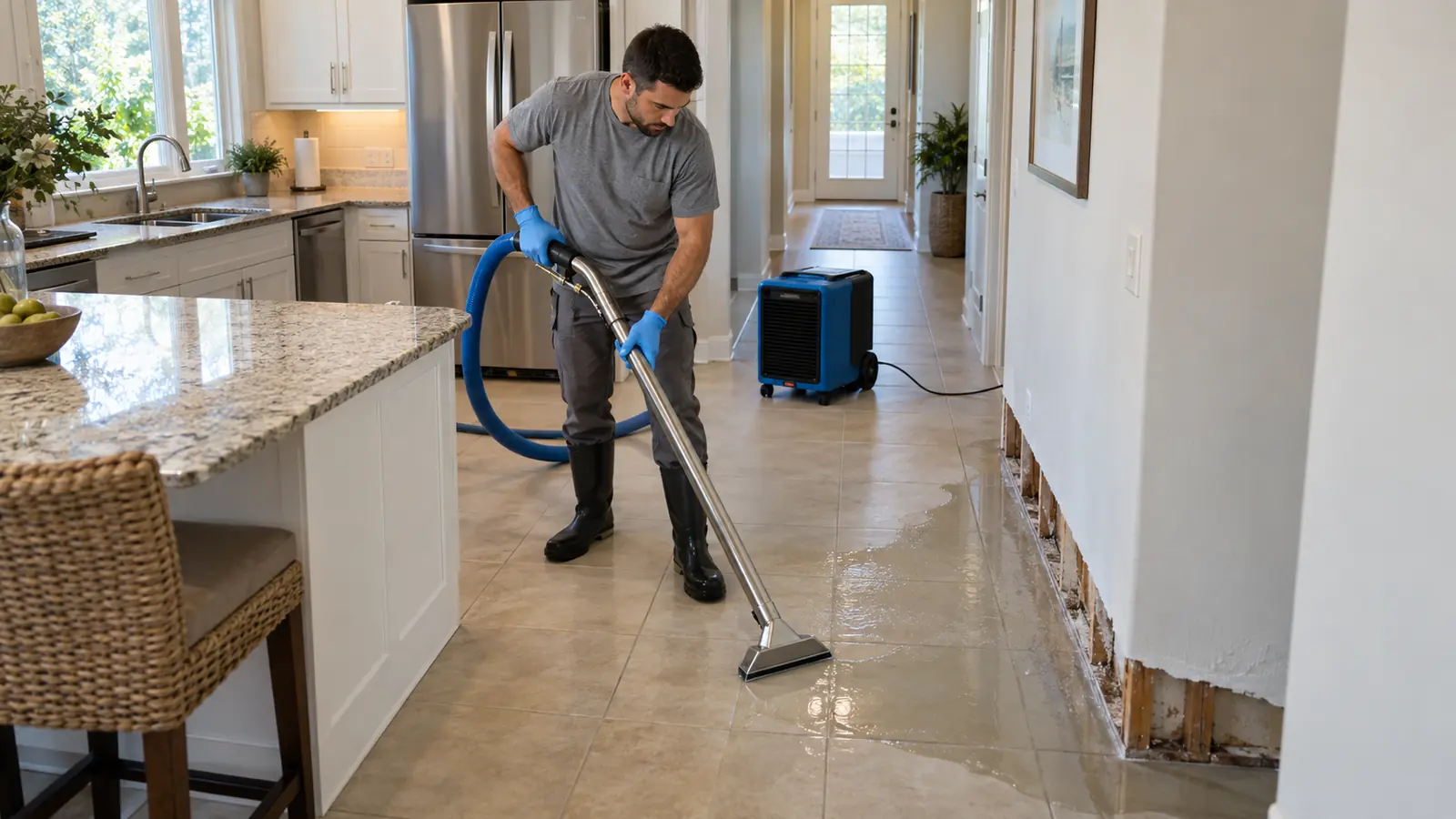
Water damage rarely arrives on a convenient schedule. Wind-driven rain can expose roof or window leaks, humid weather can aggravate HVAC condensation, brief cold snaps can stress plumbing, and tenant turnover can uncover leaks behind furniture or appliances.
In older homes, commercial corridors, mixed-use properties, and multi-tenant buildings across the region, the first priority is controlling water and moisture before repairs hide the problem.
That is the purpose of water mitigation. Knowing where mitigation ends and repairs begin helps you limit secondary damage and avoid rebuilding over moisture that is still active.
What Is Water Mitigation?
Water mitigation is the immediate process of limiting additional damage after water enters a building. It stabilizes conditions before repair or reconstruction begins.
Mitigation controls the active loss
The first objective is to stop continued water movement when it can be done safely. That may mean shutting off an accessible plumbing supply, addressing an active leak, protecting an opening, or isolating the affected area.
Standing water is then removed so it cannot keep soaking into walls, flooring, cabinets, carpet padding, or contents.
Professional water extraction services may use pumps, extraction equipment, air movement, and dehumidification depending on the amount of water and materials involved.
Drying protects repair decisions
A surface can look dry while moisture remains under flooring, behind baseboards, inside wall cavities, or within porous materials. Mitigation therefore includes drying and moisture evaluation, not just puddle removal. The goal is to create stable conditions for later repairs.
Water Mitigation, Remediation, and Restoration Are Different Phases
These terms overlap in everyday use, but their purposes differ. Knowing the distinction helps you understand what should happen now and what belongs later in recovery.
What is water damage mitigation?
Water damage mitigation means reducing the severity and spread of the loss. It can include damage control, water removal, moisture management, protection of unaffected areas, and decisions about wet materials.
What is water remediation?
Water remediation generally means correcting conditions left by the water event. Depending on the source, that can include removing damaged materials, cleaning affected surfaces, addressing odors, and managing mold or contamination concerns.
What is water restoration?
Water restoration is the broader recovery process that brings damaged areas back into usable condition. If you are asking what water restoration means, think of the path from assessment and drying through cleaning, material decisions, and repairs.
A typical water damage restoration process may include inspection, extraction, drying, cleaning, restoration, and follow-up.
Full water damage restoration can extend beyond mitigation when drywall, flooring, trim, cabinets, or other finishes need repair.
What Does a Water Mitigation Company Do?
The scope depends on the water source, affected materials, contamination concerns, and how far moisture traveled. A sound mitigation plan follows actual property conditions rather than a fixed checklist.
- Assess the affected area. Identify visible damage, likely water pathways, safety concerns, and materials that may hold moisture.
- Control the source when safe. Stop or isolate ongoing water entry so newly dried areas are not repeatedly re-wet.
- Remove standing water. Bulk extraction reduces continued absorption and creates better drying conditions.
- Map hidden moisture. Check beyond the visible puddle, including walls, flooring layers, cabinets, adjacent rooms, and areas below the loss.
- Dry and dehumidify. Manage moisture in materials and indoor air while monitoring drying progress.
- Prepare for the next phase. Once drying is verified, decide what can remain, what needs cleaning, and what requires repair or replacement.
The difference between water removal and restoration matters because extraction alone does not prove that concealed materials are dry.
Why Fast Action Matters Before Repairs Begin
Speed matters because moisture can keep moving after the obvious leak is stopped. Fast action should still be controlled and safety-led, not rushed demolition or premature rebuilding.
Re-wetting expands the problem
A roof opening, condensate issue, supply-line leak, or drainage problem can repeatedly wet the same assembly. Drying equipment cannot solve a source that remains active. Re-wetting can enlarge the affected area and keep finishes from stabilizing.
Hidden moisture can outlast visible water
Water can travel under floor coverings, behind wall finishes, through joints, and along framing. A practical hidden moisture map helps you compare visible symptoms with likely water pathways instead of assuming the stain marks the full boundary.
Do not enter standing water to reach a breaker or use electrical equipment where water may create a hazard. Use flooded-home electrical safety guidance when conditions are uncertain.
Damp materials can undermine finishes and contents
Lingering moisture can contribute to musty odors, swelling, warping, corrosion, adhesive failure, staining, and coating problems.
If visible mold or persistent dampness develops, moisture control and complete drying remain central. Mold cleanup guidance can help you recognize when a qualified evaluation may be appropriate.
What to Do Immediately After Water Damage
Your first actions should protect people, stop unnecessary spread, and preserve useful information about the loss. Avoid any step that requires entering an unsafe area.
- Keep occupants, customers, tenants, and pets away from wet areas with electrical, structural, or contamination concerns.
- Stop an accessible water source only when you can do so safely.
- Photograph visible water, stains, affected contents, and the apparent source before cleanup changes the scene.
- Move dry contents away from the wet boundary to avoid spreading contaminated water.
- Avoid covering damp walls or floors with new finishes, rugs, cabinets, or stored items.
- Arrange moisture evaluation when water reaches porous materials, multiple rooms, wall cavities, or layered flooring.
Seasonal Patterns That Change Mitigation Priorities
Different times of year reveal different weak points. Seasonal awareness helps you watch the places where water can enter or remain hidden.
Wind-driven rain can expose roof edges, exterior openings, and drainage problems. Humid periods can make condensate leaks and damp HVAC areas more noticeable. Brief cold snaps can reveal vulnerable plumbing.
Tenant move-outs and seasonal turnover can uncover slow leaks under sinks, behind appliances, or around toilets.
Across year-round residential and commercial properties, watch for recurring stains, soft finishes, swelling trim, musty odors, rust, and flooring changes after weather shifts or building-use changes.
When Mitigation Ends, and Repairs Can Begin
Repairs should follow evidence that the water event is controlled and that affected materials are stable. Cosmetic appearance alone is not enough.
Drying has been verified
Moisture readings and comparison areas can help determine whether materials are approaching appropriate dry conditions. Moisture detection after water damage is especially important when flooring, drywall, cabinets, or wall cavities were involved.
The source is controlled
A repaired wall can fail again if the roof leak, plumbing problem, condensate issue, or exterior water entry remains unresolved. Source control should come before concealment.
Repair materials have a stable substrate
Paint, flooring, trim, sealants, and cabinetry depend on dry, sound surfaces. Mitigation creates the conditions for repair. Restoration then addresses what the water has already damaged. Keeping those phases in order reduces the chance that hidden moisture becomes a later repair failure.
Frequently Asked Questions
How is water mitigation different from water restoration?
Water mitigation limits additional damage by controlling water, removing excess moisture, and stabilizing affected materials. Water restoration is broader and can include cleaning, repair, replacement, and other work needed after mitigation. Mitigation usually comes first because repairs depend on stable, dry conditions.
Is water extraction the same as water mitigation?
No. Water extraction is one part of mitigation and focuses on removing standing or bulk water. Mitigation also considers hidden moisture, drying, dehumidification, affected contents, material condition, and whether the water source has been controlled.
What does a water mitigation company do first?
The first priorities are safety, source control, and understanding how far the water traveled. The affected area may need inspection before extraction begins, especially when electricity, structural damage, or contamination is involved. The response should match the source and the materials that became wet.
Can repairs begin as soon as standing water is gone?
Not necessarily. Flooring, drywall, cabinets, subfloors, insulation, and wall cavities can retain moisture after puddles disappear. Repairs should wait until the affected assemblies have been evaluated and are stable enough for new finishes or materials.
How is hidden moisture found after a leak?
Moisture evaluation can involve visual inspection, moisture readings, comparison with unaffected areas, and checking likely pathways under flooring or behind finishes. Recurring stains, swelling, musty odors, soft materials, or cool, damp areas can also signal a problem. The visible waterline should not be treated as the automatic boundary.
What if the water may contain sewage or outdoor runoff?
Avoid unnecessary contact and keep occupants away from the affected area until the conditions are evaluated. Water that crosses soil, drainage systems, or contaminated surfaces may require different cleaning and material decisions than a small clean-water leak. Qualified help is appropriate when the source is uncertain.
Can I stay in a property during water mitigation?
That depends on the affected area and any electrical, structural, contamination, odor, or access concerns. Some losses can be isolated while other parts of a building remain usable, while others may require restricted access. Safety decisions should follow the actual conditions, not convenience alone.
Does water mitigation prevent mold?
Mitigation reduces the moisture conditions that support mold growth, but it cannot guarantee that mold will never develop. The source must be corrected, wet materials must be properly dried or addressed, and re-wetting must be prevented. Existing visible or suspected growth may require separate evaluation.
How long does water mitigation take?
There is no reliable fixed timeline for every property. Drying depends on the amount of water, material type, humidity, airflow, hidden cavities, contamination, and whether the source is fully controlled. Completion should be based on verified conditions rather than a preset number of days.
What is water remediation after mitigation?
Water remediation addresses conditions that remain after the immediate spread has been controlled. It can involve cleaning, removing materials that cannot remain, managing odors or contamination, and preparing affected areas for repair. The exact scope depends on the source and extent of damage.
What should property managers document during mitigation?
Photograph visible water, affected rooms, damaged contents, stains, source conditions, and areas beside or below the loss. Record when the problem was discovered, access restrictions, maintenance actions, and major drying or removal decisions. Clear records help maintain continuity across tenants, vendors, ownership, and later repair work.
Can HVAC condensation require water mitigation?
Yes, when condensation or a drain-line problem wets drywall, flooring, cabinets, insulation, or nearby contents. The immediate issue is not just the visible drip but whether moisture has traveled into concealed materials. Source correction and moisture verification should happen before cosmetic repairs.