
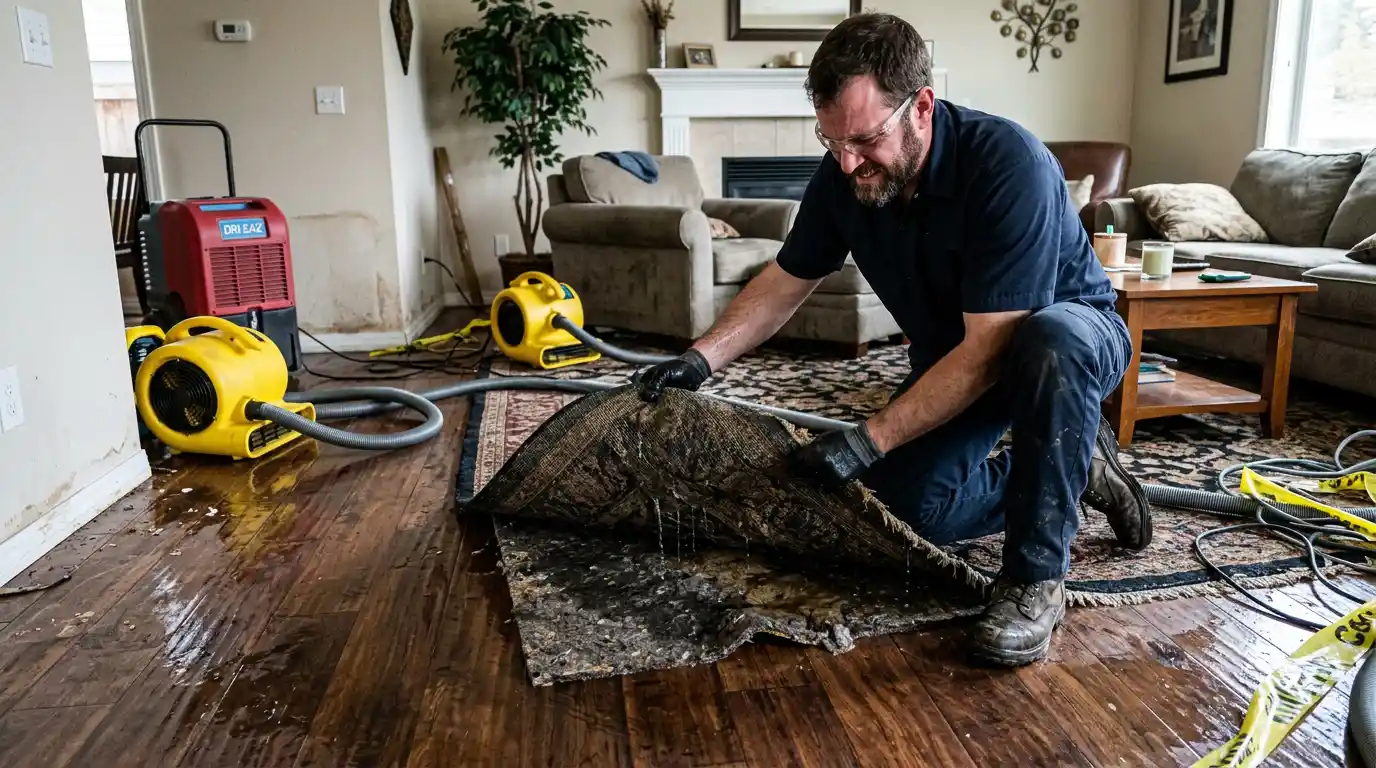
Floodwater does not stop at the surface you can see. In North Central Florida homes, heavy rain, tropical storms, roof leaks, plumbing failures, appliance leaks, and HVAC condensation can push moisture into carpets, area rugs, wood flooring, and the subfloor below.
The first 48 hours can determine whether cleanup stays limited or expands into removal, odor control, repairs, and mold-related concerns.
Why Flood Water Moves From Rug to Subfloor Fast
Flooded flooring behaves like a layered system, not a single wet surface.
The top layer hides the lower problem
Carpet fibers may look wet first, but the padding absorbs water like a sponge. Area rugs can hold moisture against tile, plank flooring, or hardwood. Wood floors can pull water through seams and end grain.
Once moisture moves below the finish layer, surface drying can give a false sense of control.
Florida humidity slows the drying curve
Humid indoor air can keep damp flooring wet longer, especially in closed bedrooms, hallway closets, apartment units, and commercial suites. Wet materials also transfer moisture to baseboards, wall bottoms, furniture legs, and nearby contents.
Guidance on water damage restoration tips can help you think beyond visible puddles.
0 to 12 Hours: Carpet and Padding Take the First Hit
Early action focuses on safety, source control, and reducing water load.
Carpet fibers show the first clues
Wet carpet darkens, feels heavy, and may make a squishing sound underfoot. Foot traffic pushes water deeper into the backing and padding, so limit movement across the affected area. Move dry contents away from the wet zone, but do not drag furniture through contaminated water.
Padding carries the hidden load
Padding is often why carpet feels dry on top but smells damp later. It can hold water against the subfloor, tack strips, baseboards, and wall materials. Small clean-water leaks may allow more options when handled quickly. Storm runoff, sewage concerns, or water from an unknown source call for caution.
The first cleanup decision should separate clean water from questionable water. The next question should ask what is wet below the surface.
A practical overview of how to handle water problems and minimize water damage explains why carpet may need to be lifted when moisture sits underneath.
12 to 24 Hours: Area Rugs and Wood Floors Start Changing
This stage often reveals staining, edge movement, and trapped moisture.
Area rugs can stain in both directions
Area rugs may bleed dye, wrinkle, stretch, or trap grit after flood water exposure. A wet rug can also transfer color to the flooring below. Foam backings, natural fibers, fringe, and layered construction complicate cleaning decisions. Do not roll a saturated rug and leave it in a warm room. That traps moisture and odor inside the roll.
For valuable rugs, the answer depends on the water source, material, dye stability, and saturation time. Regular area rug cleaning and emergency water cleanup are different decisions. Floodwater adds contamination and subfloor concerns that routine cleaning does not address.
Wood floors absorb at seams and edges
Wood flooring reacts to water unevenly. Edges may cup, boards may lift, and the finish may cloud or blister. Water can also collect below boards while the surface looks only mildly damp. In older homes and rental properties, past repairs may hide vulnerable seams, unsealed edges, or mixed flooring materials.
Storm runoff across properties often calls for flood damage cleanup in Gainesville when water has reached rugs, carpet padding, wood flooring, or lower wall areas.
24 to 48 Hours: Subfloor Risk Becomes the Decision Point
By the second day, the question shifts from “Is the floor wet?” to “How deep did the water go?”
Subfloor moisture changes the scope
Subfloor materials can swell, soften, separate, or hold odor after prolonged wetting. Plywood, OSB, particleboard, and older layered flooring do not respond the same way. A surface fan cannot confirm whether the subfloor is dry. If flooring is reinstalled too early, trapped moisture can keep affecting finishes.
Contamination changes the answer
Floodwater from outside, drain backups, or overflowing fixtures can contain debris or contaminants.
- Treat it differently from a clean supply-line leak.
- Keep children, pets, tenants, customers, and staff away from affected flooring until the water category and damage extent are understood.
Cleanup Decisions for Homes, Rentals, and Commercial Spaces
Good restoration decisions match the water source, flooring material, and building use.
Start with safety and source control
- Do not enter standing water near outlets, cords, appliances, or electrical panels.
- Shut off a clean-water source only when it is safe.
- For stormwater, roof leaks, or ceiling sagging, protect people first and keep the area clear.
- In multifamily and commercial spaces, document affected units, hallways, storage areas, and tenant belongings.
Match the cleanup to the material
Carpet may need extraction, cleaning, drying, or removal depending on the water source and saturation. Padding may need replacement even when the carpet looks usable. Area rugs may need separate cleaning decisions. Wood floors may need controlled drying, board assessment, and repair planning.
The water damage restoration process can include assessment, water removal, drying, cleaning, and restoration decisions based on the loss.
What Not to Do With Wet Flooring
Avoid actions that hide moisture or spread contamination.
Do not judge by surface dryness
A dry-looking carpet surface can still hide wet padding. A wood floor can feel dry while seams or subfloor layers remain damp. A musty odor, swollen trim, loose boards, staining, or recurring dampness means the problem may not be over.
Do not trap moisture under coverings
- Do not cover wet carpet with plastic.
- Do not place furniture back on damp rugs.
- Do not reinstall flooring until the lower layers are dry enough for repair.
- Do not use household cleaners on contaminated flood water without understanding the water source and material type.
The same caution applies to nearby contents. Wood furniture can wick water from wet flooring, and water-damaged furniture may need separate decisions from the floor itself.
Planning for the Next 48-Hour Flood Window
The next storm response improves when you record what happened this time.
Prepare rooms that flood first
Map the areas that took water: exterior doors, garage entries, HVAC closets, laundry rooms, lower commercial suites, and rooms with area rugs. Store rugs, files, electronics, and cardboard above floor level before heavy rain.
Track repairs after drying
Flooring repairs should follow moisture control. Replacing baseboards, laying new carpet, reinstalling rugs, or refinishing wood too soon can hide continuing dampness.
For Gainesville carpet restoration questions after storm water or indoor leaks, carpet restoration after water damage guidance can help frame the next step.
Floodwater changes every layer it touches. In the first 48 hours, calm decisions matter: protect people, stop the source when safe, separate clean water from questionable water, remove wet contents, and avoid closing up materials before the lower layers are addressed.
Frequently Asked Questions
1. What happens to carpet in the first 48 hours after flood water exposure?
Carpet fibers absorb water first, then moisture moves into the backing and padding. The surface may look less wet than the layers underneath. Traffic across wet carpet can push moisture deeper and spread residue through the room.
2. Can carpet padding be saved after flooding?
Padding is difficult to evaluate from the surface because it holds water against the subfloor. Clean-water events handled quickly may allow more options than storm runoff or sewage-related events. If padding smells damp, feels heavy, or sits under contaminated water, replacement may be part of the cleanup decision.
3. Are area rugs different from wall-to-wall carpet after flood water?
Yes. Area rugs can bleed dye, wrinkle, trap grit, and transfer stains to the flooring below. Natural fibers, fringe, backing type, and saturation time all affect the decision. Do not roll a saturated rug and store it indoors because trapped moisture can create odor problems.
4. What does flood water do to hardwood or wood flooring?
Wood flooring can absorb water through seams, edges, and damaged finish areas. Boards may cup, lift, gap, or show cloudy finish changes as moisture moves. Water can also remain below the boards even when the visible surface starts to dry.
5. Why does the subfloor matter so much after flooding?
The subfloor supports the finished flooring and can hold hidden moisture. If it swells, softens, or stays damp, new flooring or repairs may not perform well. Cleanup should account for what happened beneath carpet, rugs, plank flooring, or hardwood.
6. Is storm runoff more serious than a clean plumbing leak?
Storm runoff can contain soil, debris, and unknown contaminants. A clean supply-line leak is a different situation from water entering through doors, drains, or exterior flooding. When the source is unclear, limit contact and avoid spreading the water into unaffected areas.
7. Should I use fans on wet carpet or wood floors?
Fans should never be used near standing water, wet outlets, or unsafe electrical conditions. Air movement may help with minor clean-water dampness, but it does not confirm that lower layers are dry. Major saturation, odors, or questionable water sources require more careful decisions.
8. How should property managers handle wet flooring in rental units?
Document the affected rooms, water source, tenant belongings, and any common areas involved. Keep residents, staff, and vendors away from unsafe flooring or electrical hazards. Coordinate access for evaluation before repairs hide moisture under carpet, trim, or wood flooring.
9. Can mold become a concern after carpet or wood floors get wet?
Moisture that remains trapped in padding, subflooring, wall edges, or contents can increase mold concerns. Florida humidity can make drying slower when rooms stay closed or materials remain stacked. Musty odor, recurring dampness, or visible growth should not be ignored.
10. When should flooring repairs begin after flood water damage?
Repairs should follow water removal, drying decisions, and material assessment. Installing new flooring too early can trap dampness under the finished surface. Wood repair, carpet replacement, and baseboard work should wait until the affected layers are properly addressed.