
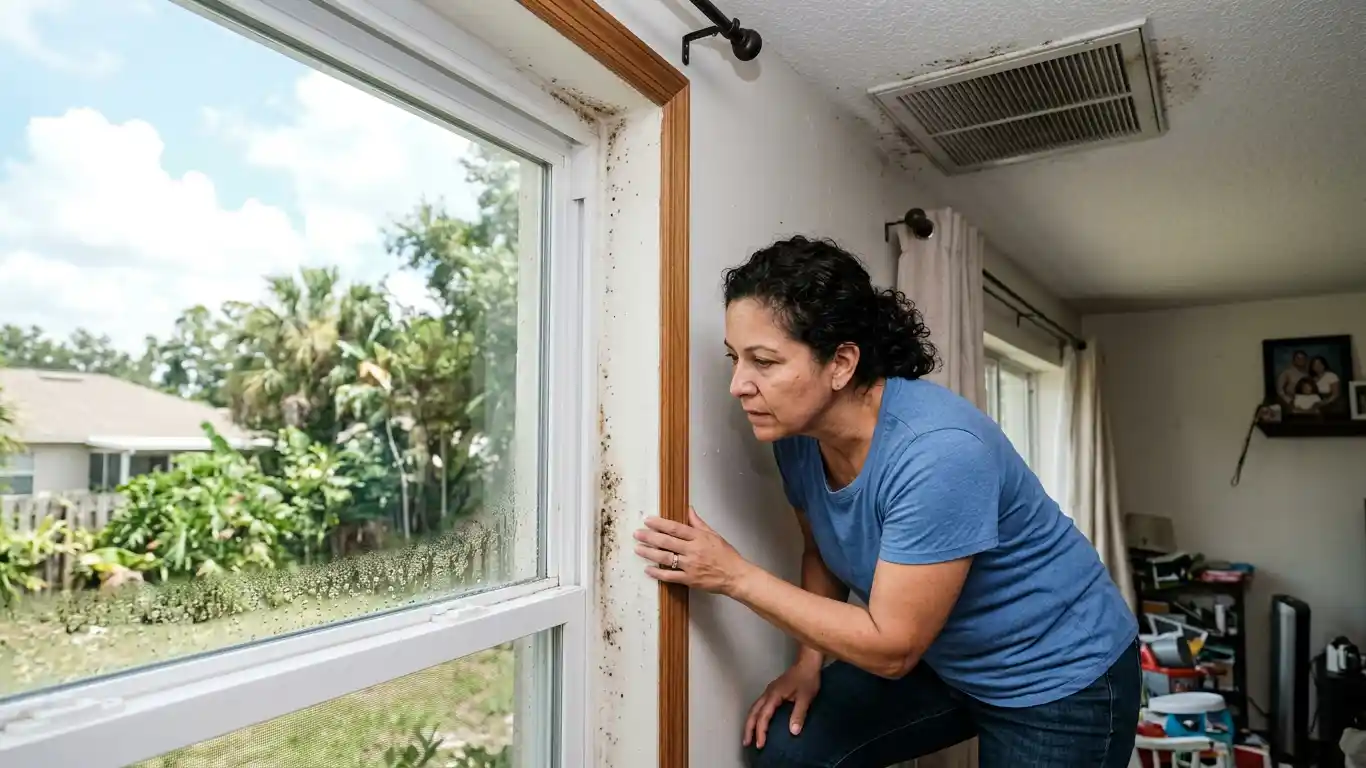
In Gainesville properties and other North Central Florida buildings, mold risk often starts before the first named storm gets close. Late spring rain, roof leaks, aging plumbing, appliance overflows, and air conditioning condensation can leave moisture where you cannot see it.
By July, damp drywall, wet carpet backing, and closed storage areas may already support mold growth.
Hidden moisture can turn a small leak into property damage that disrupts rooms and operations. A short pre-July check helps you decide when simple drying is enough and when deeper cleanup planning is needed.
Why Hidden Moisture Builds Before Peak Summer Humidity
Learn why early summer makes small water problems harder to spot and slower to dry.
Storm runoff and roof exposure
North Central Florida rain does not need hurricane-force wind to create trouble. Heavy downpours can overwhelm gutters, push runoff toward slab edges, and expose weak roof areas. If water enters around flashing, soffits, windows, or ceiling penetrations, the first sign may be a faint stain.
Check attic access points, ceiling corners, window trim, and exterior walls after repeated rain. Look for bubbling paint, swollen baseboards, rusty fasteners, and damp insulation. If stormwater enters, guidance for flood damage cleanup in Gainesville can help you understand why extraction, drying, and moisture checks matter.
Plumbing, HVAC, and appliance leaks
Many mold concerns begin indoors. A loose toilet supply line, dishwasher leak, washing machine overflow, or clogged HVAC condensate drain can dampen subfloors and wall cavities without creating an obvious flood. These leaks often repeat in older homes, rentals, offices, and multifamily buildings.
Open sink cabinets and look for staining, warped cabinet bottoms, or sour odor. Check water heaters, refrigerators with ice makers, laundry rooms, and HVAC closets. If the leak is active, stop the source when safe.
Hidden Moisture Signs to Check Room by Room
Warning signs that help you find damp materials before visible mold spreads.
Ceilings, walls, and trim
A water stain does not always show the full moisture path. Water can travel along framing, insulation, and wiring openings before it appears on the paint. Watch for peeling paint, nail pops, soft drywall, swollen trim, or a musty odor in closed rooms.
Dry water-damaged materials within 24 to 48 hours when possible. If materials stay wet longer, surface drying may not be enough. Hidden moisture may remain behind the finish layer.
Floors, carpets, and soft goods
Wet carpet is easy to underestimate. The surface can feel dry while padding, tack strips, and subflooring stay damp. Check for ripples, dark edges, loose transitions, musty smells, or cool spots under rugs. In rentals and commercial spaces, ask about spills, toilet overflows, and entryway flooding.
For carpet-focused guidance, review ways to reduce the risk of carpet mold after water damage. Area rug cleaning, upholstery cleaning, carpet cleaning, and hard-surface cleaning may become relevant when moisture affects soft materials.
HVAC areas, closets, and crawl spaces
Closed spaces trap moisture. HVAC closets, supply vents, return areas, crawlspaces, and storage closets can develop musty odors before a room looks damaged. Look for condensation on ducts, damp insulation, stained ceiling tiles, or dust clumping around vents.
Controlling moisture matters because mold needs water to grow. Find the moisture source, fix it, and dry affected materials before humidity keeps feeding the problem.
What to Do When You Find Damp Materials
Prioritize safety, documentation, drying, and cleanup decisions.
Prioritize safety before cleanup
- Do not step into standing water near outlets, power strips, appliances, or electrical panels.
- Avoid disturbing materials contaminated by sewage, floodwater, smoke residue, or unknown debris.
- If ceilings sag, floors feel unstable, or water continues entering, leave the affected area.
- For manageable clean-water events, stop the source if safe.
- Move dry items away from wet areas.
- Photograph visible damage.
- Keep children, pets, customers, and tenants away from damp or contaminated areas.
Drying, water removal, and documentation
Drying is not only about what you can see. Water extraction and structural drying decisions depend on where the water traveled and how long materials stayed wet. Record the source, first date noticed, affected rooms, damaged contents, and odor changes.
Special Risks for Commercial and Rental Properties
Shared, occupied, and older buildings often need a more organized moisture response.
Tenants, inventory, and downtime
Moisture can disrupt tenants, customers, staff, files, inventory, furniture, and equipment. In apartment communities, one leak can affect adjacent units or lower floors. In offices and retail spaces, wet flooring may create access concerns and business interruption.
- Create a simple reporting path before storm season.
- Staff and tenants should know how to report ceiling leaks, restroom overflows, HVAC condensation, and musty odors.
- Early reporting can limit damage and guide emergency water cleanup priorities.
Older buildings and repeated leaks
Older homes and buildings may have layered flooring, past roof repairs, older plumbing, or previous stains hidden under paint. Repeated leaks deserve attention because they can keep materials damp even when each event seems minor.
A deeper look at the water damage restoration process can help you think through assessment, removal, drying, and repair coordination without assuming every water event has the same scope.
Cleanup Decisions Before Mold Spreads
When basic drying may be reasonable, and when moisture history points toward broader restoration planning.
When surface drying is not enough
Surface drying may work for very small, clean-water spills found immediately. It becomes less reliable when water enters wall cavities, carpet padding, cabinetry, insulation, or subflooring. It also becomes less reliable when dampness lasts beyond the 24 to 48-hour window, odors persist, or staining grows.
Drywall, carpet padding, ceiling tile, fabric, and wood products can hold moisture after visible water is gone. Helpful next steps often include moisture checks, water cleanup, cleaning, and repair planning.
When mold remediation becomes part of the plan
If you see visible mold-like growth, smell persistent mustiness, or find damp materials from an old leak, do not scrub aggressively or spread dust through the building. Limit traffic and avoid fans that blow across suspected growth.
Review tips for preventing mold growth in your home and guidance on how to handle water problems and minimize water damage.
Stay Ahead of July Moisture
A prevention mindset for homes, rentals, and commercial spaces before humidity makes drying harder.
A pre-July moisture check is simple risk management.
- Walk the property after heavy rain.
- Open cabinets.
- Check HVAC closets.
- Smell closed rooms.
- Look under rugs.
- Ask tenants or staff about ignored leaks.
- Watch for ceiling stains, soft drywall, warped trim, and flooring changes.
Mold follows moisture, time, and materials that stay damp. When you find warning signs early, you have more options and fewer disruptions.
Frequently Asked Questions
1. Why should Gainesville properties be checked before July humidity peaks?
Moisture problems often begin before hurricane season activity becomes obvious. Late spring rain, roof leaks, plumbing failures, and HVAC condensation can dampen materials quietly. A pre-July check gives you more time to find stains, odors, wet carpet, and wall softness before conditions worsen.
2. What are the first hidden moisture signs after heavy rain?
Look for ceiling stains, swollen baseboards, peeling paint, soft drywall, and musty odors in closed rooms. Check around windows, exterior walls, attic access points, and HVAC closets. Small changes can indicate water intrusion even when no standing water is present.
3. Can carpet feel dry and still hold moisture underneath?
Yes. Carpet fibers may dry faster than padding, tack strips, and subfloor materials. Cool spots, ripples, dark edges, and odors can suggest moisture below the surface. Wet carpet after water damage deserves careful review, especially before humid weather intensifies.
4. What should renters report to a landlord or property manager?
Report ceiling leaks, damp flooring, musty odors, plumbing drips, appliance overflows, and visible mold-like growth. Include the room, date noticed, and photos when possible. Early reporting helps reduce damage in apartments, rental homes, and multifamily buildings.
5. How should commercial properties handle recurring musty odors?
Recurring odor should be treated as a moisture warning, not just an air-freshening issue. Check restrooms, break rooms, storage closets, HVAC areas, and exterior walls. Persistent odors may point to damp materials, poor drying, or repeated water intrusion.
6. Is HVAC condensation a real mold risk in Florida buildings?
Yes. HVAC closets, drain lines, ducts, and return areas can collect condensation or leak slowly. Closed mechanical spaces may smell musty before visible damage appears. Routine checks are especially useful before summer humidity places more demand on cooling systems.
7. What should you avoid after flood water or sewage enters a property?
- Avoid direct contact with unknown or contaminated water.
- Do not run fans across contaminated areas or handle damaged materials without proper precautions.
- Keep people away from the affected area until hazards are understood and cleanup decisions are clear.
8. How can roof leaks create hidden mold concerns?
Roof leaks can travel through framing, insulation, and ceiling cavities before stains appear indoors. A small roof opening may dampen materials repeatedly during storms. Ceiling discoloration, sagging, soft drywall, and attic dampness all deserve prompt attention.
9. When are water removal services relevant?
Water removal services become relevant when water spreads beyond a minor spill or reaches porous materials. Wet carpet, wall cavities, cabinetry, and subflooring can hold moisture after surfaces look dry. The longer the materials stay damp, the more complicated the cleanup and repair decisions may become.
10. Can fire or smoke damage complicate moisture cleanup?
Yes. Fire response can leave water in walls, flooring, contents, and structural materials. Smoke odor, soot, and residue may also require separate cleanup decisions. When fire and water damage overlap, safety, odor control, drying, and repair coordination all matter.