
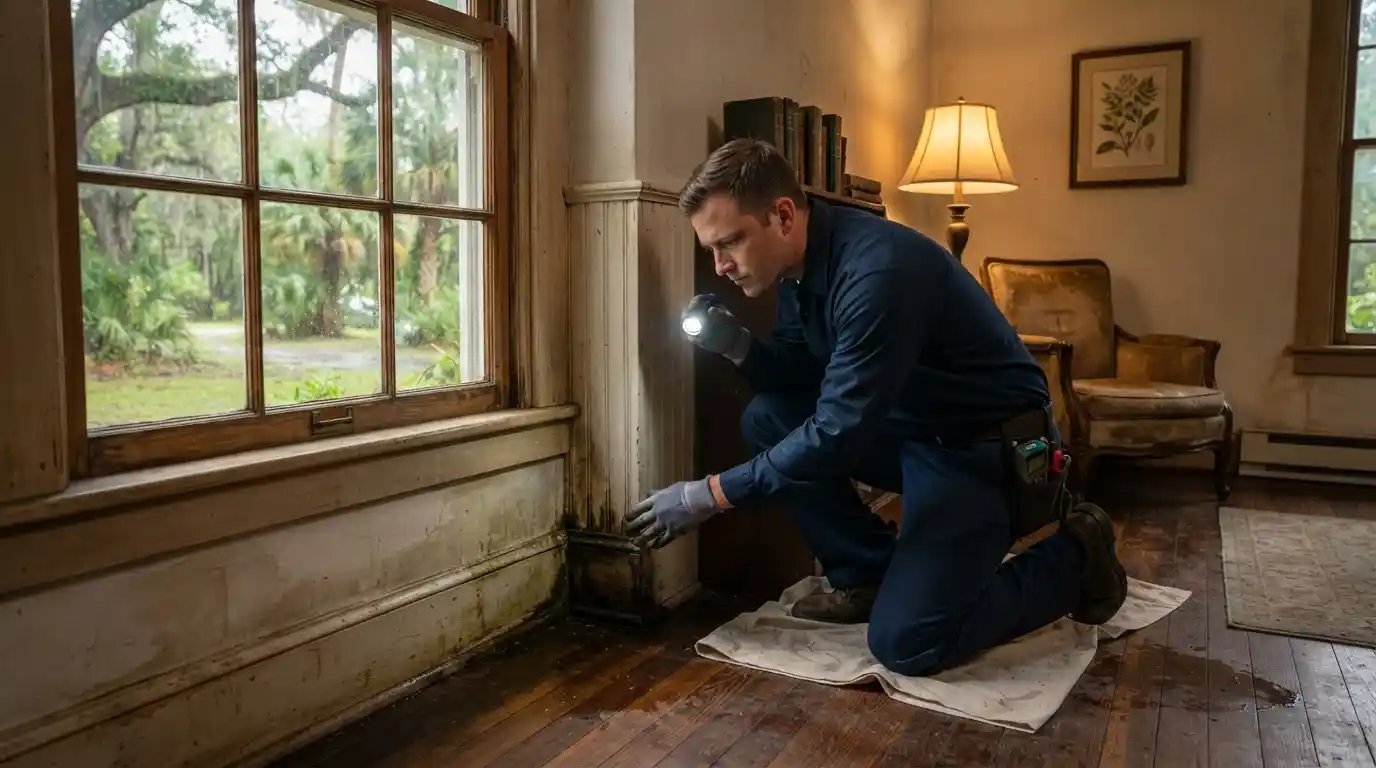
Several days of rain can expose an obvious roof leak. Several weeks of rain create a different problem. Materials may absorb moisture, partly dry, then become wet again before the assembly returns to normal.
A room can look acceptable while drywall paper, carpet pad, insulation, subflooring, and wood framing remain damp.
This pattern affects older homes, mixed-use districts, commercial corridors, multi-tenant properties, and seasonal visitor areas.
Wind-driven rain is one trigger. HVAC condensation, plumbing leaks during cooler snaps, and rushed tenant turnover can produce the same hidden moisture cycle.
The goal is not only to remove visible water. You need to find where moisture traveled, stop re-wetting, and prevent odors, warping, corrosion, and finish failure.
Why Weeks of Rain Change the Moisture Picture
Repeated rain extends drying time and allows moisture to move farther into porous assemblies.
Repeated Wetting Outpaces Ordinary Drying
Rainwater can enter at roof edges, flashing, windows, wall penetrations, door thresholds, or foundation joints. Gravity and capillary movement then carry it behind finishes and into lower materials. A small ceiling stain may reflect a wider wet area above it.
The CDC recommends drying wet materials within 24 to 48 hours after water entry. Intermittent rain can reset that clock repeatedly, so concealed materials never reach a stable dry condition.
Humidity Keeps Concealed Materials Damp
Warm outdoor air and cooled indoor surfaces can create condensation around supply registers, air handlers, ducts, and exterior walls. Closed closets, crowded storage rooms, and furniture placed tightly against walls dry more slowly.
The EPA advises keeping indoor relative humidity below 60 percent, ideally between 30 and 50 percent. A humidity meter can show whether indoor air stays damp, but it cannot confirm that wall cavities or flooring layers are dry.
Where Hidden Mold Growth Starts First
Growth often begins on the concealed side of moisture-sensitive materials, not on the painted surface you can see.
- Behind drywall and wall coverings. Check below window corners, around plumbing, behind cabinets, and beneath old stains. A qualified mold remediation assessment may be appropriate when odors or moisture readings point inside a closed assembly.
- Under carpet and padding. Carpet fibers can feel dry while the pad and tack strip remain damp. Moisture below the surface raises the risk of carpet mold after water damage.
- At baseboards and lower wall plates. Swollen trim, separating caulk, soft drywall edges, or rusting fasteners may show that water collected near the floor.
- Above ceilings and below roof leaks. Wet insulation can hold water against ceiling materials. Watch for sagging, new seams, peeling paint, or stains that expand after each storm. Do not press or cut a weakened ceiling.
- Inside cabinets and plumbing chases. Sink bases, dishwasher recesses, ice-maker lines, and restroom chase walls can hide leaks and condensation.
- In crawl spaces and beneath subfloors. Ground moisture, drainage problems, and plumbing leaks can wet joists and insulation from below. Indoor flooring may cup or feel soft first.
- Behind furniture and stored contents. Sofas, filing cabinets, mattresses, and boxed inventory reduce airflow against walls. Decisions about water-damaged furniture should consider the material, contamination source, and time wet.
Clues That Moisture Has Moved Beyond the Surface
Changes in odor, texture, and room behavior can reveal a concealed problem before widespread staining appears.
Visible Material Changes
Watch for bubbling paint, lifted flooring, swollen cabinet panels, separating trim, crumbling drywall edges, rust, or recurring ceiling spots. A repair that fails after the next rain usually means the water path was not fully corrected.
Odor and Room Behavior
A musty odor that strengthens when the HVAC starts, after a room has been closed, or during humid weather can indicate damp porous material. One room may also feel clammy despite normal thermostat settings.
Signals That Should Stop DIY Investigation
Do not open walls, pull contaminated carpet, or aim fans at suspected mold without considering exposure and spread. Stop when you find electrical involvement, a sagging ceiling, sewage or floodwater contamination, extensive growth, or a strong odor with no accessible source.
If repeated rain has left musty odors, soft materials, or unexplained staining, call 352-505-3321 to discuss the affected areas before opening walls, lifting flooring, or disturbing suspected growth.
A Practical Response Plan After Prolonged Rain
The safest approach separates immediate damage control from deeper investigation and repair.
- Stop active water entry. Address accessible plumbing leaks. Use qualified roofing, electrical, HVAC, or construction professionals for systems outside your training.
- Protect people and limit access. Keep occupants away from sagging ceilings, wet electrical components, contaminated water, and visibly moldy areas. Seek medical guidance for personal health concerns.
- Remove standing water safely. Professional water removal and extraction may be needed when water reaches multiple rooms, porous assemblies, electrical systems, or inaccessible areas.
- Document conditions. Photograph stains, wet contents, damaged finishes, and the apparent source. Record dates and steps taken. Confirm coverage and documentation requirements directly with your insurer because policies vary.
- Measure, do not guess. A dry-looking wall is not proof of a dry cavity. Moisture meters, humidity readings, and targeted inspection help define the wet boundary.
- Prepare for the next rain. Review drainage, flashing, gutters, window seals, condensate lines, and maintenance history. A practical flood preparation plan can reduce disruption during another prolonged wet period.
Preventing the Next Moisture Cycle
Exterior maintenance, indoor humidity control, and property operations must work together.
Exterior Drainage and Rain Entry
Keep roof drainage paths clear and direct discharge away from foundations and low entries. Inspect flashing, window perimeters, roof penetrations, and wall openings after severe weather. Repainting a stain without correcting the entry point can hide continued moisture.
HVAC and Condensation Control
Maintain condensate pans, drain lines, filters, and accessible coils. Do not block supply or return airflow. During humid periods, keep relative humidity below 60 percent and preferably within the 30 to 50 percent range. Investigate repeated condensation rather than wiping it away each day.
Property Operations for Rentals and Commercial Spaces
Use move-outs, vacancy checks, and seasonal turnover to inspect under sinks, behind appliances, inside mechanical rooms, and along exterior walls. Record recurring leak locations so repairs address patterns.
If materials remain wet beyond 24 to 48 hours, treat the situation as a hidden-moisture investigation rather than cosmetic cleanup.
Avoid painting over discoloration or applying household chemicals without fixing the source. Guidance on how to prevent black mold growth can support routine moisture control, but concealed growth requires case-specific evaluation.
Weeks of rain do not automatically mean a building has mold. They do mean you should look beyond visible puddles. Follow the moisture path, verify drying, protect occupants, and repair the source before replacing finishes. This reduces the risk of recurring odors, warped materials, corrosion, and failed repairs.
Frequently Asked Questions
- Can mold develop after rain without an obvious leak?
Yes. Wind-driven rain, roof seepage, condensation, and damp crawl spaces can affect concealed materials without creating a visible puddle. Recurring odors, stains, soft finishes, or unusual humidity may provide the first warning. - Why does a room smell musty only during or after rain?
Higher humidity can increase odor release from damp drywall, carpet padding, wood, dust, and stored contents. Rain may also re-wet an existing problem area. An odor that repeatedly follows wet weather deserves a moisture-focused inspection. - Which parts of a property should be checked first?
Start near previous leaks, roof penetrations, window corners, exterior doors, plumbing fixtures, HVAC equipment, and low points along walls. Also inspect beneath sinks, behind appliances, inside closets, and around carpet edges. Do not enter unsafe crawl spaces or attics. - Does a dry wall surface mean the cavity is dry?
No. Paint and exposed drywall can dry faster than insulation, framing, or the back of the wallboard. Touch alone cannot confirm the condition inside a closed assembly. Moisture measurement may be necessary when staining or odors persist. - Should fans be used when mold is suspected?
Avoid directing fans across visible or suspected mold because airflow may move particles into unaffected spaces. Fans also should not be used around unsafe electrical conditions or contaminated water. Determine the source and scope before creating strong air movement. - Does black discoloration confirm a specific type of mold?
Color alone cannot reliably identify a mold species or determine its potential effects. Dirt, soot, water staining, and several types of growth may appear dark. Focus first on correcting moisture and arranging appropriate evaluation when the material is uncertain. - Can wet carpet always be dried and saved?
Salvageability depends on the water source, time wet, carpet construction, padding condition, and materials beneath it. Carpet may feel dry even when the pad or subfloor remains damp. Contaminated or persistently wet materials may require removal. - How can you tell whether drywall has hidden moisture?
Look for bubbling paint, softened edges, swollen baseboards, staining, loose tape joints, or a musty odor. Moisture readings can help compare the affected area with known dry material. Avoid cutting into walls when electrical wiring, plumbing, or contamination may be present. - Can HVAC condensation contribute to hidden mold risk?
Yes. Blocked condensate lines, wet drain pans, uninsulated ducts, poor airflow, and cold surfaces can create recurring moisture. Condensation near registers or mechanical equipment should be investigated rather than repeatedly wiped away. - What should a property manager document after repeated rain?
Record the date, affected rooms, visible staining, odors, tenant reports, weather conditions, and maintenance steps. Photograph damaged finishes and contents before removal when it is safe to do so. Keep a history of recurring leak locations and completed repairs. - When does the situation require qualified professional evaluation?
Seek qualified help when growth appears extensive, odors have no visible source, ceilings sag, flooring becomes soft, or water reaches electrical systems. Professional input is also appropriate for contaminated water, inaccessible cavities, or repeated failures after cosmetic repairs.