
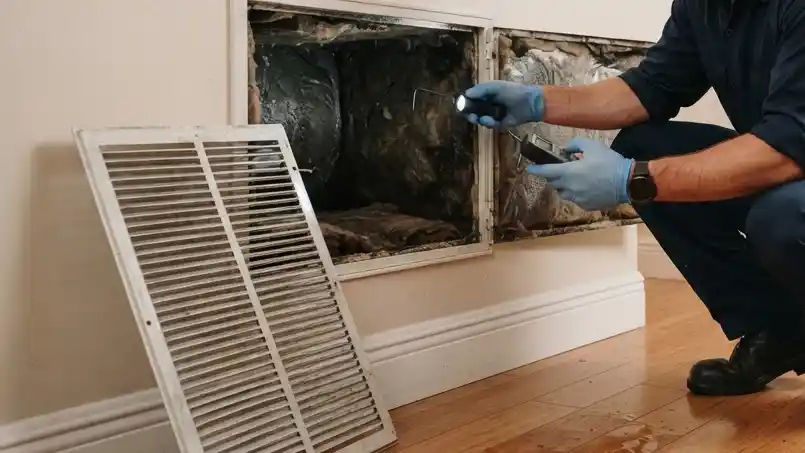
The storm has passed, and visible water is gone. Then the HVAC system starts, sending a damp, earthy odor into spaces that never appeared wet.
That pattern can point toward ductwork or another HVAC component, but the ducts are not always the source. Storm moisture may enter an attic, crawl space, mechanical closet, return cavity, or air handler.
The blower can carry the odor into occupied rooms, so finding the moisture path matters more than masking it.
Why Storms Expose HVAC Odor Problems
Heavy rain can reveal leaks, drainage defects, and condensation problems that stay hidden during drier weather.
Rain Can Reach the Air System
Water may enter through roofing, flashing, wall penetrations, rooftop equipment curbs, exterior vents, or poorly sealed panels. It can wet duct insulation, ceiling cavities, filters, return plenums, and surrounding materials.
A return-side leak can pull musty air from a damp attic, wall cavity, or crawl space. Storms, cooling season, cold-snap plumbing failures, and tenant turnover can expose hidden moisture.
Condensation and Drainage Add Moisture
Cooling coils remove moisture from indoor air. That water should collect in a pan and leave through a clear condensate line. A clogged line, damaged pan, poor slope, or wet insulation can create persistent dampness.
Higher outdoor humidity can cause condensation when humid air reaches cold, poorly insulated duct surfaces. The EPA guidance on duct moisture focuses on leak repair, drainage, sealing, insulation, and moisture control.
Ductwork May Carry Odor From Elsewhere
A musty register odor does not prove growth is inside the duct. Wet carpet, drywall, insulation, stored cardboard, or a damp crawl space may be the source.
This distinction changes the response. Water damage restoration may need to address the building materials first. Duct cleaning may be appropriate only when the air system is also affected.
Signs the Odor May Be Connected to Ductwork
Timing and location can help narrow the inspection area before materials are disturbed.
The Smell Starts With the Blower
Notice whether the odor appears when cooling begins or the fan starts. A strong startup odor may involve the air handler, coil, drain pan, filter compartment, return path, or nearby insulation.
Consider whether air duct cleaning is worth it only after the moisture source and system condition have been assessed.
The Pattern Follows Rooms or Zones
Odor from one or two registers may point to a branch duct or wet ceiling cavity. Odor throughout the property may involve the return, air handler, shared plenum, or broader moisture.
Look for these clues:
- Water stains near registers or mechanical closets.
- Damp or collapsed duct insulation.
- Condensation on grilles, cabinets, or nearby surfaces.
- A wet filter or water near the air handler.
- Odor that returns after rain or humid periods.
If musty air becomes stronger when the HVAC system runs after a storm, avoid spraying products into registers or repeatedly operating a visibly wet system.
Call 352-505-3321 for help evaluating the ductwork and connected water damage before treating the odor as a surface problem.
Where Storm Moisture Hides in the HVAC System
Concealed components can remain damp after floors, walls, and ceilings appear dry.
Return Cavities and Unconditioned Spaces
Return leaks can draw air from damp attics, crawl spaces, utility rooms, or wall cavities. Wet insulation, framing, and stored materials may create the odor.
Sealing the return without drying the adjacent area will not solve the full problem. Steps that reduce mold risk after water damage also apply here: remove excess moisture, inspect concealed spaces, and prevent re-wetting.
Coils, Pans, Filters, and Air Handlers
Debris or drainage defects can leave water around the coil and drain pan. Filters may become damp when stormwater reaches a mechanical closet or condensation forms nearby.
Do not reach into energized equipment when electrical conditions are uncertain. Qualified personnel should inspect components when water has entered the cabinet, wiring area, or controls.
Porous Duct Materials
Hard surfaces may sometimes be cleaned after the source is corrected. Wet or moldy fiberglass liner and some insulated duct materials may require replacement.
The EPA mold and moisture guide advises against running an HVAC system when mold contamination is known or suspected because the system may spread it through the building.
How to Investigate Without Spreading the Problem
Begin with observations that do not disturb wet insulation, suspected growth, or electrical equipment.
Safe Checks You Can Make
- Record when the odor begins and which vents are affected.
- Check the filter without touching wet electrical components.
- Look for staining near grilles, ceilings, penetrations, and mechanical closets.
- Note recent roof leaks, drain backups, condensation, or flooding.
- Photograph visible moisture for maintenance records.
Do not spray bleach, fragrance, ozone, or an unverified chemical into ductwork. Added moisture and unsuitable products can complicate cleaning.
Follow the Full Moisture Path
A useful inspection looks beyond the vent cover to the return, supply branches, accessible ducts, air handler, coil, drain pan, filter compartment, insulation, and nearby materials.
Before authorizing work, use focused questions for professional duct cleaners to clarify the inspection scope, included components, containment methods, and documentation.
Cleaning, Restoration, or Replacement?
The correct scope depends on the material, contamination, access, and whether the moisture source has been corrected.
When Cleaning May Be Appropriate
Professional air duct cleaning may be appropriate when hard-surface ducts or HVAC components contain debris or contamination that can be removed safely. Cleaning should address affected components, not only visible registers.
The moisture source must be repaired first. Otherwise, the odor can return.
When Materials May Need Replacement
Replacement may be necessary when porous duct liner, duct board, flexible insulation, filters, or nearby insulation remain wet, damaged, contaminated, collapsed, or impossible to dry reliably.
When the Building Needs Broader Drying
Duct service alone will not correct wet ceiling cavities, wall insulation, carpet, subflooring, or crawl spaces. Water extraction, dehumidification, material removal, or targeted drying may be needed before the system can operate without redistributing odor.
A plan to prepare your property for flooding should include roof drainage, mechanical areas, stored materials, and access to shutoffs.
Preventing Musty Air After the Next Storm
Prevention keeps both the building enclosure and the air system dry.
- Inspect roof penetrations, flashing, gutters, exterior vents, doors, windows, and equipment curbs.
- Keep condensate drains clear and investigate recurring water around the air handler.
- Replace filters as needed and check accessible insulation for dampness.
- Keep ducts in attics and crawl spaces sealed and insulated.
- Track odor reports by room, unit, floor, or HVAC zone in larger properties.
Across older homes, rural properties, commercial corridors, and multi-tenant buildings, the source may be inside the ductwork, beside it, or elsewhere in the structure. Musty air after a storm is a moisture clue, not a diagnosis.
A careful investigation follows the water path, evaluates the HVAC system, dries connected materials, and verifies that the conditions causing the odor have been corrected.
Frequently Asked Questions
Does a musty smell from a vent always mean mold is in the ducts?
No. Wet insulation, carpet, drywall, crawl spaces, ceiling cavities, or mechanical rooms may produce the odor. The HVAC system can collect air from those areas and distribute the smell without being the source.
Why does the smell become stronger after rain?
Rain can introduce water through roof openings, exterior penetrations, equipment curbs, windows, or wall assemblies. Higher outdoor humidity may also increase condensation on cold duct surfaces or HVAC components.
Why do I only smell the odor when the air conditioner starts?
The blower may be moving odor from the air handler, return path, damp insulation, or another concealed area. A strong startup smell provides a useful clue, but an inspection is still needed to identify the exact source.
Can a wet HVAC filter cause musty air?
Yes. A damp filter can hold moisture, dust, and odor. It may also indicate a leak, drainage problem, condensation issue, or water intrusion near the air handler that requires more than a filter change.
Should I turn off the HVAC system after stormwater enters the property?
Avoid operating a visibly wet system or equipment with uncertain electrical conditions. When mold contamination is known or suspected, operating the blower may distribute contamination. Qualified personnel should evaluate the system before it restarts.
Will duct cleaning remove every musty odor?
Not when the odor originates outside the ducts. Wet walls, ceilings, subfloors, insulation, crawl spaces, or mechanical components must also be dried or restored. Cleaning without correcting the moisture source may provide only temporary improvement.
Can wet insulated ductwork be cleaned?
Some hard duct surfaces may be cleanable after the moisture source is corrected. Wet, damaged, or mold-contaminated porous insulation may require removal and replacement because reliable cleaning and drying may not be possible.
Does dust around a vent prove the ducts are contaminated?
No. Return grilles commonly collect ordinary household dust. A meaningful assessment considers visible deposits inside the system, moisture, odor patterns, component condition, and whether debris is entering occupied rooms.
Can an attic or crawl space cause musty supply air?
Yes. Leaky return ducts may pull damp air from unconditioned spaces. Moisture in insulation, wood framing, soil, stored materials, or nearby cavities may then create an odor that travels through the HVAC system.
Should I spray bleach or deodorizer into the vents?
No. Spraying liquids into ductwork adds moisture and may expose occupants to unsuitable chemicals. It can also conceal the odor temporarily without correcting leaks, condensation, wet insulation, or contaminated materials.
What should property managers document after an odor complaint?
Record when the smell began, which rooms or units are affected, recent weather, roof or plumbing leaks, HVAC operating conditions, and visible staining. Photographs and zone-by-zone notes can help identify recurring patterns.