
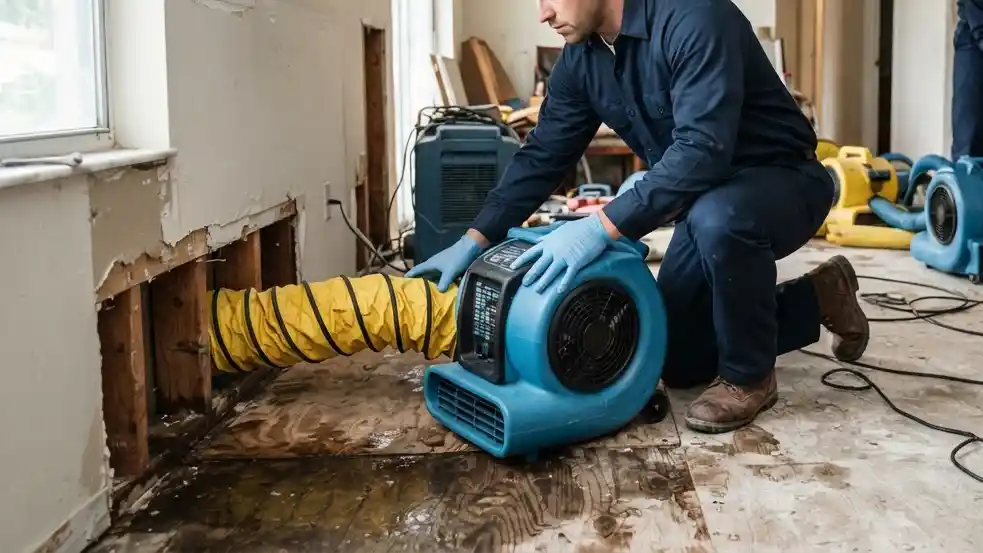
Floodwater rarely stays where you first see it. It can pass beneath baseboards, wick into drywall, soak carpet padding, settle under floating floors, and reach wall cavities. The visible waterline may disappear while hidden materials remain damp.
That creates a difficult recovery problem for homeowners, business owners, and property managers across older neighborhoods, rural properties, commercial corridors, and multi-tenant buildings.
Storm runoff may start the loss, but roof openings, backed-up drainage, plumbing failures, and HVAC shutdowns can keep adding moisture.
The first objective is safety. The second is stopping water movement. The third is proving that walls, flooring, and concealed assemblies are dry before repairs begin. Skipping a stage can lead to odors, swelling, corrosion, loose finishes, and hidden mold growth.
Floodwater Moves Beyond the Visible Waterline
Understanding how water travels helps you inspect the full damage area instead of cleaning only what is easy to see.
Walls Absorb Water From the Bottom Up
Drywall, paper facing, wood trim, and insulation can draw water upward. A stain above the floor may not show the full wet boundary. Moisture can also move sideways through wall cavities and reach adjacent rooms.
Flooring Can Hide Water Between Layers
Carpet may feel less wet after surface extraction while the pad and subfloor remain saturated. Laminate and engineered flooring can trap moisture beneath boards. Tile may survive, but water can remain in underlayment, grout joints, or the slab below.
Contents Can Block Airflow
Cabinets, shelving, furniture, boxed inventory, and stored textiles create pockets with limited circulation. Moving salvageable items may expose wet surfaces. Decisions about water-damaged furniture should consider the water source, material type, exposure time, and whether complete cleaning and drying are practical.
First Actions After Indoor Flooding
Early decisions should reduce exposure, prevent re-wetting, and preserve information needed for cleanup and repairs.
- Wait until entry is reasonably safe. Do not enter around electrical hazards, unstable ceilings, moving water, structural movement, fuel odors, or damaged utilities.
- Identify the source without taking unsafe risks. Shut off an accessible plumbing supply when safe. Do not walk through water to reach an electrical panel.
- Limit access. Floodwater may contain dirt, microorganisms, chemicals, or sewage. Keep occupants, customers, tenants, and pets away from wet areas until hazards are evaluated.
- Document the loss. Photograph waterlines, rooms, damaged contents, contamination, and the apparent entry point. Confirm policy and documentation requirements directly with your insurer.
- Remove standing water and define the wet boundary. Professional flood damage cleanup may involve extraction, moisture detection, structural drying, cleaning, and repairs. Surface removal does not prove that walls or floors are dry.
- Sort materials carefully. Separate items that can be cleaned and dried from porous materials that remain contaminated. The EPA flood cleanup guidance emphasizes safe cleanup, material sorting, cleaning, and complete drying.
- Prevent another water entry. Temporary protection may be necessary, but damaged roofs and structures require qualified help. A practical flood preparation plan can reduce confusion during the next heavy-rain event.
If floodwater has reached walls, carpet padding, cabinets, or multiple flooring layers, call 352-505-3321 to discuss the affected areas before opening assemblies or installing replacement finishes.
How Walls and Flooring Trap Moisture
Each material responds differently, so cleanup decisions should reflect what is wet, what touched it, and whether hidden layers can dry.
Drywall, Insulation, and Wall Cavities
Drywall can soften, swell, crumble, or delaminate after saturation. Insulation may hold moisture even when the surface looks dry. Wall cavities can also contain wiring, plumbing, fasteners, and framing that need inspection before closure.
Opening a wall without containment can spread dust or suspected growth. Qualified evaluation becomes more important when water was contaminated, the affected area is extensive, or odors point to hidden material.
Carpet, Padding, and Subflooring
Carpet layers dry at different rates. Padding can remain wet under a drier surface, while tack strips and subfloor seams hold moisture near walls. Guidance on reducing carpet mold after water damage reinforces the need to inspect beneath furniture and floor coverings.
Wood, Laminate, and Resilient Flooring
Wood may cup, crown, split, or stain. Laminate can swell at edges and joints. Sheet flooring and vinyl planks may trap water below them. Replacing flooring too early can seal moisture into the assembly and cause odor, adhesive failure, or recurring movement.
Signs Secondary Damage Is Developing
Small material changes can reveal moisture or growth beyond the original flood area.
- A musty odor returns when the building is closed, or the HVAC operates.
- Baseboards swell, separate, or develop dark staining.
- Paint bubbles, wall surfaces soften, or drywall seams become visible.
- Carpet develops recurring odor, discoloration, or damp edges.
- Flooring cups, lifts, buckles, or feels soft underfoot.
- Cabinets swell near toe kicks or sink bases.
- Metal fasteners or floor transitions begin to corrode.
- Spots appear outside the original waterline.
Visible or suspected growth may require controlled mold remediation rather than ordinary cleaning. Color alone cannot identify a mold type. General black mold prevention starts with correcting the moisture source and avoiding disturbance that could move particles.
What Not to Do During Flood Cleanup
Avoiding common mistakes can prevent injuries, contamination spread, and failed repairs.
- Do not energize wet electrical systems. Use qualified electrical help when water reaches outlets, panels, appliances, or concealed wiring.
- Do not mix cleaning products. Chemical combinations can create dangerous vapors.
- Do not direct fans across visible mold or contaminated debris. Air movement can spread particles.
- Do not paint, caulk, or install flooring over damp materials. Cosmetic coverage does not stop moisture or growth.
- Do not assume clear water stayed clean. Water can pick up contaminants as it crosses floors, soil, drains, and stored materials.
- Do not begin demolition without checking hazards. Older buildings may contain materials that require specialized handling.
- Do not rely on odor masking. Fragrance does not remove wet materials or the source of a musty smell.
The CDC mold cleanup guidance stresses protective equipment and safe cleaning practices. People with health concerns should seek appropriate medical guidance and avoid cleanup when advised.
Drying Verification Before Repairs
Repairs should follow measured drying and cleaning, not simply the disappearance of standing water.
Define the Moisture Boundary
Moisture meters, humidity readings, visual inspection, and targeted access can help compare affected materials with known dry areas. Inspection should extend below the waterline, into adjacent rooms, and beneath floor coverings.
Confirm Materials Are Ready for Finishes
Drywall, framing, subflooring, slabs, and cabinets may dry at different rates. Do not close walls or install flooring until the underlying assembly is ready. Otherwise, moisture can become trapped beneath new materials.
Record the Recovery Process
Property managers and business owners should document moisture readings, removed materials, photographs, drying progress, cleaning steps, and repair approvals. Clear records help coordinate tenants, contractors, owners, and insurers without promising that a specific cost will be covered.
Flood cleanup is complete only when the source is controlled, contamination is addressed, hidden materials are dry, and repairs will not seal moisture inside walls or flooring. A careful sequence reduces the risk of mold spread, recurring odors, warping, corrosion, and another round of demolition.
Frequently Asked Questions
- What should you do first when indoor flooding is discovered?
Confirm that the area is safe to approach and keep people away from electrical, structural, or contamination hazards. Stop an accessible water source only when doing so is safe. Document visible conditions before moving or discarding materials.
- Can walls remain wet after the floor looks dry?
Yes. Drywall, insulation, framing, and wall cavities can retain moisture after standing water disappears. Water may also wick above the visible line or travel into an adjacent room. Surface appearance and touch are not reliable drying tests.
- Should fans be used immediately after a flood?
Air movement may support drying after electrical safety and contamination conditions have been assessed. Avoid blowing air across visible mold, sewage-contaminated debris, or materials that could spread particles. The equipment layout should support controlled drying rather than random circulation.
- Does all wet drywall need to be removed?
The decision depends on the water source, saturation, material condition, contamination, and whether the assembly can dry completely. Soft, crumbling, contaminated, or mold-affected drywall may require removal. Hidden insulation and framing must also be considered.
- Can flooded carpet and padding be saved?
Salvageability depends on the water source, time wet, backing, padding, subfloor, and ability to clean and dry every layer. Padding can remain saturated beneath carpet that feels drier. Contaminated or persistently damp materials may need removal.
- How can you tell whether water is trapped beneath flooring?
Warning signs include buckling, cupping, raised seams, clicking boards, darkened edges, soft areas, recurring odors, or moisture at wall transitions. Testing may be needed beneath the finished surface. Do not install new flooring until the underlying material is dry.
- Will bleach prevent mold inside walls or flooring?
A surface treatment cannot correct moisture trapped inside an assembly. Cleaning products also cannot restore material that remains wet, damaged, or contaminated. The water source must be corrected, and affected layers must be cleaned, dried, or removed as appropriate.
- When may mold remediation become necessary?
Controlled remediation may be appropriate when visible growth is extensive, odors point to a concealed source, or affected materials cannot be cleaned safely in place. It may also be needed when opening walls or flooring could spread contamination. Qualified evaluation should define the scope.
- When is it safe to begin replacing walls or flooring?
Begin repairs only after contamination has been addressed, and the complete assembly has reached an acceptable dry condition. Different materials dry at different rates. Closing a wall or floor too soon can trap moisture and cause odor, warping, or finish failure.
- What should a property manager document during cleanup?
Record the discovery time, affected units or rooms, apparent source, water movement, photographs, tenant reports, removed materials, and drying progress. Keep moisture readings and contractor records together. Confirm insurance requirements directly because policies and coverage differ.
- Can the HVAC system contribute to mold spread after flooding?
Moisture or contamination may affect equipment, filters, ducts, or nearby building materials. Operating an exposed system could move odors or particles between spaces. Arrange a qualified inspection when floodwater or contaminated air may have entered mechanical components.