Call Us Today 352-505-3321


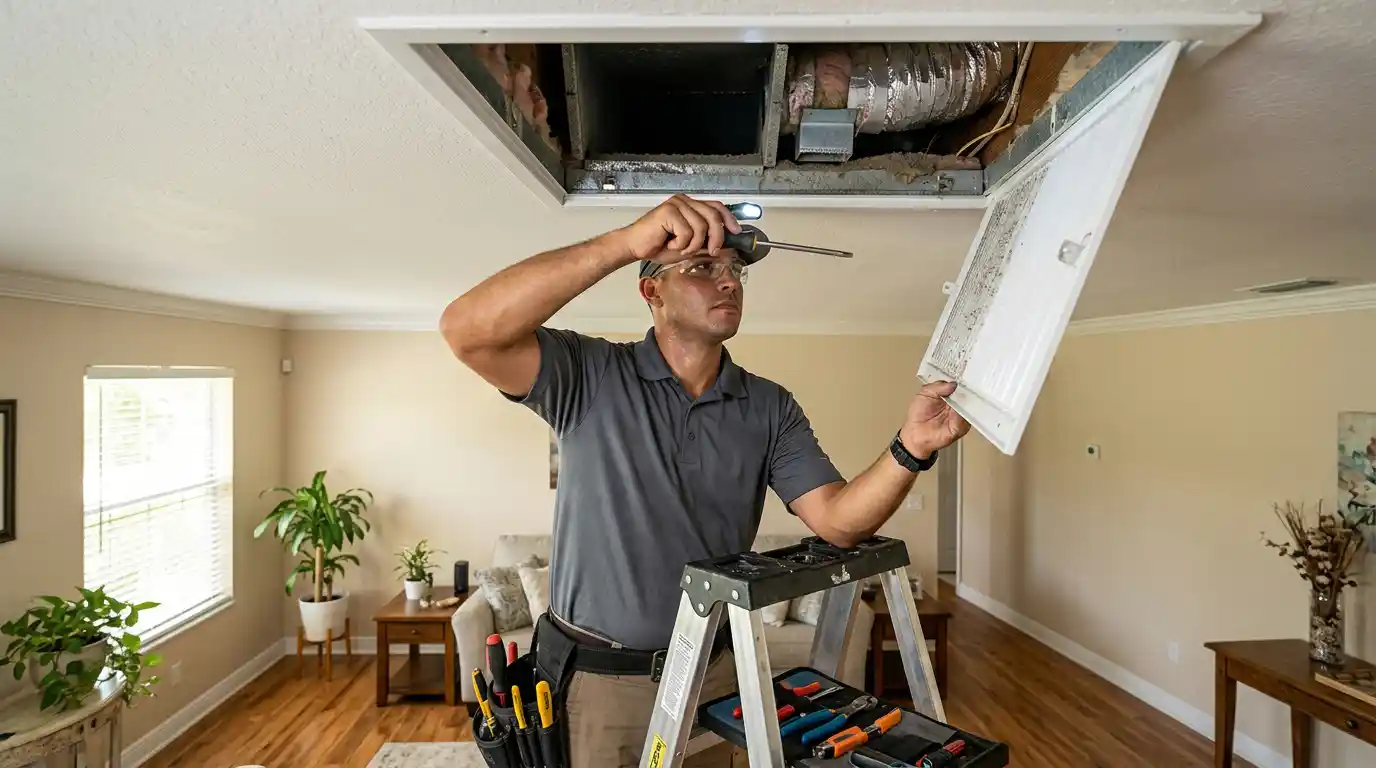
AC Running All Summer? Add Air Duct Cleaning to Storm Prep
North Central Florida storm prep usually starts with roof checks, gutters, batteries, and bottled water. Air ducts rarely make the list. They should. When the AC runs all summer, it pulls air through returns, vents, filters, coils, and ductwork for hours.
Gainesville properties face heavy rain, storm runoff, roof leaks, HVAC condensation, wet flooring, and high humidity. If dust, odor, moisture, pests, or renovation debris are already in the system, storm season can make the problem harder to control. It belongs on the list when the property shows real warning signs.
Why Air Duct Cleaning Belongs on a Storm-Prep List
A pre-storm duct check helps you catch air movement, odor, and moisture concerns before weather limits access.
Your AC moves more than cool air
Your cooling system circulates the same indoor air again and again. Dusty registers, clogged returns, and musty vents are not just comfort issues. They can point to buildup, moisture, or a nearby property damage source.
Air duct cleaning enquiries often start after odors or airflow issues appear. If warning signs appear, air duct cleaning in Gainesville can fit into a broader seasonal plan with carpet cleaning, tile and grout cleaning, upholstery cleaning, and other surface care.
Storms can change indoor conditions fast
Wind-driven rain, roof exposure, clogged drains, and wet entryways can add moisture quickly. Once moisture enters, the HVAC system may pull air from damp materials or move odors through occupied rooms.
Older homes, apartment communities, rental properties, and commercial spaces with shared ceiling cavities need extra attention.
Treat duct cleaning as an as-needed service, not a yearly checkbox. Visible growth, heavy dust, vermin signs, and moisture matter more than the calendar.
Warning Signs to Check Before Summer Storms
These clues help you decide whether simple vent cleaning is enough.
Dust, debris, and dark vent streaks
A little dust on a return grille is common. Dust blowing from supply vents, debris around registers, or dark streaks near vents may point to a larger issue. Remove vent covers only if safe and simple.
Basic vent care starts with the visible register steps on how to clean the air vents in the home. Persistent debris, dust bursts, or hard-to-reach buildup calls for a cautious decision.
Musty odor when the AC starts
A musty smell at startup can come from damp filters, coils, drain pans, nearby drywall, carpet, or duct sections. Do not assume the duct is the only source. Track when the odor appears. Check the HVAC closet, ceiling stains, baseboards, carpet edges, and walls near the return.
If odor follows a leak, cleanup should start with the moisture source.
Condensation near ducts or vents
Condensation may point to humidity imbalance, insulation gaps, poor airflow, or cold surfaces meeting warm, humid air. Wipeable condensation is different from stained drywall, soft ceiling texture, or recurring dampness.
Wet ceiling materials near a vent can become a water damage restoration Gainesville FL issue, not just an air duct cleaning issue. Look above and around the vent before storms add more moisture.
How Duct Cleaning Connects to Damage Prevention
Air movement, moisture control, and cleanup decisions often overlap after heavy rain or fire damage.
It can reveal hidden building problems
A duct and vent review may uncover water stains near registers, wet insulation, loose vent boots, dirty returns, pest evidence, or dust from past renovation work. These clues can guide property damage cleanup before a small issue spreads.
Clear decision-making starts by asking whether air duct cleaning is worth it for the evidence inside your building.
It works with water and surface cleanup
Air ducts do not exist apart from the building. Wet carpet, damp drywall, contaminated floodwater, smoke residue, and soot can affect the same indoor environment. After storm water intrusion, water removal, carpet cleaning, area rug cleaning, and hard-surface cleaning may be part of a larger plan.
If storm prep reveals damp vents, musty returns, ceiling leaks, or dust blowing from registers, document the signs, stop safe moisture sources when possible, and get qualified guidance before running the system through affected areas.
Use storm water damage cleanup support when rain, wind, roof exposure, or interior water intrusion affects the property.
What Not to Do After Rain, Leaks, or Smoke Events
Safe choices can limit the spread while you decide what cleanup is needed.
Do not run the AC through active contamination
If water is entering the building, ceilings are sagging, outlets are wet, or smoke and soot remain after a fire, do not use the HVAC system as a drying tool. Air movement can spread odors, dust, soot, or particles from damaged materials. Keep people away from unsafe areas when electricity, contaminated water, structural damage, or fire residue is present.
For smoke damage or fire damage repair in Gainesville, separate soot and odor cleanup from routine AC maintenance. The duct system may need review, but the property damage source comes first.
Do not cover odors with fragrance
Fragrance does not fix moisture, soot, or duct debris. A sour HVAC closet, smoky vent, or musty room needs source tracing. Check drain pans, filters, visible vents, wet carpet, ceiling stains, and wall softness.
The goal is to avoid duct cleaning myths and focus on evidence inside your building.
Property-Specific Storm-Prep Checks
Shared, older, and commercial buildings need better notes before storm damage expands.
Rental and multifamily buildings
Tenants may notice odors, leaks, or weak airflow before managers do. Create a simple reporting path before peak storm activity. Ask for photos of ceiling stains, wet flooring, vent condensation, and musty rooms. Track repeat complaints by unit, floor, and HVAC zone.
Repeated odor in one apartment can be local. Odor across several units may suggest a broader moisture or ventilation issue.
Commercial and facility spaces
Commercial spaces have more people, longer operating hours, and more disruption when rooms close. Storm runoff, roof leaks, wet entry mats, dusty returns, and construction debris can affect tenants, staff, customers, records, inventory, and equipment.
Facility managers should add vents, returns, filters, ceiling tiles, HVAC closets, storage rooms, and lower-level spaces to storm-prep inspections.
Questions to ask before hiring help
A qualified duct cleaner should explain what will be cleaned, why cleaning is recommended, and whether connected HVAC components or registers are included. Ask how the work will protect occupied areas and what signs suggest a moisture problem rather than simple dust.
Clear questions to ask before hiring duct cleaners help you compare answers, not vague promises.
Air duct cleaning belongs on a storm-prep list because summer HVAC use, Florida humidity, and storm-related water intrusion overlap. Check before heavy rain. Look for evidence. Fix moisture first. Then decide whether cleaning, water damage restoration, or mold remediation.
Frequently Asked Questions
1. Why should air duct cleaning be part of storm prep in Gainesville?
Summer AC use keeps air moving through ducts, vents, returns, and filters for long periods. Storm season can add moisture through roof leaks, wind-driven rain, wet entryways, and HVAC condensation. A duct and vent check helps you find dust, odor, and moisture clues before storms create more disruption.
2. Does every property need air duct cleaning before hurricane season?
No. Air duct cleaning should be based on signs inside the property, not the calendar alone. Visible debris, musty odor, pest evidence, moisture near vents, or dust blowing from registers are stronger indicators. A simple inspection of vents, returns, filters, and nearby building materials can help guide the decision.
3. What does a musty smell from the AC usually mean?
A musty smell can come from several places, including filters, coils, drain pans, nearby drywall, carpet, or ductwork. The first step is to look for moisture sources, stains, damp materials, and recurring condensation. If odor follows water damage, the cleanup decision should focus on the moisture source first.
4. Can stormwater damage affect air ducts?
Yes, storm water damage can affect ducts when roof leaks, ceiling leaks, flooding, or wet building materials are near the HVAC system. Air movement may spread odors or particles from damaged areas if the source is not addressed. Do not run the AC through areas with active water intrusion, soot, smoke residue, or unsafe electrical conditions.
5. What should renters report before storm season?
Renters should report musty rooms, ceiling stains, wet carpet, vent condensation, weak airflow, and odors when the AC starts. Photos, dates, and room locations help property managers identify repeat concerns. Early reporting is especially useful in multifamily buildings where one leak can affect nearby units.
6. How do commercial properties benefit from duct-related storm prep?
Commercial spaces have more occupants, longer operating hours, and greater disruption when rooms close. Storm runoff, roof leaks, dusty returns, and wet entry mats can affect staff, tenants, customers, records, and inventory. Facility teams should document vents, returns, ceiling tiles, HVAC closets, and lower-level spaces before major rain.
7. Should the AC be used to dry out wet rooms after a leak?
No. The AC should not be treated as a drying tool after water intrusion. Running the system through damp, contaminated, smoky, or dusty areas can move odors and particles through the building. Stop safe moisture sources first, keep people away from unsafe areas, and plan cleanup based on the water source.
8. How does air duct cleaning relate to mold concerns?
Duct cleaning does not replace moisture control or mold remediation when damp materials or visible growth are present. Mold-related decisions depend on the source of moisture, affected materials, and whether growth is visible. Fixing the water problem comes first because moisture can allow the concern to return.
9. What should property managers check around vents?
Check for staining, condensation, dust streaks, loose vent covers, musty odor, and soft ceiling or wall materials. Look at HVAC closets, return areas, nearby carpet, ceiling tiles, and storage rooms. Repeated findings should be documented by location so patterns are easier to identify.
10. Can smoke damage affect duct cleaning decisions?
Yes. Smoke odor, soot, and fire residue can change the cleanup priority around HVAC systems. Do not treat smoky vents as routine dust until the fire or smoke source is understood. Fire damage repair, smoke damage repair, odor cleanup, and water damage from firefighting efforts may need separate review.
11. What questions should be asked before hiring a duct cleaner?
- Ask what parts of the system will be cleaned, why cleaning is recommended, and what visible evidence supports the work.
- Ask whether registers, returns, and connected HVAC components are included.
- Also, ask how the occupied areas will be protected during the cleaning decision and work.