
Wind-driven rain, long cooling cycles, plumbing leaks, smoke events, and seasonal turnover can change what moves through an HVAC system.
If a vent suddenly smells musty or smoky, the first question should not be “How soon should I clean the ducts?”
It should be “Where is the odor or moisture coming from?”
That distinction matters when you need air duct cleaning in Gainesville. Ducts can collect dust, smoke residue, or moisture-related contamination, but they can also carry odors that begin in wet drywall, insulation, carpet, or a mechanical closet. An inspection helps you avoid cleaning the wrong part of the building.
Should Air Ducts Be Checked After Smoke, Moisture, or Musty Odors?
Each condition points to a different possible source, so the inspection should follow the evidence rather than assume the ducts need cleaning.
After smoke or a fire event
Smoke can move through return paths, registers, filters, and accessible duct surfaces when the HVAC system is exposed. Soot and odor may also settle on walls, ceilings, carpet, and other materials. Duct cleaning alone may not solve a building-wide smoke odor.
A useful check asks where residue is visible, whether the system operated during the event, and whether odor becomes stronger when the blower starts.
After moisture or water intrusion
Moisture changes the decision more than ordinary dust. Check for wet duct insulation, condensation near registers, a damp filter, water around the air handler, and recurring ceiling or wall moisture.
Our guide to musty air after a storm explains why odor may come from ductwork, a return cavity, wet insulation, or nearby material. If the water source is active, fix and dry that source before treating odor as a cleaning problem.
After a musty odor appears
A musty smell is a clue, not proof of mold inside the ducts. Notice when the odor starts, which rooms are affected, and whether it becomes stronger after rain, long cooling cycles, or HVAC startup.
The EPA guidance on air duct cleaning recommends considering cleaning when there is substantial visible mold growth inside hard-surface ducts or other HVAC components, vermin, or substantial dust and debris. It also stresses moisture control when biological growth is a concern.
Start With Inspection Before You Decide to Clean
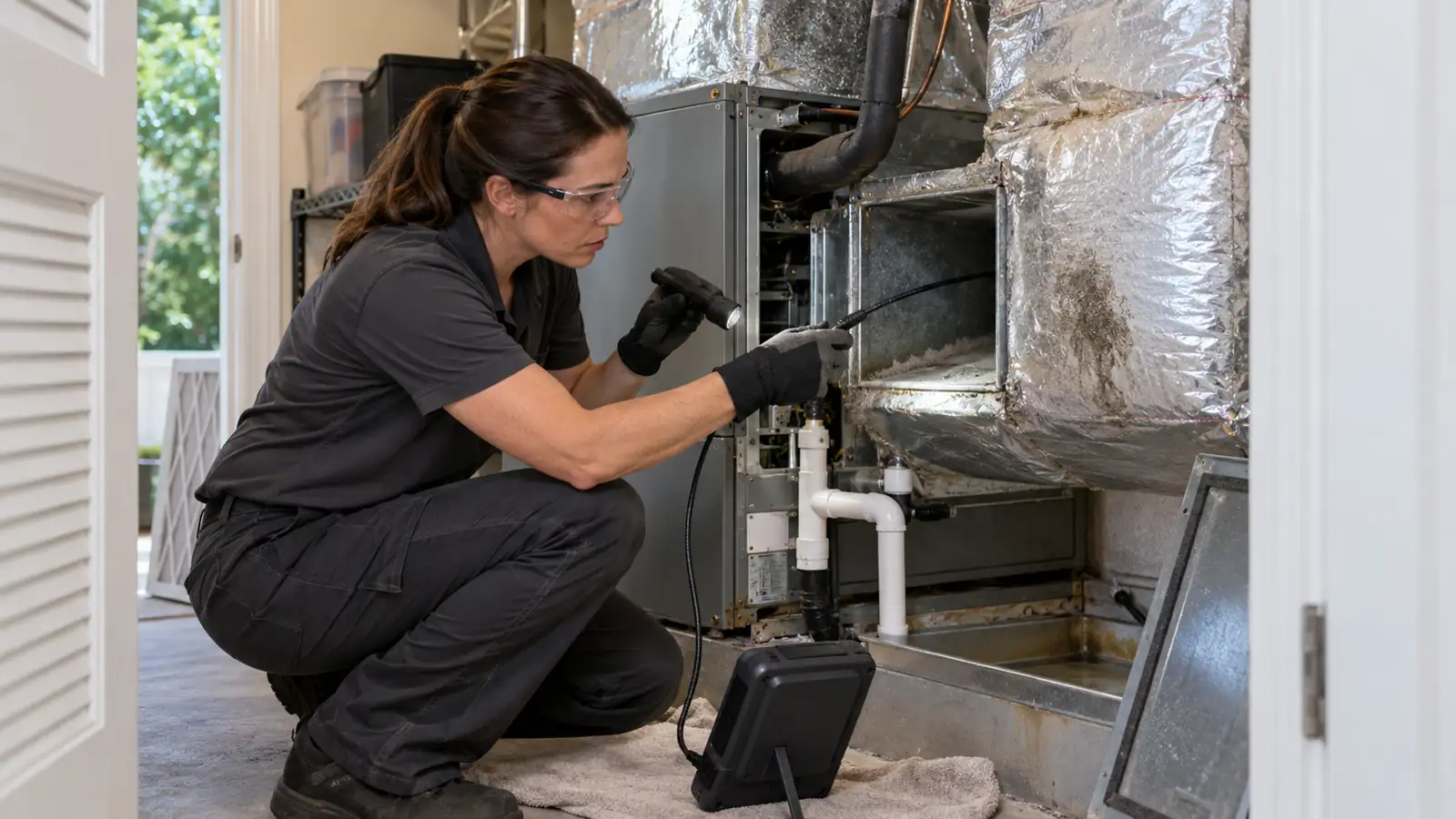
A source-focused inspection can separate a true duct problem from a leak, drainage issue, wet material, or surface odor.
Before authorizing cleaning:
- Note whether the odor appears only when the blower starts.
- Check visible registers, the filter area, and surrounding ceilings or walls without reaching into energized equipment.
- Record recent leaks, condensate overflows, smoke events, or renovation dust.
- Photograph staining, condensation, wet insulation, or residue.
- Ask whether the source has been corrected before cleaning begins.
If you need help deciding whether cleaning, testing, sealing, or a broader restoration response makes sense, call 352-505-3321. At The Best Restoration, we provide residential and commercial air duct cleaning, air duct testing, air duct sealing, and vent cleaning services.
What a Proper Duct Check Should Look At
The useful inspection area extends beyond the vent cover because odor and moisture can involve several connected components.
Supply and return paths
Registers and grilles are only the visible endpoints. Accessible supply ducts, return ducts, plenums, and connections may need review for residue, debris, damaged insulation, or moisture.
The air handler and moisture components
The coil, drain pan, condensate line, filter compartment, and nearby insulation deserve attention when the complaint is damp or musty air. A drainage problem or recurring condensation can keep moisture close to the air stream.
Adjacent building materials
Ceiling cavities, walls, carpet edges, closets, and insulation near ductwork can hold moisture and odor. A hidden water damage moisture map can help track re-wetting and compare affected areas with normal dry areas.
The 2025 ACR standard includes HVAC component inspections, scope development, cleaning procedures, and cleanliness verification.
When Duct Cleaning Makes Sense and When It Does Not
Cleaning is most useful when removable contamination is in the system and the condition that caused it has been corrected.
Cleaning may make sense when accessible duct or HVAC surfaces contain significant debris, smoke residue, or cleanable contamination. Our air duct cleaning services include duct cleaning, testing, sealing, and vent cleaning.
Cleaning is not the complete answer when the main problem is an active leak, saturated insulation, wet drywall, contaminated floodwater, or a damaged HVAC component. Wet or moldy fiberglass duct material may require replacement rather than ordinary cleaning.
This evidence-first approach also separates practical maintenance from common duct cleaning myths. A dusty grille alone does not prove the full duct system needs cleaning.
Seasonal Conditions That Can Change the Decision
Repeated moisture and heavy HVAC use can reveal problems that stay hidden during drier or lower-use periods.
- Wind-driven rain: Roof or exterior leaks can wet ceiling cavities, insulation, or duct wraps.
- Long cooling cycles: Condensation and drainage problems may become more obvious near cold components.
- Cold-snap plumbing failures: A leak can wet walls, ceilings, or mechanical areas.
- Tenant or seasonal turnover: Closed rooms, moved furniture, and filter changes can expose previously unnoticed odors.
- Smoke events: Residue may become noticeable when the HVAC starts moving air again.
An air duct cleaning storm-preparation plan should include the surrounding building, not just the duct interior.
What to Do Before a Duct Inspection
Simple documentation can narrow the source without disturbing wet, contaminated, or electrically unsafe areas.
- Write down when the odor starts and stops.
- Identify the rooms, units, or HVAC zones affected.
- Note recent leaks, smoke, construction, or condensation.
- Avoid spraying bleach, deodorizer, or unverified chemicals into vents.
- Avoid operating visibly wet equipment when electrical conditions are uncertain.
- Keep photos and maintenance notes together.
These steps are especially useful across older homes, commercial corridors, multi-tenant properties, rural properties, and seasonal visitor districts where one odor complaint may involve a single room, a shared return, or a broader moisture path.
Choosing Companies Offering Duct Inspections Before Cleaning
The contractor conversation should explain why cleaning is recommended and what evidence supports the scope.
When comparing companies offering duct inspections before cleaning, ask whether the evaluation covers more than registers.
You should understand which components will be checked, whether moisture or smoke changes the approach, what cleaning includes, and how the condition will be reviewed afterward.
Be cautious when a recommendation relies only on odor, a dusty grille, or a fixed interval. A stronger scope connects the recommendation to visible conditions, system history, moisture sources, and accessible findings.
When the Odor Is Part of a Bigger Restoration Problem
Duct cleaning should fit into the broader property response when water, smoke, or damaged materials extend beyond the HVAC system.
A musty vent after a leak may point to wet drywall or insulation. A smoky register after a fire may be only one part of soot and odor contamination. Re-wetting can also contribute to finish failure, corrosion, warping, and recurring odor.
Frequently Asked Questions
- Does a musty smell from a vent always mean the ducts need cleaning?
No. A musty odor may come from wet insulation, drywall, carpet, a return cavity, an air handler, or another damp area near the HVAC system. The timing and location of the odor help narrow the source. Cleaning makes more sense after the moisture path has been identified. - Should ducts be inspected after smoke damage?
An inspection can be useful if smoke or soot has reached the HVAC system or if the odor becomes stronger when the blower runs. The check should consider filters, accessible duct surfaces, returns, registers, and other affected materials rather than assuming the entire odor is inside the ducts. - Can duct cleaning remove every smoke odor?
Not necessarily. Smoke residue can affect walls, ceilings, carpet, upholstery, contents, and HVAC components at the same time. Duct cleaning addresses contamination within the air system. Other affected surfaces may require separate cleaning or restoration. - What causes musty air during heavy cooling periods?
Condensation, drainage problems, wet insulation, and moisture around mechanical components can all contribute. The smell may also come from another damp area that the return system is drawing air through. A moisture-focused inspection is more useful than masking the odor. - Can wet fiberglass duct insulation simply be cleaned?
Wet or visibly moldy fiberglass duct material may not be suitable for ordinary cleaning.
Moisture must first be corrected, and affected porous material may require removal and replacement by qualified personnel. - What should an air duct inspection include?
The scope may include accessible supply and return ducts, registers, plenums, filters, the air handler, coils, drain pans, and condensate drainage. Nearby insulation, ceilings, walls, and other materials should also be considered when moisture or odor is part of the complaint. - Does dust around a register mean the whole duct system is dirty?
Not by itself. Grilles and registers naturally collect visible dust because air moves across them. A cleaning decision should consider conditions farther inside the system, whether debris is substantial, and whether there is another identifiable contamination source. - Should you run the HVAC system after water gets near it?
Avoid operating equipment that is visibly wet or has uncertain electrical conditions. If water reaches the air handler, wiring, controls, or other concealed components, qualified personnel should evaluate the equipment before normal operation resumes. - Can a deodorizer or fragrance solve a musty duct smell?
Fragrance may temporarily cover an odor but does not correct a leak, wet insulation, condensation, or contaminated material. Spraying liquids or unverified products into the duct system can also complicate the problem. Source identification should come first. - What should property managers document before duct cleaning?
Record when the odor occurs, affected units or zones, recent leaks or smoke events, HVAC operating conditions, and visible staining. Photos of registers, ceilings, mechanical areas, and moisture can help show whether the problem is isolated or recurring. - What air duct services can we provide?
We provide residential and commercial air duct cleaning, air duct testing, air duct sealing, and vent cleaning services. The appropriate scope depends on what the inspection finds and whether a separate moisture, water damage, or smoke issue also needs attention.