
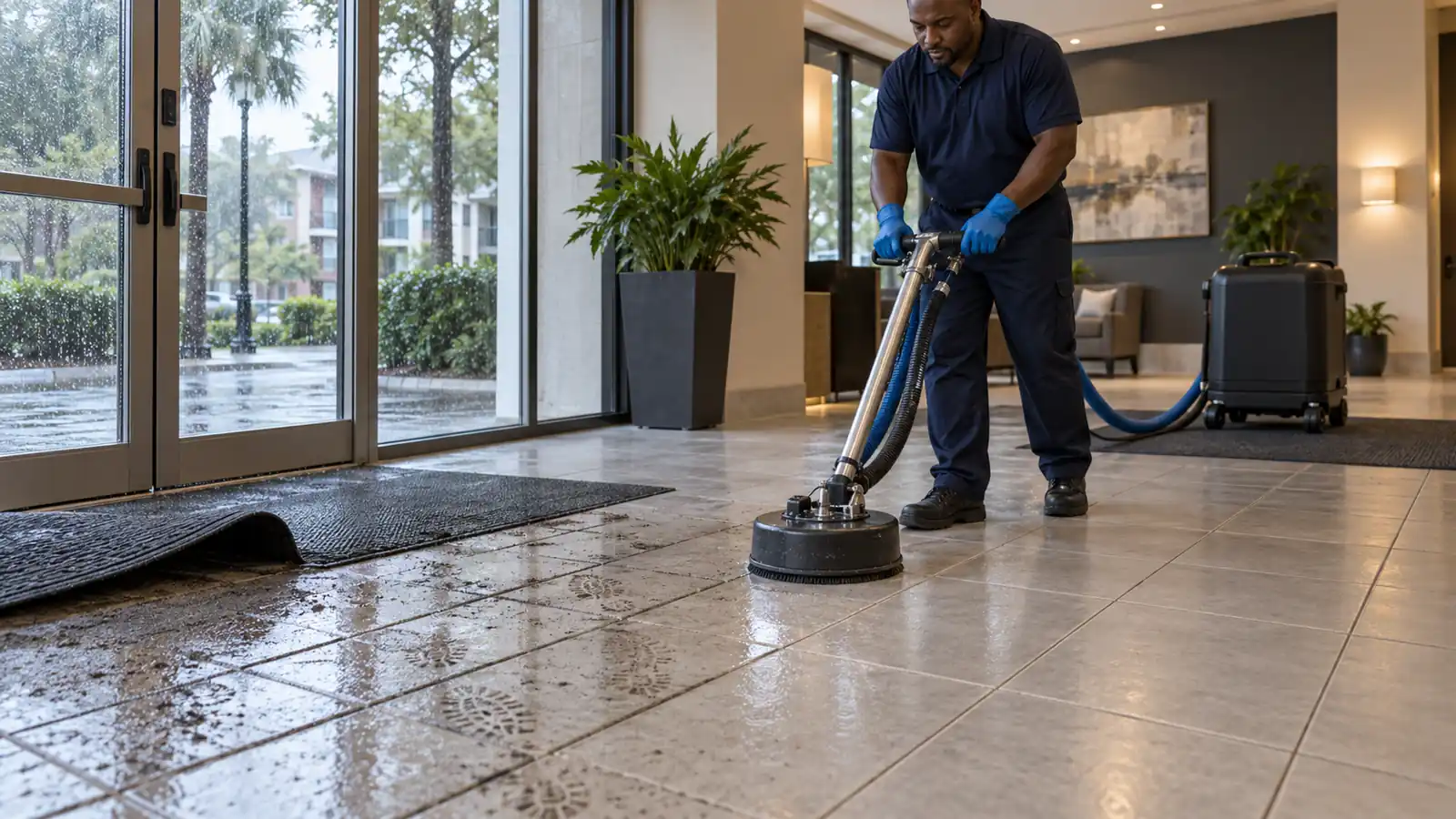
A tile floor can look clean after a quick mop, while the grout lines keep getting darker. Rainy periods make that contrast more noticeable.
Wet shoes carry fine soil indoors, entryways stay damp longer, and bathrooms, kitchens, laundry areas, lobbies, and commercial floors may see moisture from several directions at once.
The problem is not simply that rain makes floors dirty. Tile and grout behave differently. Many tile surfaces shed water and soil relatively well, while cement-based grout is more porous and usually sits slightly below the tile face.
Moisture, cleaning residue, and tracked-in dirt can therefore become more visible along the joints.
Understanding that difference helps you decide whether routine cleaning is enough or whether tile and grout cleaning Gainesville FL services make more sense for stubborn buildup.
Why Rainy Weather Makes Grout Lines Look Dirty Faster
Wet-weather soil, porous grout, and slower drying can create dark grout lines even when the surrounding tile still looks relatively clean.
Grout holds soil differently than tile
Grout contains small pores and surface irregularities that can retain moisture and fine debris. It is also commonly recessed below the tile surface. Dirty water can settle into those lower joints during foot traffic or cleaning.
The Tile Council of North America guidance on grout residue notes that grout joints tend to show dirt because they are often lower and more porous than the adjoining tile. Moisture can also move through a tile assembly and create discoloration that is not ordinary surface dirt.
Wet foot traffic adds more than water
Rainwater on footwear usually arrives with soil, organic debris, dust, and residue from exterior surfaces. As people cross an entry, hallway, restroom, kitchen, or lobby, that material mixes with water and moves into grout joints.
This effect is especially visible on pale grout and busy floors. Repeated wetting can make freshly mopped tile look acceptable while the grout gradually develops a gray or brown cast.
Slow drying makes existing buildup easier to see
Humidity, damp entryways, bathroom use, appliance moisture, and HVAC condensation can keep tile-heavy areas wet longer.
Recurring darkening, musty odor, cracked grout, or loose tile deserve more attention than ordinary tracked soil. Tile and grout warning signs before humidity peaks can help you separate routine maintenance from moisture-related warning signs.
What to Do When Grout Darkens After Rain
A simple cleaning sequence can reduce tracked soil without repeatedly pushing dirty water back into porous joints.
- Remove loose soil first. Vacuum or sweep before wet cleaning so grit does not turn into muddy cleaning water.
- Pick up wet footprints promptly. Do not allow puddles to remain around entrances, bathrooms, kitchens, or floor transitions.
- Use a cleaner suited to the tile and grout. More chemicals are not automatically better. Residue left behind can attract additional soil.
- Rinse and remove dirty water. Reusing cloudy mop water can spread suspended dirt across the floor and into recessed grout lines.
- Encourage complete drying. Use normal ventilation and moisture control where appropriate, especially in areas that repeatedly stay damp.
- Track recurring discoloration. If the same grout darkens after every rainfall or cooling cycle, inspect for a leak, condensation, or another moisture source. Practical habits to prevent grout yellowing also start with limiting excess moisture and addressing leaks.
If repeated mopping leaves the tile brighter but the joints remain dark, call 352-505-3321. At The Best Restoration, we begin our tile and grout process with an area inspection and damage notation, followed by pretreatment, scrubbing, pressurized steam cleaning, and grout sealing.
When Dirty-Looking Grout Points to More Than Soil
Grout discoloration sometimes acts as a moisture clue, especially when it returns in the same location after cleaning.
Watch for repeat wetting patterns
One dirty joint near an entrance may simply reflect traffic. A line that repeatedly darkens beside a wall, cabinet, toilet, appliance, exterior door, or HVAC area deserves a closer look.
Look for connected signs such as swelling baseboards, loose tile, cracked grout, stains, recurring odor, or a cool, damp area. A simple way to track hidden moisture after heavy rain is to compare repeat problem areas with nearby surfaces that remain dry.
Correct the moisture source before cosmetic cleaning
Cleaning cannot repair an active plumbing leak, a failed seal, roof intrusion, a condensate problem, or water moving below the tile assembly. Repeatedly cleaning a damp area may improve its appearance briefly while leaving the actual source unchanged.
Basic moisture control guidance calls for fixing water problems, drying wet materials, and keeping indoor moisture under control. If visible growth, contaminated water, or widespread damp materials are involved, avoid treating the situation as routine grout maintenance.
Why Mopping and Pressure Washing Grout Need Restraint
Cleaning methods should remove soil without flooding joints, damaging grout, or forcing additional water where it does not belong.
More mop water is not always better
A saturated mop can move dirt around instead of removing it. Grout lines can become collection points for cloudy water, detergent residue, and fine particles.
Use clean water as needed, change dirty cleaning solution, and remove rather than redistribute loosened soil. Pay particular attention to textured tile and recessed joints where dirty liquid naturally settles.
Pressure washing grout requires control
Pressure washing grout is different from ordinary mopping. Excessive water pressure can damage grout or contribute to problems around tile installation materials. Indoor surfaces also create splash, drainage, and moisture-management concerns.
If pressure cleaning is being considered for bathroom tile or similar surfaces, understand the risks before starting. Guidance on pressure washing bathroom tiles specifically cautions that excessive pressure can damage flooring and grout.
What Professional Tile and Grout Cleaning Should Address
Deep cleaning should target embedded buildup while also identifying damaged grout or tile before work begins.
A thorough scope should include:
- Inspection: Identify the areas being cleaned and their current condition.
- Damage notation: Note cracked grout, loose tile, stains, or other visible defects before cleaning.
- Pretreatment: Apply suitable cleaning products to loosen accumulated soil.
- Agitation and extraction: Scrub the surface and remove loosened grime rather than leaving dirty water behind.
- Grout protection: Evaluate sealing after the surface has been properly cleaned.
Our professional tile and grout cleaning process includes inspection, notation, pretreatment, scrubbing, pressurized steam cleaning with specialized equipment, and sealing grout lines. It is available for residential and commercial tile surfaces.
Professional cleaning is most useful when ordinary maintenance no longer lifts embedded soil. Crumbling grout, loose tile, persistent moisture, or unexplained staining may require repair or moisture investigation instead of stronger cleaning.
Keep Grout Cleaner Through Rainy Periods
Reducing the amount of water and soil that reaches the grout can slow visible buildup between deeper cleanings.
- Place absorbent mats at frequently used entrances and clean them before they become saturated.
- Vacuum or sweep grit before mopping.
- Wipe standing water instead of allowing it to air-dry in grout joints.
- Address plumbing leaks, condensation, and recurring wet spots instead of cleaning around them.
- Watch high-traffic grout during property turnovers and after periods of heavy rain.
- Avoid aggressive scrubbing or pressure when grout is cracked, loose, or deteriorating.
Seasonal tile maintenance works best when cleaning and moisture control support each other. Even an older summer tile and grout routine starts with recognizing that visible stains and dirt affect how the entire tiled surface looks.
Frequently Asked Questions
Why does grout look darker after rainy weather?
Wet footwear brings water and fine soil onto the floor. Because grout is often porous and recessed below the tile surface, that dirty moisture can settle into the joints. Repeated foot traffic can make the contrast between clean-looking tile and darker grout more obvious.
Does high humidity actually make grout dirty?
Humidity does not create dirt by itself. It can slow drying and make moisture-related discoloration more noticeable. When grout stays damp while collecting normal dust, cleaning residue, or foot traffic soil, buildup may become visible faster.
Can mopping make grout lines look worse?
Yes, particularly when the mop water is already dirty or too much cleaning solution remains on the floor. Cloudy water can settle into recessed grout joints. Removing loose soil first and changing dirty water help reduce redistribution.
Is pressure washing grout a good cleaning method?
It requires caution. Excessive pressure can damage grout and may introduce unnecessary water around the tiled assembly. The condition of the grout, tile, substrate, drainage, and surrounding materials should be considered before using pressure.
How can you tell whether dark grout is dirt or moisture?
Look at the pattern. Traffic soil often follows walking paths, while moisture may recur around walls, fixtures, appliances, doors, or known leak areas. Odor, loose tile, cracked grout, swollen trim, or repeat darkening after rain can justify a broader moisture check.
Should cracked grout be cleaned before it is repaired?
Loose dirt can be removed carefully, but aggressive cleaning should not substitute for evaluating damaged grout. Cracks may allow water to move into areas that are harder to dry. Determine why the grout failed before repeatedly soaking or scrubbing it.
Does grout sealing prevent all rainy-weather staining?
No. Sealing can help grout resist stains and liquids, but it does not correct active leaks, damaged grout, or moisture moving from below the tile. The surface should be properly cleaned and its condition evaluated before sealing.
How often should professional grout cleaning be scheduled?
There is no single interval that fits every property. Traffic, grout type, bathrooms, cooking areas, pets, entryway exposure, and cleaning practices all affect buildup. Use appearance and condition rather than an arbitrary calendar date to decide when deeper cleaning is needed.
What should property managers inspect during rainy periods?
Check entrances, common-area tile, restrooms, utility rooms, kitchens, HVAC closets, and floor transitions. Track repeating stains, wet mats, damaged grout, loose tile, odors, and tenant reports so recurring moisture does not get mistaken for ordinary dirt.
What happens during professional tile and grout cleaning?
Our process starts with an inspection and notation of existing tile or grout damage.
Pretreatment and scrubbing are followed by pressurized steam cleaning with specialized equipment, and the grout lines are then sealed.
When is grout discoloration more than a cleaning problem?
Treat it as a broader property issue when the same area repeatedly becomes damp, an odor returns, tile loosens, grout crumbles, or nearby materials show water damage. At that point, source identification and moisture control should come before cosmetic cleaning.