Call Us Today 352-505-3321


Fort White Water Removal Checklist for Summer Rain Risks
Fort White water removal is not only about getting visible water off the floor. In North Central Florida, summer rain can arrive fast, soak already-wet soil, and push moisture toward slabs, crawlspaces, garages, and lower rooms. Properties near river corridors need extra attention when runoff carries sediment toward low entries.
Older homes, rentals, and commercial buildings also face hidden plumbing age. A supply line, toilet seal, water heater, ice maker line, or washing machine hose can fail while storms stress roofs and drainage. Your first priorities are safety, source control, documentation, extraction, drying, and contamination awareness.
Immediate Water Removal Checklist
Use this checklist to organize the first decisions after sudden indoor water damage, flooding, or storm water intrusion.
1. Check safety before entering
Do not step into standing water if electrical outlets, cords, appliances, or the panel may be involved. If the building has shifted, ceiling materials are sagging, or storm damage has exposed the interior, wait for appropriate professionals.
Floodwater can hide debris, animals, fuel, sewage, and unstable flooring. Use the flooded homes cleanup guidance as a safety reference before re-entering a seriously affected area.
2. Stop the source when it is safe
Shut off the water supply if a pipe, fixture, appliance, or water heater is leaking. If roof damage is allowing rain inside, protect belongings without climbing onto wet roofs or unsafe ladders. For river runoff or flash flooding, source control may mean waiting until the water stops entering.
3. Document the damage
- Take photos and short videos before moving items.
- Capture water lines, wet floors, damaged inventory, soaked carpet, ceiling stains, and affected cabinets.
Property managers should document unit numbers, common areas, tenant reports, and discovery time.
4. Remove standing water and wet items
Standing water keeps soaking into porous materials. Move dry items out of the wet zone first. Then separate wet rugs, upholstery, cardboard, and contents that trap moisture. Fort White water removal services may be relevant when water has spread under the carpet or behind the walls.
5. Start drying, not just cleaning
Mopping is not enough when water reaches drywall, baseboards, cabinets, subflooring, or carpet padding. Air movement, dehumidification, and moisture checks help show whether materials are drying or only looking dry. Review these water damage restoration tips for early cleanup concerns.
Source-Specific Risks: Rivers, Plumbing, Septic, and Rain
Different water sources create different cleanup decisions when contamination, hidden moisture, or repeated intrusion may be involved.
River and runoff flooding
River-adjacent properties around Fort White need a different mindset than homes with a clean supply line leak. The Ichetucknee River system connects with the Santa Fe River, and heavy summer rain can raise concerns around runoff, saturated ground, and low-entry water intrusion. Treat outdoor floodwater as potentially contaminated.
Flood damage cleanup in Gainesville often focuses on removal, drying, and damaged material decisions. The same priorities apply in Fort White. If water enters from outdoors, flood damage cleanup may involve more than extraction because sediment and contaminants can remain after water recedes.
Older plumbing failures
Older plumbing can fail quietly. A pinhole leak behind a vanity, a soft supply line under a sink, or a worn toilet connection may wet the flooring for days. Look for cupping floors, loose tiles, bubbling paint, swollen baseboards, musty odors, and stains that return after wiping.
For sudden indoor leaks, review what to do when water damage occurs and focus on fast source control. In apartments and commercial spaces, check adjacent rooms and shared walls because water can travel through cavities and under flooring.
Septic backups
Septic backups require more caution than clean water leaks. Avoid direct contact with floodwater or wastewater that may contain sewage, and keep people away from affected rooms until cleanup decisions are made.
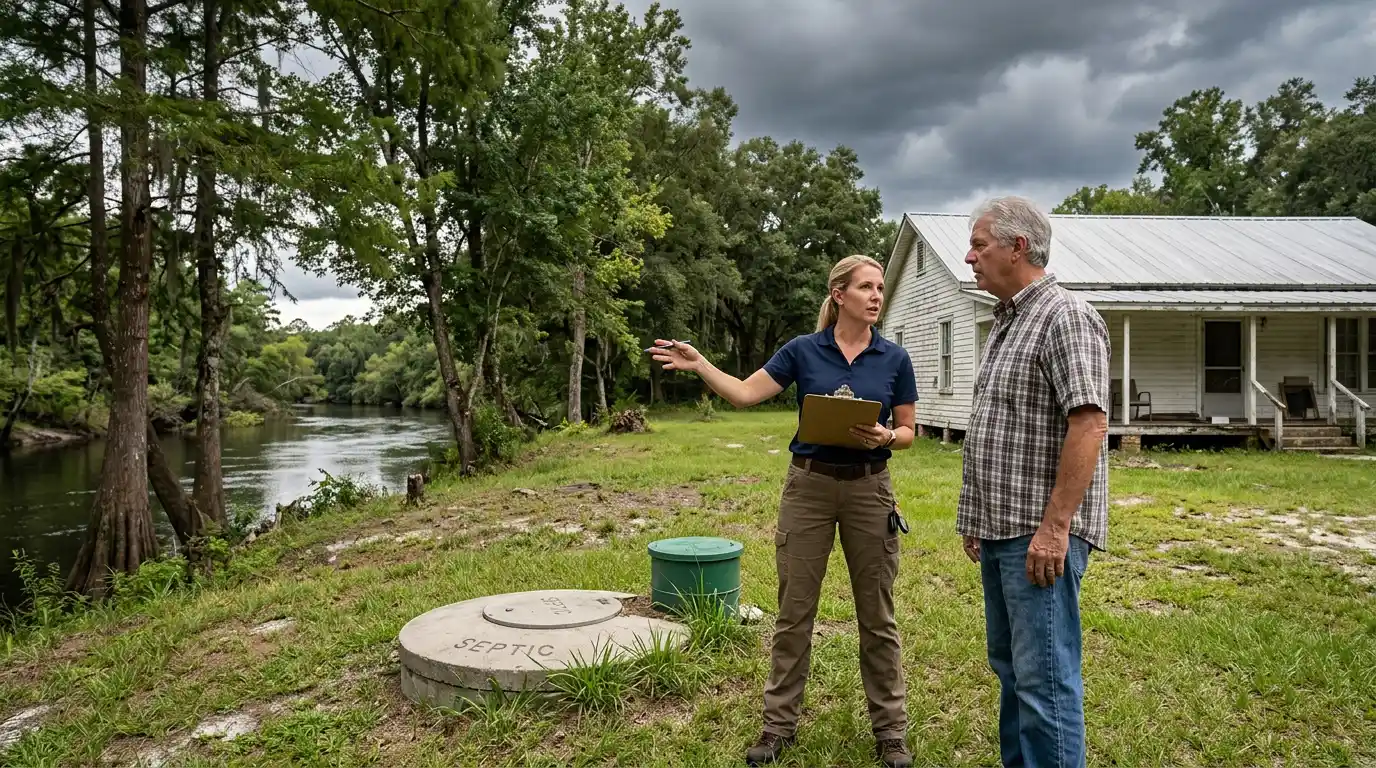
Public health guidance for septic or onsite wastewater systems warns that heavy rains and flooding can damage sewer systems and cause untreated wastewater overflows.
- Do not run extra water through fixtures during a suspected backup.
- Reduce use, protect unaffected areas, and keep porous contents away from the contaminated zone.
For commercial kitchens, offices, and rental units, restrict access and document affected areas.
Summer rain and roof leaks
Wind-driven rain can enter through roof damage, failed flashing, windows, doors, and wall penetrations. Ceiling stains after a storm may mean insulation, attic materials, and wall cavities are wet. If water drips near lights or electrical fixtures, avoid the area and get qualified help.
When water has entered from river runoff, older plumbing, septic backup, or summer rain, use the checklist to stabilize the situation and arrange qualified water extraction and cleanup support before hidden moisture spreads into additional rooms.
Cleanup and Restoration Decision-Making
The right cleanup path depends on the water source, affected materials, and how long moisture has been present.
Clean water versus contaminated water
A broken supply line is different from floodwater or sewage. Clean water may still damage drywall, wood, carpet, and cabinets, but contaminated water changes the risk profile. Outdoor flooding, toilet backups, and septic events may require removal of porous materials that cannot be cleaned reliably.
Hidden moisture matters
Dry surfaces can mislead you. Moisture often remains behind baseboards, inside wall cavities, beneath cabinets, under vinyl, or below carpet padding. The water damage restoration process can help you understand why extraction, drying, ventilation, and material decisions work together.
Contents and soft materials
Carpet, area rugs, upholstery, and stored fabrics absorb water quickly. Clean rainwater from a small leak may call for different decisions than floodwater or sewage. If soft materials smell musty, stay wet, or come into contact with contaminated water, separate them from clean areas.
Carpet cleaning, upholstery cleaning, area rug cleaning, tile and grout cleaning, and air duct cleaning may become relevant after the source is corrected and the space is dry.
Preventing Repeat Water Damage in Fort White Properties
Prevention depends on seasonal checks, plumbing awareness, drainage maintenance, and fast response when water returns.
Before summer storms
Clean gutters, extend downspouts away from foundations, check door thresholds, and inspect roof penetrations. Walk the property after heavy rain to see where water pools. Improve grading where runoff repeatedly moves toward entries.
For older homes and buildings
Replace brittle supply lines, inspect shutoff valves, monitor water heaters, and watch for slow leaks under sinks and behind toilets. In vacant units or seasonal spaces, schedule routine checks so small leaks do not sit unnoticed in Florida’s humidity.
After any water event
Do not judge recovery by appearance alone. Recheck odor, baseboards, flooring texture, and wall stains over the next several days. Use home water damage tips to keep the prevention mindset active after immediate cleanup. Fort White water removal works best when source control, drying, and repair planning happen in the right order.
Frequently Asked Questions
1. What should you do first after water enters a Fort White property?
- Start with safety.
- Avoid standing water near electricity, sagging ceilings, damaged walls, or storm-exposed areas.
- Then stop the source if you can do so safely, document the damage, and begin separating dry items from wet materials.
2. Is river runoff treated differently from a broken supply-line leak?
Yes. Water from outdoors may contain sediment, debris, and contaminants even when it looks clear. A broken supply line may start as cleaner water, but it can still damage drywall, flooring, cabinets, and contents if drying is delayed.
3. Why are older plumbing systems a concern during summer rain?
Older plumbing may already be weakened by corrosion, loose fittings, worn seals, or outdated supply lines. Heavy rain can distract from indoor leaks because stains, damp flooring, and musty odors may be blamed on the weather instead of plumbing.
4. What signs suggest hidden moisture after water removal?
Watch for musty odors, bubbling paint, soft drywall, swollen trim, warped flooring, loose tiles, and stains that return after wiping. These signs may point to moisture behind surfaces or under flooring, not just visible water.
5. Should wet carpet always be removed?
Not always. The decision depends on the water source, how long the carpet stayed wet, whether the padding is saturated, and whether contamination is involved. Carpet affected by floodwater or sewage needs more caution than carpet affected by a small clean-water leak.
6. What should renters do after water damage?
Renters should protect their safety first, document visible damage, and notify the property manager or landlord promptly. Avoid discarding items before taking photos unless they create an immediate hazard or block safe movement.
7. How should property managers handle water in multiple units?
Start by identifying the source and restricting access to wet or contaminated areas. Then document affected units, shared walls, ceilings, flooring transitions, tenant reports, and common areas so cleanup decisions are organized.
8. What makes septic backups different from other water damage?
A septic backup can involve wastewater, so contact with affected water and porous materials should be avoided. Reduce fixture use, keep people away from the affected area, and separate clean areas from contaminated rooms.
9. Can a roof leak cause mold concerns in Florida’s humidity?
Yes. Roof leaks can wet insulation, ceiling materials, attic spaces, and wall cavities. Florida humidity can slow drying, so stains, odors, and damp materials should not be ignored after summer rain.
10. What should commercial spaces prioritize after water intrusion?
Commercial spaces should protect people, limit access, document affected areas, and identify the source quickly. Inventory, flooring, customer areas, restrooms, equipment rooms, and tenant spaces may all need separate review.
11. How can you reduce repeat water damage before summer storms?
- Clean gutters, extend downspouts, check roof penetrations, inspect door thresholds, and watch where water pools after rain.
- Also check supply lines, shutoff valves, water heaters, and under-sink areas in older homes or vacant units.