Call Us Today 352-505-3321


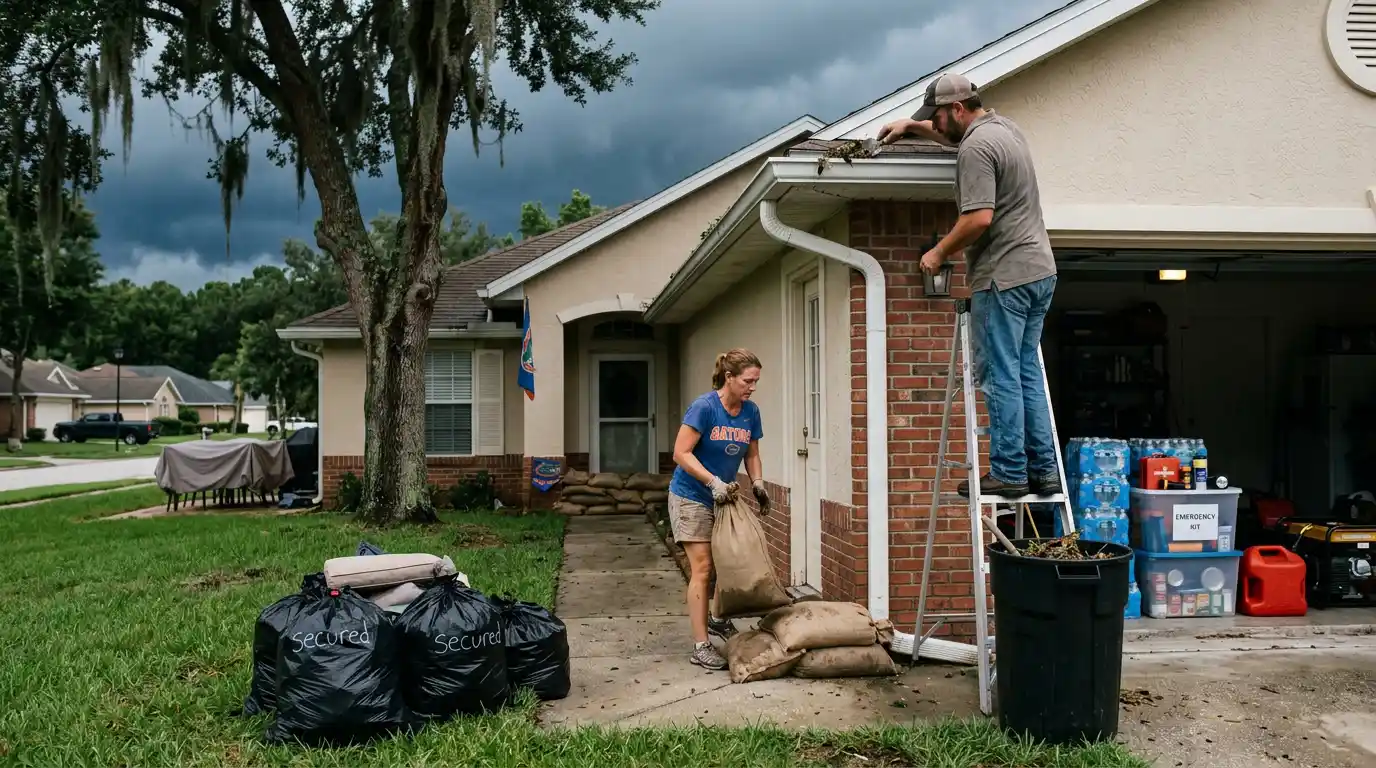
Gainesville 48-Hour Water Damage Plan Before Heavy Rain
In Gainesville, the first major downpour rarely arrives neatly. A calm afternoon can turn into wind-driven rain, clogged gutters, patio runoff, and damp flooring near a back door. North Central Florida properties also have familiar weak points: older rooflines, low yard spots, appliance leaks, and HVAC leaks.
A 48-hour water damage plan gives you a clear sequence before a small intrusion becomes a larger property damage cleanup problem.
Why 48 Hours Matter Before Gainesville Rain
A short preparation window can reduce water entry, speed decisions, and limit avoidable damage.
Water finds small openings first
Heavy rain can slip under worn door sweeps, back up through clogged exterior drains, follow roof flashing, or collect against a slab edge.
- Walk the property before the forecast worsens.
- Look for stained soffits, loose shingles, cracked caulk, packed gutters, low mulch against siding, and pooling near downspouts.
For more pre-storm maintenance ideas, review guidance on preventing water damage in your home.
Humidity can slow recovery
After the rain stops, damp materials can stay wet in humid indoor air. Closed rooms, packed closets, wet carpet padding, and furniture pushed tight against walls can trap moisture. Your plan should address prevention, response, and the first drying decisions after water appears.
The First 24 Hours: Reduce Entry Points
Use this phase to keep rain and runoff away from vulnerable materials.
Start outside, where runoff begins
- Clear leaves from gutters, downspouts, channel drains, and porch drains.
- Extend downspouts away from the foundation when possible.
- Move leaves, mulch, and loose soil away from thresholds.
- Check that splash blocks point water away from the structure, not back toward the slab.
On lower-lying properties, note how water usually moves across the yard. A low patio, driveway dip, or blocked swale can direct storm water toward the building.
Move contents above floor level
Lift cardboard boxes, area rugs, electronics, files, and fabric items off the floor in garages, storage rooms, closets, and lower-level areas. In commercial spaces, raise records, inventory, and tenant materials near exterior doors or plumbing rooms.
This step matters in rental homes, apartment communities, and mixed-use buildings because one wet hallway or office suite can disrupt tenants, staff, customers, and vendors.
Check indoor water risks
Rain is not the only trigger. Inspect washing machine hoses, dishwasher connections, water heater pans, refrigerator supply lines, sinks, toilets, and HVAC drain lines. A plumbing failure during heavy rain creates confusion.
Place a flashlight, towels, plastic sheeting, gloves, and a phone charger where you can find them quickly.
The Next 24 Hours: Build a Response Path
Set your safety, documentation, and decision steps before water gets inside.
Set safety rules before water enters
- Do not enter standing water if outlets, cords, appliances, or electrical panels may be wet.
- Stay away from storm water that may contain debris, sewage, chemicals, or sharp objects.
- If water is rising, the ceiling sags, or you smell gas, leave the area and involve emergency or utility professionals.
For property managers, the plan should include after-hours access, tenant communication, vendor contacts, and shutoff locations.
Document normal conditions
Before the rain starts, take photos or videos of vulnerable rooms, exterior doors, roofline trouble spots, mechanical rooms, and stored contents. If water enters later, document the source if it is safe. Documentation supports repair planning if moisture spreads behind walls, under flooring, or into contents.
Know when DIY stops being reasonable
Small clean-water spills on hard flooring may be manageable when handled immediately. Bigger problems need different judgment. Wet carpet, soaked padding, wall staining, ceiling leaks, storm runoff, sewage concerns, or water in multiple rooms can require water extraction services, drying decisions, and material removal.
When the Downpour Hits: Triage Without Creating More Risk
These steps help you respond during active rain or immediately after water intrusion.
Stop the source when it is safe
If the problem is a supply line, fixture overflow, or appliance leak, shut off the water at the fixture or main valve only if safe. For roof leaks or rain, place a container under dripping water and move contents away. Do not climb onto a wet roof or use electrical equipment near water.
For broader storm runoff, flood damage cleanup in Gainesville may involve saturated flooring, wall cavities, odors, and trapped moisture.
Separate clean leaks from questionable water
Water from a clean supply line is different from water that entered from outside, backed up from a drain, or touched a toilet overflow. Treat questionable water with caution. Keep children, pets, tenants, and customers away from affected areas until the situation is evaluated.
Avoid cleanup mistakes
- Do not cover wet carpet with plastic.
- Do not paint over stains before drying is complete.
- Do not mix cleaning products.
- Do not move heavy, saturated furniture without help, especially on slippery floors.
- Start with people, source control, documentation, dry-content protection, and cautious water removal from hard surfaces.
After Water Is Out: Drying, Cleaning, and Repair Decisions
Think beyond puddles and plan the next recovery stage.
Look beyond visible water
Water removal is only the start. Moisture can remain under plank flooring, behind baseboards, inside wall cavities, beneath cabinets, and under carpet padding. Musty odors, cool wall sections, bubbling paint, swelling trim, or recurring dampness can signal hidden moisture.
Use what to do when water damage occurs as a reminder that quick action and careful cleanup decisions help reduce secondary damage.
Treat soft goods as time-sensitive
Carpet, upholstery, area rugs, and fabric contents absorb moisture quickly. Some items may need cleaning, drying, or removal depending on the water source, saturation, material, and how long they stayed wet. Do not stack wet rugs or cushions in a closed room.
If furniture gets wet, review basic furniture-drying decision points before you move or discard items.
Plan repairs after mitigation
Repairs should follow moisture control. Replacing baseboards, repainting walls, reinstalling flooring, or closing cavities too early can trap damp materials. The water damage restoration process can include assessment, water removal, drying, cleaning, and restoration decisions depending on the situation.
Commercial owners and apartment managers should also think about access control, tenant notices, affected inventory, odors, and business interruption.
Keep the Plan Ready for the Next Storm
Use what you learned during the first storm to improve the next response.
- After the first big downpour, update your checklist.
- Note where water pooled, which doors leaked, which drains clogged, and which rooms smelled damp.
- Replace wet cardboard storage with plastic bins.
- Keep gutters clear throughout the season. Inspect roof leak stains after each heavy rain.
Use water damage restoration tips to refine your plan after each event. Gainesville properties face rain, humidity, runoff, plumbing failures, and sudden indoor leaks. A prepared response helps you act with less panic when the next storm arrives.
Frequently Asked Questions
1. What should I do 48 hours before a major Gainesville downpour?
- Start outside with gutters, downspouts, drains, thresholds, and low yard areas.
- Move vulnerable contents off floors in garages, closets, storage rooms, and lower-level spaces.
- Then check appliance connections, plumbing fixtures, and HVAC drain areas for signs of leakage.
2. How do I know whether my home is at a higher risk for water intrusion?
Watch areas where water has pooled before, especially patios, slab edges, crawlspace openings, and garage entries. Inside, look for staining, musty odors, swelling trim, or repeated dampness near walls and flooring. Older homes, rental properties, and buildings with past leaks deserve extra attention before heavy rain.
3. What should I do first if water enters during a storm?
- Protect people before property.
- Avoid standing water near electrical items, sagging ceilings, contaminated water, or storm debris.
- If the source is safe to reach, stop it, document the damage, and move dry contents away from the affected area.
4. Is storm runoff different from a clean water leak?
Yes. Water from outside can carry dirt, debris, chemicals, sewage, or other contaminants. Treat storm runoff with more caution than a clean supply-line leak. Keep people and pets away from affected areas until cleanup decisions are clear.
5. Can a wet carpet dry on its own after a small leak?
Sometimes surface dampness dries, but carpet padding and subfloor materials can hold moisture. A room may look dry while hidden areas remain damp. If the carpet is saturated, smells musty, or was touched by questionable water, evaluate it carefully before keeping it.
6. What should property managers do before heavy rain?
- Confirm access to shutoffs, mechanical rooms, vacant units, and roof or drain problem areas.
- Share reporting instructions with tenants or staff before the weather worsens.
- Document normal conditions in common areas, commercial suites, storage spaces, and known leak-prone rooms.
7. Should I use fans after water damage?
- Use caution. Fans may help dry clean, minor dampness when materials are not contaminated and no visible mold is present.
- Do not use electrical equipment near standing water or wet outlets.
- If mold, sewage, storm runoff, or major saturation is involved, get a proper evaluation before forcing air through the space.
8. When should repairs begin after water intrusion?
Repairs should begin after moisture has been addressed. Painting, replacing trim, installing flooring, or closing wall cavities too early can trap damp materials. A repair plan should follow water removal, drying decisions, cleaning needs, and any necessary material removal.
9. What are common hidden moisture signs after Florida rain?
Watch for musty odors, cool wall sections, soft drywall, bubbling paint, swelling baseboards, and cupping or lifting flooring. Repeated dampness near the same door, window, or cabinet can point to a recurring source. Do not rely only on visible puddles when judging the extent of damage.
10. How can I reduce mold concerns after water damage?
- Act quickly to remove water, separate wet items, and improve drying conditions when safe.
- Do not stack wet rugs, close damp rooms, or ignore wet padding under carpet.
- Because Florida humidity can slow drying, hidden moisture should be taken seriously after rain, leaks, or flooding.