
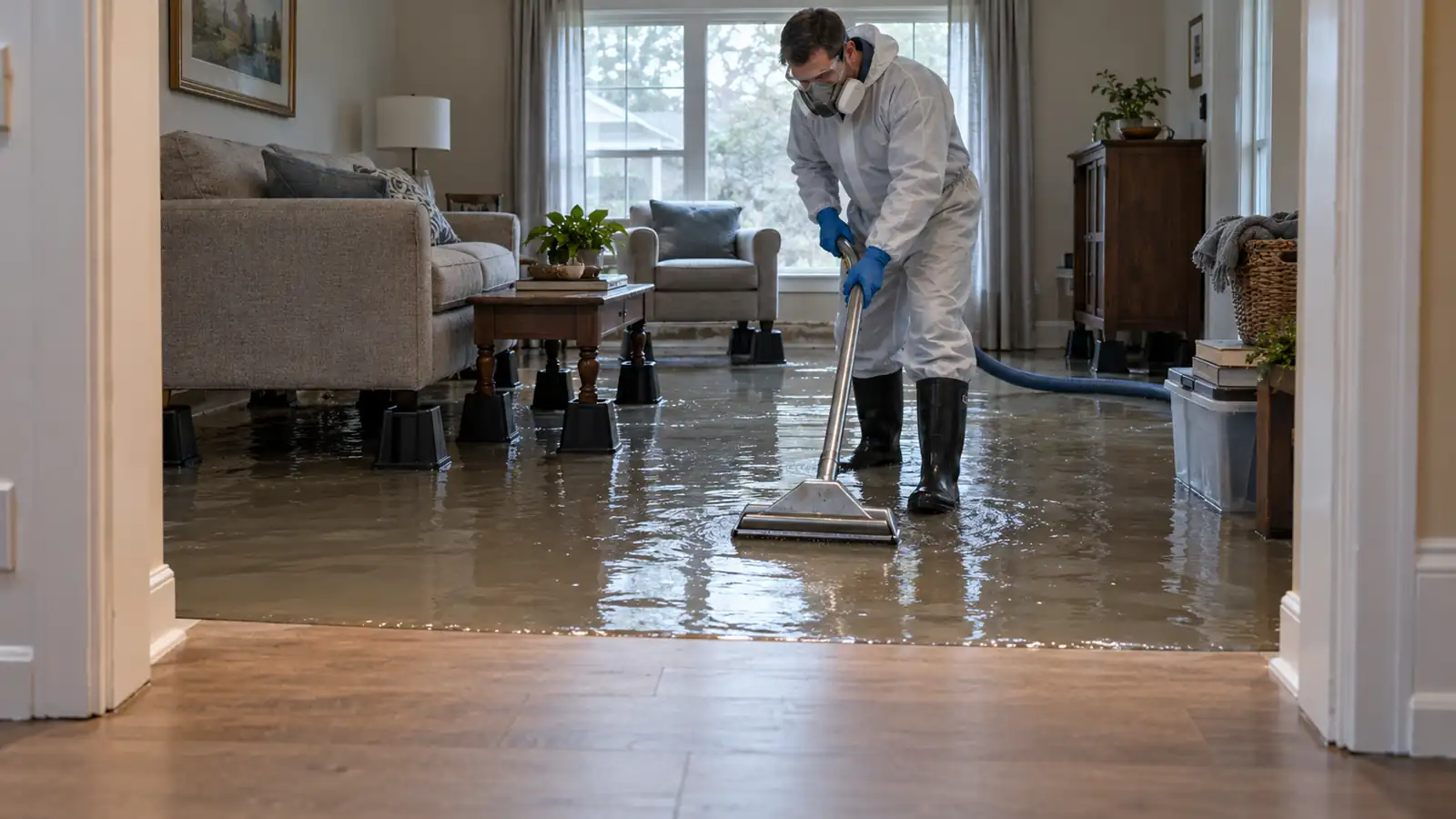
A flooded room changes quickly. Water can move under furniture, follow flooring seams, wick into baseboards, and reach wall cavities before the surface looks dramatically worse.
Wind-driven rain, long cooling cycles, brief cold snaps, and seasonal tenant turnover can all expose water problems.
For homeowners, business owners, and property managers, the first objective is not cosmetic cleanup. It is to stop water from spreading, protect people, separate wet contents from dry areas, and begin controlled removal without creating new hazards.
Make Safety the First Cleanup Decision
Before moving furniture or extracting water, determine whether the affected area is safe enough to enter.
Floodwater can involve electrical hazards, unstable materials, sewage, chemicals, sharp debris, or damaged utilities.
Do not step into standing water to reach an electrical panel or handle wet electrical equipment. If you smell gas, see structural movement, or find a sagging ceiling, leave the area and use qualified help.
CDC flooded-home safety guidance recommends controlling electrical hazards before working around standing water and taking precautions during reentry.
How to Start a Flooded House Cleanup in the Right Order
An organized response helps keep contaminated water out of clean rooms and reveals where moisture is already moving.
- Stop the source when safe. Shut off an accessible plumbing supply or address another controllable source without entering hazardous water.
- Limit access. Keep children, pets, tenants, customers, and unnecessary foot traffic out of the wet zone.
- Document conditions. Photograph the waterline, affected rooms, wet contents, visible damage, and apparent source.
- Protect dry areas. Create a path for moving equipment and contents without dragging wet materials through unaffected rooms.
- Remove standing water. Begin with bulk water before relying on air movement and dehumidification.
- Map the wet boundary. Check beyond the puddle because moisture may already be under the flooring or inside the walls.
Professional flood damage cleanup can combine extraction, drying, moisture detection, cleaning, and later repair decisions when several materials are affected.
Protect Furniture Without Spreading Water Further
Contents can carry water into clean areas if they are moved without a plan.
Move small dry or lightly affected items away from advancing water when the path is safe. Do not drag saturated upholstery, rugs, cardboard, or stored goods across dry flooring. If a heavy piece cannot be moved safely, protecting or elevating it may be more practical until extraction begins.
Keep dry items separate from wet ones. Upholstered furniture, engineered wood, particleboard, and absorbent contents can hold moisture below the visible surface, so appearance alone should not determine whether an item is dry.
Remove Standing Water Before It Reaches Hidden Layers
Bulk extraction reduces the water available to soak into walls, flooring systems, cabinets, and contents.
Dedicated water extraction may use pumps, industrial vacuums, air movement, and dehumidification as conditions require. Removing visible water is the first control step, not proof that cleanup is finished.
If you are asking how to clean up flood damage, think in layers. Water may already have reached seams, padding, underlayment, subflooring, baseboards, or lower drywall.
A guide comparing water removal with full restoration helps separate extraction from the drying, cleaning, material decisions, and repairs that may follow.
Check Walls and Flooring Beyond the Visible Waterline
The inspection area should extend beyond the puddle because concealed materials can stay wet.
Walls can wick moisture upward
Baseboards may hide wet drywall edges. Water can move through trim gaps, drywall paper, insulation, framing, or utility penetrations. Bubbling paint, soft drywall, swollen trim, staining, or a returning musty odor can indicate a wider wet area.
A practical guide to flood cleanup around walls and flooring explains why surface removal alone does not confirm that concealed assemblies are dry.
Flooring can trap water underneath
The carpet may feel less wet while the pad remains saturated. Floating floors can trap moisture beneath planks. Wood can swell or cup. Cabinets can also hold water at toe kicks and concealed bases.
Avoid covering damp floors with rugs, boxes, replacement flooring, or new finishes. Trapped moisture can contribute to odor, warping, corrosion, mold, and finish failure.
Dry the Structure Without Guessing
Drying should address moisture in materials and indoor air without spreading contamination.
Use airflow only when conditions support it
After standing water is controlled, ventilation, air movement, and dehumidification may help wet materials release moisture. Floodwater from outdoors or an uncertain source should be treated cautiously because it may contain contaminants.
The EPA flood-cleanup guidance emphasizes safe cleanup, material sorting, cleaning, and complete drying.
Verify hidden moisture before repairs
A wall or floor can feel dry while concealed layers remain damp. Hidden-moisture detection can help define where water traveled and whether materials are approaching stable dry conditions.
This matters when deciding how to clean up water damage after puddles disappear. Surface appearance should not decide when to repaint, reinstall flooring, reset cabinets, or close a wall.
Decide What Can Be Cleaned, Dried, or Removed
Material type, contamination, saturation, damage, and drying potential should drive salvage decisions.
Furniture needs material-specific decisions
Hard, nonporous components may be easier to clean and dry than absorbent upholstery, cushions, composite wood, or swollen furniture cores. A dry exterior does not prove the interior is dry.
Building materials need the same scrutiny
Drywall, insulation, carpet padding, trim, flooring, cabinets, and wall coverings respond differently after saturation. Some can be cleaned and dried. Others may be too damaged, contaminated, or difficult to dry reliably.
When people ask, “How do you clean up water damage?” The answer is not one product. The sequence is source control, safe extraction, material evaluation, drying, cleaning as appropriate, moisture verification, and then repair.
Account for Seasonal and Property-Specific Water Sources
The likely source changes throughout the year, but stopping re-wetting always matters.
Across year-round residential and commercial properties, wind-driven rain can expose your roof to damage. Long cooling cycles can reveal condensate problems.
Short cold periods can stress plumbing. Tenant or seasonal turnover can uncover leaks behind furniture, under sinks, or around appliances.
A seasonal hidden-water inspection map can help you check exterior openings, HVAC areas, cabinets, flooring edges, and wall surfaces after changing weather or building use.
Know When Flood Cleanup Has Become Restoration
Cleanup should lead into repair only after the active water problem is controlled and materials are stable.
Confirm moisture conditions
Do not rebuild because the surface feels dry. Investigate persistent odors, swelling, staining, soft finishes, or elevated moisture readings.
Repair after the substrate is stable
Paint, flooring, trim, cabinets, adhesives, and sealants need suitable substrates. Installing them over damp materials can trap moisture and contribute to later failures.
A flooded house cleanup works best in sequence: protect people, stop water movement, extract what you can safely reach, protect unaffected contents, identify concealed moisture, dry and clean affected materials, and verify conditions before repairs begin.
Frequently Asked Questions
What is the first thing I should do when my house floods?
Start with safety rather than cleanup. Stay out of standing water if electricity, structural damage, contaminated water, or damaged utilities may be involved. Once conditions are safe, stop an accessible water source, restrict access, document the loss, and begin controlling the spread.
Should I move furniture before removing the water?
Moving furniture only when doing so is safe and will not spread contaminated water into dry rooms. Small dry items near the advancing waterline may be moved first. Saturated upholstery, heavy furniture, and unstable items may need to remain in place until water extraction creates a safer working area.
Can I use a wet-dry vacuum during flood cleanup?
A wet-dry vacuum may be useful for some standing water when electrical conditions are safe and the equipment is appropriate for wet use. Never operate electrical equipment while standing in water or in a potentially energized area. Large, contaminated, or structurally complicated losses may require specialized extraction.
How do I clean up flood damage from walls?
First, determine how far the moisture traveled. Baseboards, drywall paper, insulation, framing, and wall cavities may stay wet after the surface looks better. Cleaning visible staining is not enough if moisture or contaminated materials remain behind the finish.
How do I clean up water damage from flooring?
Remove standing water first, then evaluate the complete flooring assembly. Carpet padding, underlayment, subflooring, floating-floor seams, wood, and cabinet bases can retain moisture underneath. Do not install replacement flooring until underlying materials have been checked and properly dried.
What if I do not know whether the floodwater is contaminated?
Treat uncertain outdoor floodwater cautiously. It may contain microorganisms, sewage, chemicals, soil, or other contaminants that change cleanup and disposal decisions. Limit unnecessary contact and get qualified guidance when water has affected porous materials, multiple rooms, HVAC components, or difficult-to-access spaces.
Should I turn on fans immediately after flooding?
Not automatically. First, control standing water and consider whether contamination or existing mold could be spread by air movement. Once conditions support drying, ventilation, air movement, and dehumidification can help remove moisture from materials and indoor air.
How can I tell whether water is hidden inside walls?
Look for swelling baseboards, soft drywall, bubbling paint, discoloration, recurring odors, or stains that continue changing. Moisture meters and comparison readings can help define the actual wet boundary. A wall that feels dry on the painted face may still contain damp materials behind it.
Can flooded furniture be saved?
It depends on the material, contamination, saturation, and whether the entire item can be cleaned and dried. Hard, nonporous components may present different options than upholstery, cushions, particleboard, and composite materials. Do not judge a piece only by whether its exterior feels dry.
When can I repaint a wall after water damage?
Repainting should wait until the source has been corrected and the wall assembly is dry and stable. Covering a damp wall can hide ongoing moisture and create adhesion or finish problems. Persistent staining, softness, odor, or elevated moisture deserves further evaluation before coating.
What should property managers document during flood cleanup?
Photograph affected rooms, waterlines, damaged contents, apparent sources, removed materials, and areas that remain inaccessible. Keep records of moisture checks, drying progress, access restrictions, and repair decisions. Documentation also helps coordinate owners, tenants, maintenance personnel, restoration work, and insurer requirements without assuming coverage.
What is the difference between flood cleanup and water damage restoration?
Flood cleanup focuses first on safety, standing-water removal, contamination control, cleaning, and drying. Restoration continues into material replacement and repairs after the affected areas are ready. The sequence matters because rebuilding too soon can trap moisture behind new flooring, drywall, cabinets, or finishes.