
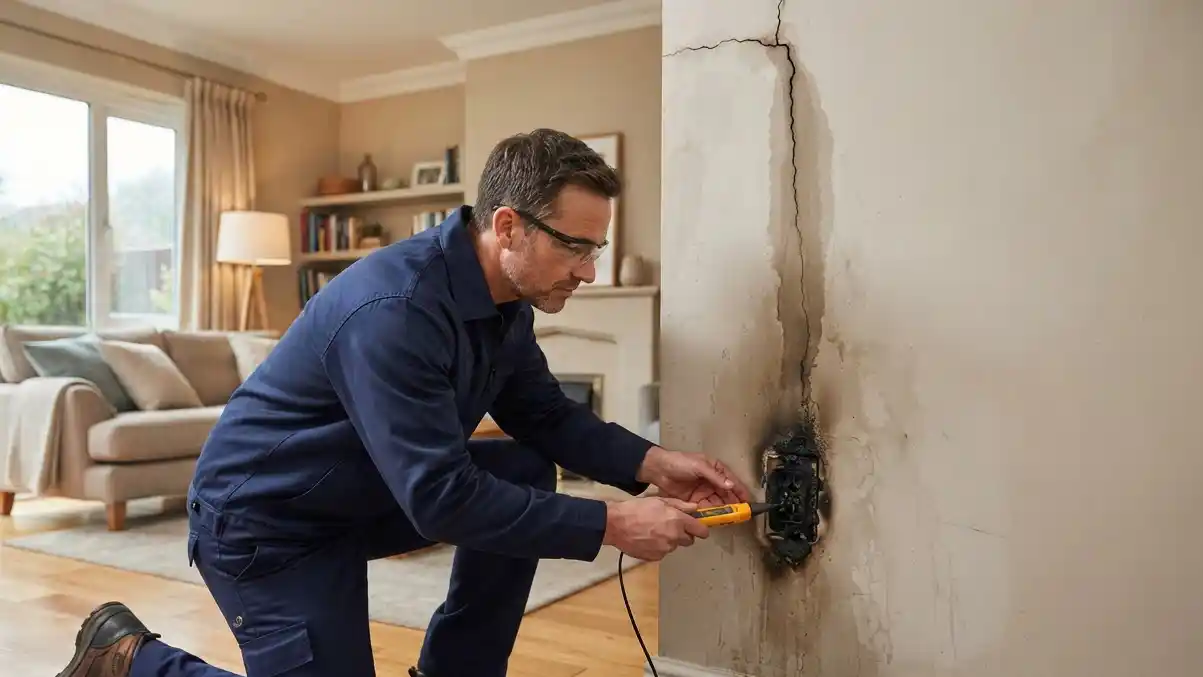
A lightning event can leave a property with more than a burned outlet or scorched roof section. The electrical energy may ignite concealed materials, damage wiring, and travel through connected systems.
Fire suppression can then saturate ceilings, insulation, flooring, and contents. Smoke and soot may spread into rooms that never saw open flame.
That overlap matters across older neighborhoods, rural properties, commercial corridors, multi-tenant buildings, and seasonal visitor districts.
Thunderstorm periods bring wind-driven rain and high humidity. One incident may therefore involve fire damage, firefighting water, rain entry, HVAC disruption, and smoke residue.
Treating only the visible problem can leave secondary damage behind. Restoration must follow every damage path before finishes are replaced.
Why One Lightning Strike Can Create Several Losses
Lightning can affect electrical, structural, plumbing, roofing, and interior systems within the same incident.
Electrical Energy Can Start Hidden Fires
Lightning may enter a structure directly or travel through wiring, pipes, the ground, and connected communication systems. The National Weather Service lightning safety guidance also warns that lightning-generated surges can damage equipment away from the strike point.
A fire may begin in an attic, wall cavity, service panel, appliance, or roof assembly. Damage can remain hidden after the flame is extinguished. Charred framing, damaged wiring, and weakened roof components require qualified evaluation.
Fire Suppression Adds Water to the Loss
Water used to control a fire can migrate beyond the burn zone. It may run through wall cavities, collect above ceilings, soak carpet padding, or reach lower floors. Broken pipes and storm openings can add more water.
Visible puddles are only part of the problem. Insulation, subflooring, drywall, cabinets, and framing can stay wet after surfaces look dry.
Smoke Moves Farther Than Flames
Hot smoke travels through openings, pressure differences, stairwells, ceiling spaces, and mechanical pathways. Soot can settle on walls, furniture, electronics, textiles, and HVAC components.
Residue differs with the materials that burned and the conditions of the fire. An incorrect cleaning method can smear soot, set staining, damage finishes, or spread contamination into unaffected rooms.
Each Restoration Service Solves a Different Problem
A complete recovery separates fire, water, and smoke tasks while coordinating their timing.
Fire Damage Assessment and Stabilization
Professional fire damage restoration can include inspection, containment, debris cleanup, water dry-out, smoke and soot removal, cleaning, and repairs. The sequence depends on structural conditions and the extent of the loss.
Openings may need temporary protection from rain. Unsafe materials may require controlled removal. Repairs should not cover charred, unstable, wet, or contaminated assemblies.
A detailed fire damage repair process also considers ongoing water intrusion, damaged contents, corrosion risk, mold risk, and the construction work needed after cleanup.
Water Extraction and Structural Drying
Extraction removes standing water, but drying addresses moisture held inside building materials. Air movement, dehumidification, moisture measurements, and targeted access may be needed to dry concealed areas.
This stage helps reduce swelling, warping, adhesive failure, rust, microbial growth, and damage to finishes. Drying goals should be confirmed before installing drywall, flooring, trim, or coatings.
Smoke, Soot, and Odor Treatment
Professional smoke damage repair may involve containment, specialized surface cleaning, air scrubbing, odor treatment, contents cleaning, and repair of damaged finishes.
Cleaning must match the residue and surface. The wrong liquid, sponge, vacuum contact, or pressure can worsen damage. Practical soot-cleaning cautions show why fire residue is not ordinary household dust.
What to Do Immediately After the Incident
Early decisions should protect people, preserve evidence, and prevent weather or moisture from causing additional damage.
- Wait for official clearance. Do not re-enter until fire authorities allow it. Avoid sagging ceilings, wet electrical areas, unstable flooring, and damaged roof sections.
- Do not restore power casually. Tripped breakers, burned wiring, hot-insulation odors, damaged appliances, and water near electrical components require a qualified electrician.
- Limit unnecessary movement. Walking through soot or carrying items between rooms can spread residue. Keep occupants and pets away from affected spaces.
- Document visible conditions. Photograph fire, smoke, water, roof, ceiling, flooring, and contents damage when it is safe. Do not discard items until you understand your insurer’s documentation requirements.
- Prevent safe, accessible re-wetting. Temporary weather protection may be needed where lightning or firefighting opened the roof, windows, or exterior walls. Do not climb onto a damaged roof.
- Separate contents decisions. Hard surfaces, electronics, documents, clothing, upholstered items, and water-damaged furniture need different evaluations. Heat, smoke, soot, water source, and time wet all affect salvageability.
The American Red Cross post-fire safety guidance advises caution around damaged wiring, standing water, utilities, household chemicals, and smoke-exposed food or medicine.
If a lightning-related loss involves burned materials, firefighting water, or smoke odors beyond the immediate room, call 352-505-3321 to discuss a coordinated assessment before cleaning, powering equipment, or replacing finishes.
Secondary Damage Can Appear After the Fire Is Out
Hidden moisture and residue may continue affecting materials even when the property looks calmer.
Lingering Moisture and Mold Risk
Wet insulation, carpet pad, subfloors, cabinets, and wall cavities may dry slowly. Re-wetting from an open roof or later rain extends the problem. Musty odors, swollen trim, cupped flooring, and soft drywall can indicate concealed moisture.
Corrosion and Finish Failure
Water and fire residue can affect metal fasteners, wiring components, appliances, ductwork, and electronics. Paint, flooring adhesive, cabinet finishes, and sealants may fail if installed over damp or contaminated surfaces.
Odor Absorption and Air Movement
Porous materials can absorb smoke odor. HVAC operation may move residue or odor between rooms if the system was exposed. Odor masking does not replace source removal, cleaning, and material-specific evaluation.
The Restoration Sequence Prevents Rework
Correct sequencing keeps one repair step from concealing or worsening another form of damage.
- Confirm that entry is permitted and hazards are controlled.
- Inspect the fire origin, adjacent rooms, roof, utilities, and lower levels.
- Stabilize openings and isolate affected areas.
- Remove standing water and define the moisture boundary.
- Dry wet assemblies and monitor concealed materials.
- Remove debris and clean soot with surface-appropriate methods.
- Address smoke odor in structures, contents, and affected air pathways.
- Complete repairs only after drying and cleaning goals are met.
- Reinspect for recurring moisture, odor, staining, corrosion, or finish movement.
This order may change when structural instability, electrical hazards, or contaminated water creates a higher-priority issue. Qualified specialists should coordinate their work.
Reducing Risk Before the Next Thunderstorm
Maintenance and operational planning can limit disruption in homes, rentals, and commercial properties.
Review fire prevention steps as part of routine property maintenance. Electrical repairs should remain with qualified electricians. Roof penetrations, flashing, gutters, drainage, and tree hazards also deserve attention before storm periods.
Property managers should include vacant units, mechanical rooms, attics, roof access points, and shared electrical spaces in seasonal inspections. Commercial operators should maintain current emergency contacts, utility shutoff information, occupant procedures, and an inventory of critical equipment.
After a lightning-related fire, the central question is not which damage type looks worst. It is whether fire, water, and smoke have all been traced to their full boundaries.
Coordinated inspection, drying, cleaning, and repair reduce the chance that hidden moisture, soot, corrosion, odors, or failed finishes will force the property through restoration twice.
Frequently Asked Questions
- Can lightning damage a home without starting a visible fire?
Yes. A strike or nearby surge may damage wiring, appliances, communication systems, or electrical panels without producing visible flames. Scorch marks, tripped breakers, unusual odors, buzzing sounds, or failed equipment require qualified electrical evaluation.
- Why is there water damage after a lightning-related fire?
Firefighting water can travel through ceilings, walls, stairwells, and flooring assemblies.
Rain may also enter through damaged roofing, windows, or siding. Broken plumbing can create another source of water.
- Can rooms outside the fire area have smoke damage?
Yes. Smoke can move through doorways, ceiling cavities, stairwells, gaps, and mechanical pathways. Soot and odor may settle in areas that never experienced direct heat or flame.
- Should soot be wiped from walls immediately?
Not with ordinary household cleaning methods. Water, scrubbing, or direct vacuum contact can smear residue or damage a finish. Cleaning methods should match the type of soot and the affected surface.
- Can the HVAC system spread smoke residue?
An operating system may move odor or residue if smoke entered the equipment or ductwork. Avoid assuming that a filter replacement alone resolves the issue. The system may need a qualified inspection.
- How can hidden firefighting water be found?
Moisture may remain behind drywall, beneath flooring, inside insulation, or under cabinets. Moisture meters, humidity measurements, thermal observations, and targeted inspection can help define the affected area.
- Does everything exposed to smoke need replacement?
No. Salvageability depends on the material, heat exposure, residue, odor absorption, and cleaning limitations. Electronics, documents, textiles, wood furniture, and upholstered items require different evaluations.
- When can repairs begin after fire and water cleanup?
Repairs should begin after unsafe materials are addressed and drying and cleaning goals are confirmed. Installing finishes too soon can trap moisture, conceal soot, and contribute to warping, staining, or adhesion failure.
- Should power be turned back on after a small lightning fire?
Do not reset breakers or energize damaged equipment without appropriate evaluation.
Water, heat, and electrical damage can exist beyond the visible burn area, including inside walls and connected systems.
- Can mold develop after firefighting water is removed?
Mold risk increases when moisture remains in porous or concealed materials.
Removing standing water is not the same as confirming that insulation, framing, subfloors, and wall cavities are dry.
- What should a property manager document after the incident?
Record affected rooms, visible damage, odors, water movement, utility conditions, and occupant reports. Photograph the property when access is permitted and keep records of inspections, temporary protection, cleanup, and repairs.