
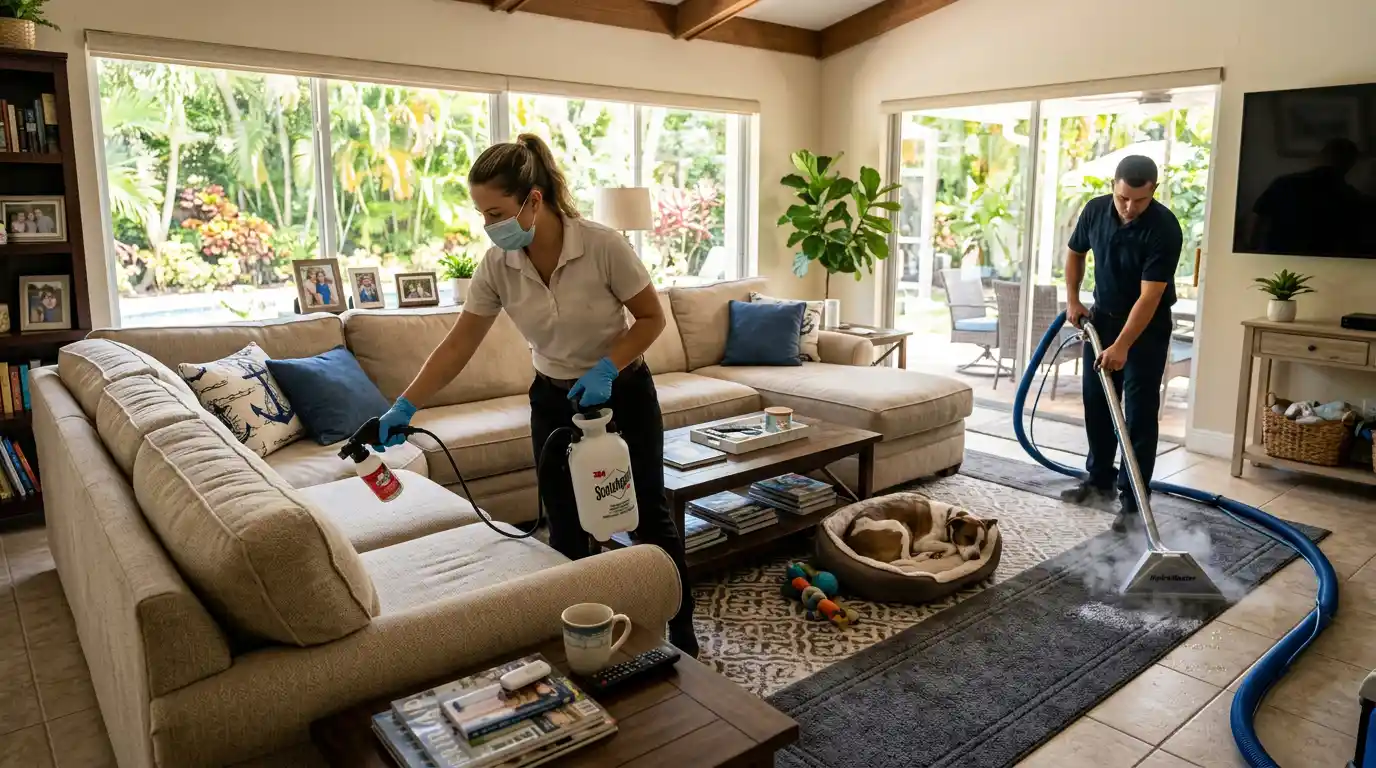
North Central Florida homes work hard during the summer. Guests move between patios, pools, driveways, porches, and living rooms. Pets track in damp soil after afternoon storms. Shoes carry grit from parking lots, sidewalks, and mulch beds. In Gainesville properties, one wet entryway can turn into a pattern of stains, odors, flattened fibers, and hidden moisture.
Carpets and upholstered furniture need protection before the first busy weekend, not after the sofa smells musty or the hallway looks gray. Prevention matters for homeowners, renters, apartment managers, commercial spaces, and property managers because soft materials absorb moisture and soil fast.
If water intrusion, roof leaks, or HVAC condensation are also present, routine cleaning can become a property damage cleanup decision.
Build a Pre-Guest Protection Plan
A simple plan before guests arrive helps reduce tracked-in soil, pet messes, spills, and wet fabric.
Create a wet-shoe landing zone
- Place washable mats outside and inside main entrances.
- Use a shoe tray, a towel basket, and a small sign near doors used by guests.
For apartment communities or offices, focus on lobbies, shared hallways, break rooms, and tenant entries. Vacuum these zones before visitors arrive so new grit does not grind old soil deeper into fibers.
Vacuum before traffic increases
Vacuum high-traffic rooms, stairs, hallways, and furniture edges before summer gatherings. Dry soil acts like sandpaper when people walk across carpet. Removing it early helps reduce visible wear. If carpets already look dull, these benefits of clean carpets explain why routine care matters before dirt becomes harder to release.
Prepare for pet traffic
Pets need a plan too. Keep towels by doors, brush shedding coats before guests arrive, and place washable throws on favorite furniture. Blot accidents quickly instead of scrubbing them. For more pet-specific carpet guidance, review these carpet cleaning tips for pet owners.
Protect Entryways, Rugs, and Upholstery
Doorways, area rugs, sofas, dining chairs, and guest rooms need targeted protection during rainy summer use.
Use rugs as controlled soil catchers
Area rugs can protect wall-to-wall carpet and hard floors when they are placed strategically. Use them in entries, under dining areas, and near sliding doors. Choose rugs that can be moved, shaken, or cleaned more easily than installed carpet.
These area rug cleaner tips are useful when rugs collect dirt from shoes, pets, and guest traffic.
Protect upholstery from food, sunscreen, and pet hair
Summer upholstery stains often come from snacks, drinks, sunscreen, body oils, pet hair, and damp clothing. Add washable covers to frequently used sofas and chairs. Keep food in dining areas when possible. Vacuum cushions, seams, and under pillows before guests arrive because crumbs and pet hair collect in those areas.
Think beyond looks
A room can look clean while fabric still holds moisture, soil, or odor. This is especially true after rainy shoes, wet pet paws, or repeated spills. If soft surfaces remain damp, odor may become the first warning sign.
If the carpet has stayed wet after a leak or heavy indoor moisture, these tips to prevent mold in carpet can help you decide when the concern is bigger than a surface stain.
Handle Spills, Rainwater, and Damp Spots Fast
Fast and calm cleanup helps prevent small messes from becoming bigger moisture or odor problems.
Blot first, then clean gently
Blot liquid with a clean white towel. Work from the outside of the spot toward the center. Avoid hard scrubbing because it can distort carpet fibers and push residue deeper into upholstery. Test any cleaner in a hidden area first, especially on delicate fabrics, rugs, or older furniture.
Separate the normal mess from the water damage
A spilled drink on a rug is different from water spreading from a roof leak, plumbing failure, appliance leak, or HVAC drain issue. If the padding, subfloor, drywall, or furniture frame is wet, treat the problem as water damage rather than routine carpet care. Water removal services or water extraction services may be needed when moisture spreads beyond the surface.
If summer traffic has already left stains, pet odor, damp carpet, or soiled furniture, schedule a practical cleaning review before the next gathering. Professional carpet cleaning in Gainesville and upholstery cleaning can help you reset high-use rooms while you address moisture sources, entryway habits, and pet routines.
Dry damp areas fully
A carpet that feels slightly damp can still create problems in Florida’s humidity. Increase airflow only when the water source is clean and controlled. Do not use fans on areas affected by sewage, outdoor floodwater, or unknown contamination. For wet carpet from a clean spill, lift small movable rugs if safe, dry both sides, and keep furniture legs off damp fibers.
Choose the Right Response for Each Property Type
Homes, rentals, apartments, and commercial spaces need different prevention and cleanup routines.
Homes and guest rooms
Guest rooms often hold luggage, snacks, damp towels, and wet shoes.
- Place washable runners near beds and closets.
- Add coasters, trays, and laundry baskets so guests have easy places for drinks, shoes, and damp clothing.
- Check under furniture after guests leave.
Rentals and multifamily buildings
Rental properties need clear move-in and guest rules. Ask tenants to report leaks, soaked carpet, and musty odors quickly. Apartment managers should inspect common entries after heavy rain, especially where water collects near doors. Document repeat problem areas with photos.
Commercial spaces
Florida commercial spaces can see heavy foot traffic during summer storms. Offices, retail spaces, clubhouses, and waiting rooms need entry mats, routine vacuuming, and fast spill response. Wet upholstery in customer areas should be isolated until it dries or can be cleaned.
After Guests Leave: Inspect and Decide
A short post-visit inspection helps catch odor, moisture, and stains before they spread.
Walk the traffic path
- Start at the driveway, porch, or lobby.
- Follow the route guests and pets used most.
- Check mats, rugs, hallway carpet, stairs, dining areas, sofa cushions, and guest rooms.
- Look for dark traffic lanes, sticky spots, pet accidents, wet corners, and odors near baseboards.
Check moisture-prone areas
Inspect near exterior doors, windows, bathrooms, laundry rooms, HVAC closets, and kitchens. A summer gathering can hide a small leak because spills and rainy shoes create competing messes. If the carpet stays damp or a stain returns after cleaning, look for a source.
Decide what can wait and what cannot
Routine soil can usually wait for planned carpet cleaning, area rug cleaning, upholstery cleaning, or tile and grout cleaning. Active leaks, soaked carpet padding, ceiling drips, sewage, outdoor floodwater, or musty odors need faster attention.
The right decision protects materials and reduces disruption for guests, tenants, staff, and customers.
Frequently Asked Questions
1. How should you protect carpets before summer guests arrive?
- Start with entry mats, shoe trays, and a towel station near the doors guests use most.
- Vacuum high-traffic areas before the visit so new soil does not grind into old dirt.
- Move delicate rugs away from wet entries, dining areas, and pet traffic zones.
2. What should you do when guests track rainy shoes onto the carpet?
- Blot visible moisture with a clean towel and let the mud dry before vacuuming loose soil.
- Avoid scrubbing wet dirt because it can spread into the fibers.
- Check the padding or subfloor if the area feels wet after surface cleanup.
3. How can pet owners reduce carpet stains before gatherings?
- Wipe paws at the door, groom shedding pets, and use washable covers on favorite furniture.
- Keep pet towels, waste bags, and spot-cleaning supplies ready before guests arrive.
- Blot accidents quickly and avoid harsh scrubbing that can distort carpet fibers.
4. Should upholstery be cleaned before or after summer guests?
Clean heavily used upholstery before guests arrive if it already has odor, spots, crumbs, or pet hair. After the visit, inspect cushions, seams, arms, and headrests for new soil. Food, sunscreen, body oils, and damp clothes can leave residue on fabric.
5. Are area rugs useful during rainy Gainesville weather?
Yes, area rugs can act as controlled soil catchers near doors, dining areas, and high-traffic routes. Choose rugs that can be moved and cleaned more easily than installed carpet. Do not leave wet rugs on wood flooring or damp carpet without checking both sides.
6. When does a carpet spill become a water damage issue?
A spill becomes more serious when moisture reaches padding, subflooring, walls, cabinets, or furniture frames. Roof leaks, appliance leaks, HVAC condensation, and plumbing failures need more attention than a surface spot. If dampness spreads or returns, look for an active source.
7. What should apartment managers check after heavy summer rain?
- Check common entries, stairwells, shared hallways, clubhouses, and ground-floor units first.
- Look for wet mats, damp carpet edges, musty odors, and water collecting near doors.
- Document repeat problem areas with photos so drainage or maintenance issues can be tracked.
8. How can commercial spaces protect carpet during stormy days?
- Use large walk-off mats at entrances and vacuum them often during rainy periods.
- Keep wet umbrellas and shoes away from upholstered seating where possible.
- If the carpet stays damp, isolate the area until it dries or can be evaluated.
9. What should you avoid when cleaning a wet carpet?
- Avoid aggressive scrubbing, over-wetting, and using fans when the water source may be sewage or outdoor floodwater.
- Do not place furniture back on damp carpet without protection under the legs.
- Avoid assuming a surface is dry just because the top fibers look clean.
10. How do you reduce odors after pets and guests leave?
Remove crumbs, vacuum soft surfaces, wash throws, and check under cushions and rugs. Look for damp spots near doors, pet beds, dining areas, and guest rooms. If odors return after cleaning, moisture may still be trapped below the surface.
11. When should professional cleaning be considered?
Consider professional cleaning when stains spread, pet odor remains, upholstery feels grimy, or carpet stays dull after vacuuming. It may also help before hosting when high-use rooms already show traffic lanes. For water intrusion, soaked padding, sewage, or roof leaks, treat the issue as more than routine cleaning.