
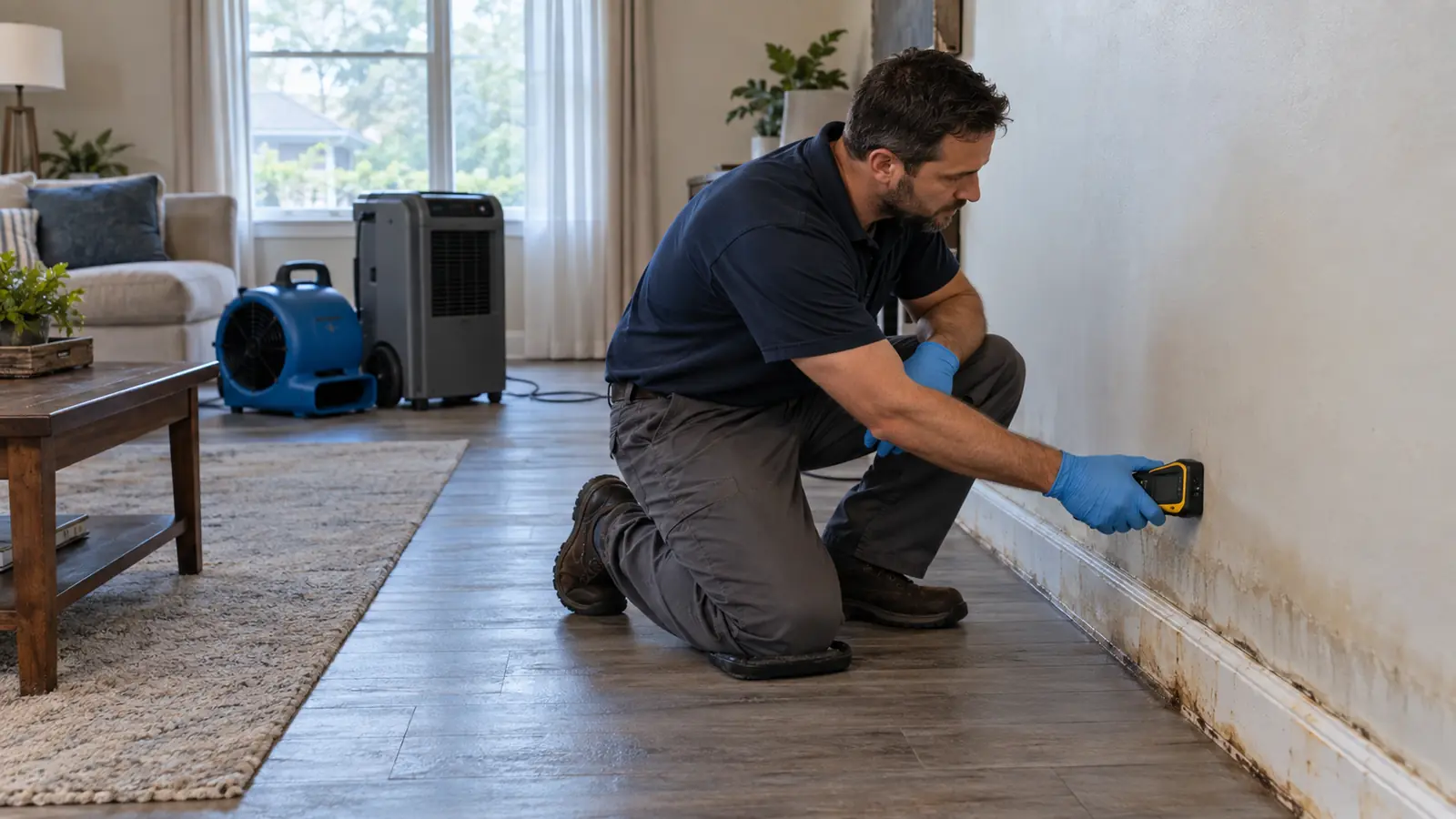
Stormwater does not have to cover an entire room to create a difficult restoration problem. Water entering at a doorway, roof opening, or exterior wall can move beneath baseboards, into drywall, under flooring, or through carpet and pad.
Heavy rain and wind-driven water can start the loss. HVAC condensation, plumbing failures, and tenant turnover can reveal other hidden moisture problems.
For homeowners, business owners, and property managers across older residential neighborhoods, commercial corridors, multi-tenant properties, and surrounding communities, the priority is the same: stop re-wetting, protect people, find where the moisture traveled, and avoid covering damage before the structure is actually dry.
Why Stormwater at Baseboards Is Bigger Than a Surface Spill
The floor-to-wall joint is a common pathway into materials you cannot judge by sight alone.
Walls and Baseboards
Baseboards may swell, stain, separate from the wall, or hide damp drywall behind them. Water can wick upward through porous wall materials even after the visible puddle is gone. A dry-looking paint surface does not prove that the wall cavity, lower drywall edge, or insulation is dry.
Floors and Subfloors
Flooring creates another concealed pathway. Water can travel through seams and perimeter gaps and reach adhesive, underlayment, carpet pad, or subflooring. The result may appear later as cupping, buckling, loosened finishes, staining, or persistent odor. Material type and trapped moisture affect whether drying, cleaning, repair, or replacement is appropriate.
What to Do Immediately Before Water Spreads Farther
Early decisions should reduce exposure and continued absorption without creating new electrical, structural, or contamination risks.
Put Safety Before Cleanup
Use flood reentry safety guidance before entering a storm-damaged wet area. Do not step into standing water to reach electrical controls. Stay out of areas with sagging ceilings, unstable flooring, damaged utilities, or other obvious hazards.
Stop Re-wetting When It Is Safe
If the source is a plumbing fixture or appliance and the shutoff is safely accessible, stop the flow. For exterior stormwater, avoid risky attempts to block moving water. Protect unaffected contents and keep people away when contamination is uncertain.
Document the Water Path
Take photos or video before moving materials when it is safe to do so. Capture the entry point, waterline, affected rooms, baseboards, flooring transitions, and damaged contents. Note where water may have crossed into adjacent rooms.
If water is still spreading into porous materials, at The Best Restoration, we are available for 24/7 emergency service. We provide water cleanup, water extraction, flood damage cleanup, and related restoration services. Call 352-505-3321 to discuss the affected areas and the next safe step.
What Water Damage Restoration Actually Does
Restoration addresses both the visible water and the moisture that remains inside affected building materials.
Extraction and Initial Control
Water damage restoration begins by assessing the affected area, identifying the water source, addressing hazards, and removing standing water as appropriate.
The distinction between water removal and water damage restoration matters because extraction controls bulk water, while restoration continues through drying, cleaning, and repairs.
Drying and Moisture Verification
Air movement and dehumidification can support drying, but equipment placement should match the materials, room layout, and contamination conditions.
Moisture can remain beneath flooring or behind walls after surfaces feel dry. That is why hidden moisture in walls and flooring deserves attention before baseboards, paint, flooring, or other finishes are replaced.
Cleaning and Material Decisions
Stormwater can pick up contaminants as it moves across exterior surfaces. Porous materials respond differently from hard, cleanable surfaces.
Cleaning, removal, or replacement decisions should consider the water source, exposure, material condition, and whether the material can be completely cleaned and dried.
How Long Does Water Damage Restoration Take?
The answer depends on the loss itself, not a fixed calendar promise.
A small, accessible wet area is different from stormwater that has crossed rooms or entered wall cavities and layered flooring.
The main factors are:
- How far does water travel? Shared walls, cabinets, closets, and flooring transitions can expand the affected area.
- Which materials are wet? Drywall, insulation, carpet pad, wood, tile assemblies, and subfloors dry differently.
- Whether contamination is present. The source can change cleaning and material-handling decisions.
- Whether materials must be opened or removed. Concealed moisture may require access before drying can progress.
- Whether moisture readings show continued progress. Repair work should follow drying verification, not simply the disappearance of visible water.
So, how long does water damage restoration take? Long enough to control the source, extract water, dry affected materials to appropriate conditions, clean as needed, and complete justified repairs. Avoid choosing a timeline before the affected assemblies are evaluated.
How to Prevent Secondary Damage After the Puddle Is Gone?
After extraction, hidden moisture, re-wetting, odors, and premature repairs can enlarge the loss.
Prevent Another Water Entry
Correct the source before finishing walls or floors. Inspect the path that allowed water inside, including roof openings, doors, drainage areas, plumbing connections, or HVAC-related moisture.
Practical steps for reducing future home water damage can help you identify maintenance issues before the next wet-weather event.
Do Not Close Wet Assemblies Too Early
Use safe flood cleanup practices that prioritize removing water, sorting materials, cleaning affected areas, and drying the building completely. Do not paint, caulk, reinstall trim, or place new flooring over materials that are still damp. If visible mold is present, avoid using fans in ways that could spread particles.
Watch High-Risk Transitions
Pay attention where materials meet: wall-to-floor joints, cabinets, flooring transitions, door thresholds, and shared walls.
These transitions can retain moisture after open surfaces appear dry. For businesses and property managers, a commercial water damage recovery plan can also help organize access, documentation, tenant communication, and phased recovery.
When Professional Help Is the Lower-Risk Choice
Escalate the loss when the source, contamination, electrical exposure, structural condition, or hidden moisture is beyond a simple surface cleanup.
Consider professional restoration when:
- Stormwater has entered wall cavities, insulation, cabinets, carpet pad, or layered flooring.
- Water is near outlets, appliances, electrical equipment, or building systems.
- The affected area crosses rooms, units, or shared walls.
- Flooring is swelling, cupping, loosening, or changing shape.
- Baseboards or drywall are soft, swollen, stained, or separating.
- Musty odors remain after visible water is removed.
- A business or multi-tenant property needs coordinated drying, documentation, and access decisions.
At The Best Restoration, our IICRC-certified technicians provide 24/7 emergency water damage restoration, water removal, flood damage cleanup, and mold remediation services.
Frequently Asked Questions
What is water damage restoration?
Water damage restoration is the broader recovery process after unwanted water enters a property. It can include assessment, water extraction, drying and dehumidification, cleaning, decisions about damaged materials, and repairs. The exact scope depends on where the water traveled and what it affected.
How long does water damage restoration take?
There is no responsible fixed timeline for every loss. The duration depends on the amount of water, the affected materials, hidden moisture, contamination concerns, access to wet assemblies, and drying progress. Repairs should begin after the relevant areas have been evaluated and dried appropriately.
What should I do when stormwater reaches baseboards?
Keep people away from the wet area if electrical or contamination hazards may be present. Document the visible waterline and affected materials, then stop continued water entry only when you can do so safely. Baseboards can hide moisture at the wall-to-floor joint, so surface drying alone may not be enough.
Does a wet baseboard mean water is inside the wall?
Not always, but it is a reason to check. Water can move behind trim, wick into the lower edge of drywall, or enter a wall cavity through gaps at the floor line. Swelling, staining, separation, softness, or persistent odor can indicate that the damage extends beyond the visible face.
Can stormwater damage hard-surface flooring?
Yes. Water can move through seams, edges, grout lines, transitions, and perimeter gaps. Depending on the assembly, moisture may reach the adhesive, underlayment, wood components, or subflooring. A floor that feels dry on top can still require evaluation beneath the finished surface.
Should I use fans after stormwater enters?
Only after you have considered electrical safety, the water source, and visible contamination or mold. Air movement can support drying in appropriate conditions, but it can also spread particles when used carelessly. If the source is uncertain or visible mold is present, qualified restoration guidance is the safer choice.
When does wet drywall need to be removed?
Removal depends on the water source, degree of saturation, material condition, contamination, and whether the wall assembly can be cleaned and dried. Soft, swollen, crumbling, or contaminated drywall may require removal. Avoid making cosmetic repairs until concealed moisture has been addressed.
What should a property manager document after a water loss?
Record the suspected source, affected rooms or units, visible waterlines, flooring transitions, damaged contents, and any tenant or operational impacts. Photos and videos taken before major material movement can preserve useful information. Keep notes on access, communications, cleanup actions, and areas that may share walls or flooring systems.
Should I contact my insurer before restoration starts?
Coverage and claim procedures vary by policy, so contact your insurer as soon as practical. At the same time, do not ignore urgent safety or mitigation needs while waiting for a coverage decision. Document the condition carefully and ask the insurer what records, photos, estimates, or notices it requires.
When is professional restoration the safer choice?
Professional help is appropriate when water reaches electrical systems, spreads behind walls or under flooring, affects multiple rooms or units, carries possible contamination, or creates structural concerns. It is also useful when a business needs coordinated drying and documentation. We provide 24/7 emergency service at 352-505-3321.