
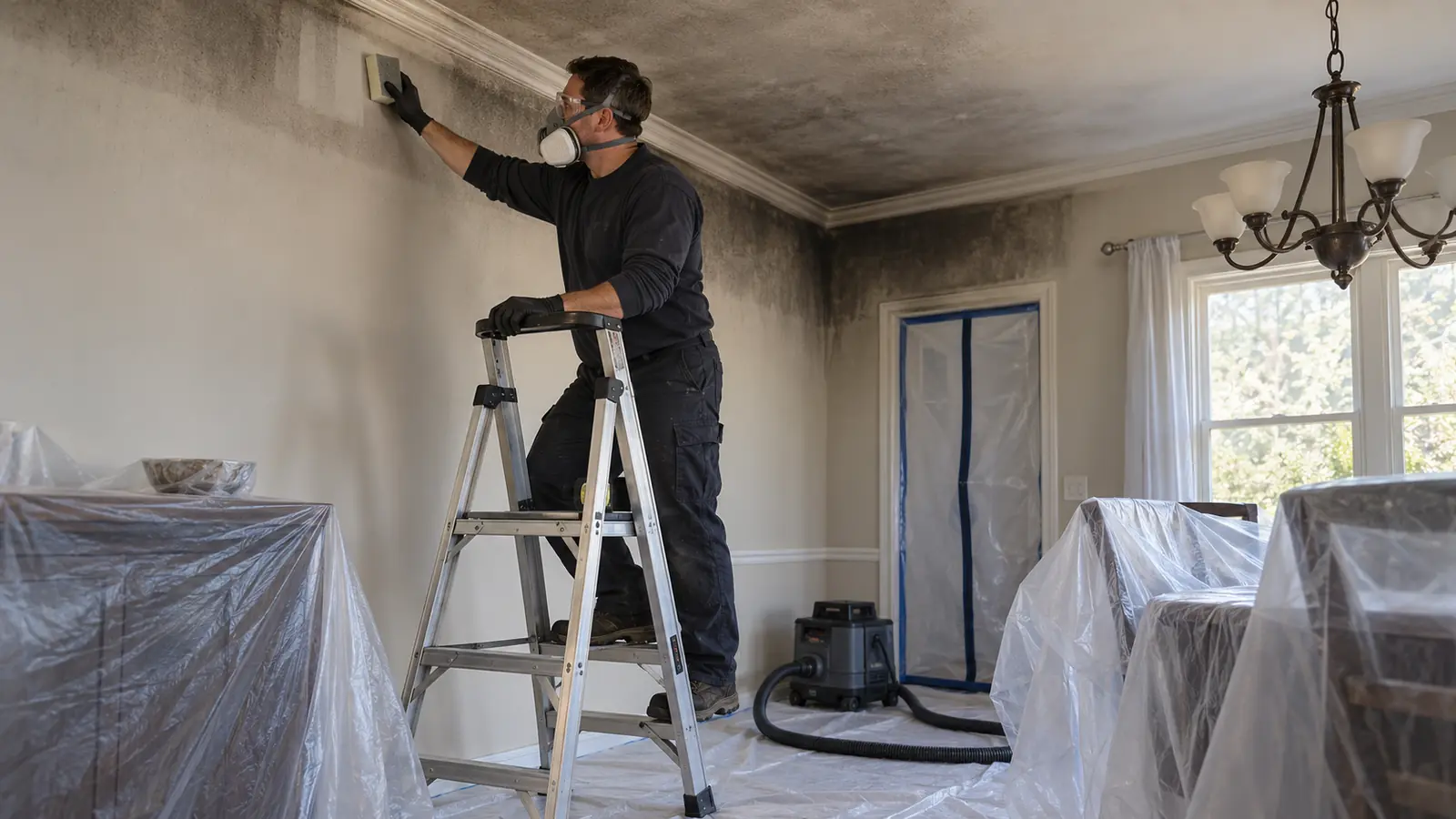
Smoke residue can look like a simple black film, but cleaning it like ordinary dust can make the room harder to restore. Soot transfers by hands, clothes, brushes, footwear, and moving air.
Once it smears into paint or reaches clean rooms, a small affected area can become a larger cleaning job.
That matters across older homes, commercial corridors, multi-tenant properties, and seasonal visitor districts in the region.
Seasonal turnover can expose residue behind furniture, while severe-weather periods can create overlapping fire, water, and smoke losses.
Control the work area, remove loose residue with dry methods first, and introduce moisture only when the surface can tolerate it.
Why Smoke Damage Spreads During Cleanup
The first decision is not which chemical to use. It is how to keep loose soot from moving into unaffected surfaces and rooms.
Soot transfers with contact
Soot can settle on walls, ceilings, trim, furnishings, and contents even where flames never reach. Professional smoke damage repairs can include containment of unaffected areas, soot and smoke removal, cleaning, odor treatment, and repair decisions.
Rubbing a dark deposit with a wet rag may create a streak instead of lifting it. Handling smoky contents and then touching clean doors or tools can also transfer residue.
Air movement can redistribute fine residue
Aggressive sweeping, dusting, or blowing can put particles back into the air. The EPA’s post-fire ash cleanup guidance advises avoiding actions that stir up ash and notes that HEPA vacuuming and dry soot or chemical sponges may suit some deposits and absorbent surfaces.
Control the Room Before You Clean Smoke Damage
Containment and tool discipline can keep cleanup from carrying soot through a home, office, or rental property.
- Confirm that the area is safe to enter. Do not work around structural instability, active electrical hazards, major fire damage, or unknown hazardous materials.
- Keep unaffected rooms separated from the cleaning zone as much as practical.
- Stage clean cloths, soot sponges, bags, and supplies before starting.
- Avoid ordinary dry sweeping. If vacuuming is appropriate, use HEPA filtration when available and avoid pressing the nozzle into soot.
- Bag or contain heavily soiled disposable materials before carrying them through clean areas.
A guide on removing soot from walls after fire damage also emphasizes testing the cleaning method and avoiding contact that smears residue.
How to Clean Smoke Damage on Walls and Ceilings?
Use the least aggressive method first so you can remove residue without unnecessarily damaging paint, drywall, or ceiling finishes.
1. Start with dry removal
Begin with loose soot. A HEPA vacuum can capture particles without scrubbing them into the finish. Hold the nozzle slightly away from the surface rather than dragging it across the wall or ceiling.
For heavier dry deposits, a dry-cleaning sponge, also called a soot or chemical sponge, can lift residue. Keep it dry and use light, straight passes.
2. Rotate to a clean sponge face often
A loaded sponge can redeposit soot. Turn to a clean face as the working surface darkens. Replace or trim the sponge as appropriate instead of continuing with a contaminated section.
This matters after a small kitchen fire and smoke odor event, where residue may include oily material from food, grease, plastics, cabinets, or packaging.
3. Wet-clean only after dry soot is controlled
If residue remains and the finish tolerates moisture, test a hidden area first. Use a mild soap or detergent solution on a clean cloth or sponge and work in small sections. Keep the surface damp, not saturated.
The post-firewall and ceiling cleaning guidance advises cleaning small areas, rinsing with clear water, drying thoroughly, and waiting until walls and ceilings are completely dry before repainting.
4. Dry and reassess before coating
Do not assume a cleaner-looking wall is ready for primer or paint. Check for remaining staining, odor, moisture, softened material, or recurring residue. If water was used to suppress the fire, drying may need attention before finishing work.
How to Clean Smoke Damage From Painted Walls
Paint finish, residue type, and moisture sensitivity determine how much cleaning a wall can tolerate.
Flat and matte finishes need a light touch
Flat and matte coatings can burnish, streak, or lift when scrubbed. Start dry, test wet methods in an inconspicuous spot, and stop if the finish changes sheen, softens, or transfers to the cloth.
If you are deciding how to remove smoke damage from walls, identify the finish and residue first rather than automatically choosing the strongest cleaner.
More washable finishes still need testing
Eggshell, satin, semi-gloss, and gloss coatings may tolerate more cleaning, but soot varies with what is burned. If you are asking what cleans smoke damage, there is no single cleaner for every fire and paint.
Dry removal, careful testing, mild detergent where appropriate, rinsing, and drying provide a safer sequence than starting with a strong chemical.
How to Clean a Smoke-Damaged Ceiling Without Dropping Soot Everywhere?
Ceilings require controlled movement because loosened residue can fall onto walls, floors, furnishings, and clean areas below.
Work in small overhead zones
Protect the floor below the work zone and move clean items away. Dry-remove loose soot first. Work methodically so you can distinguish finished areas from contaminated ones.
Avoid repeatedly moving a dirty ladder, drop cover, sponge, or vacuum attachment into clean parts of the room.
Treat fixtures and vents as separate concerns
Do not clean around damaged electrical fixtures or wet ceiling components as ordinary painted surfaces. Smoke may also travel through openings and mechanical pathways.
A lightning-related fire, water, and smoke loss can involve soot, wet ceilings, electrical damage, and concealed moisture together.
When DIY Smoke Cleaning Should Stop
Minor residue on a stable surface is different from a post-fire environment with widespread soot, water, damaged materials, or persistent odor.
Stop and seek qualified evaluation when:
- The structure has not been cleared for safe entry.
- Soot covers multiple rooms, ceilings, or HVAC components.
- Walls or ceilings are wet, soft, blistered, charred, or damaged.
- Residue repeatedly smears despite dry cleaning.
- A strong odor remains after visible residue is removed.
- You suspect asbestos, lead-containing materials, chemical residue, or other hazardous debris.
- Firefighting water entered insulation, wall cavities, flooring, or other concealed assemblies.
A broader fire damage repair process may involve assessment, drying, soot cleanup, deodorization, and later repairs when cleaning alone is not enough.
Prevent Odor and Secondary Damage After Soot Removal
Successful cleanup looks beyond the visible stain, so moisture, absorbed odor, corrosion, and finish problems are not covered by new paint.
Smoke can settle on porous surfaces and reach adjoining spaces. Fire suppression water can also leave drywall, flooring, insulation, cabinets, and trim damp. Hidden moisture may add mold concerns or contribute to swelling, warping, corrosion, and coating problems.
Professional fire damage restoration may include water removal and drying before smoke and soot removal, cleaning, and repair work.
Before repainting, confirm that the surface is dry, stable, and clean enough for the coating system. Do not use fragrance as a substitute for residue removal. If odor returns after cleaning, investigate the source rather than repeatedly adding stronger cleaners or coatings.
Frequently Asked Questions
Can I wipe smoke damage off walls with water?
Do not make water your first step when loose soot is present. Moisture can smear some residues and push discoloration farther into a painted or porous surface. Start with controlled dry removal, then test a mild wet-cleaning method only if the finish can tolerate it.
How do you get smoke damage off walls without smearing it?
Remove loose soot before scrubbing or washing. Use a HEPA vacuum without dragging the nozzle across the surface, followed by a dry soot sponge when appropriate. Rotate to clean sponge faces frequently so captured residue is not deposited back onto the wall.
What cleans smoke damage from painted walls?
The appropriate method depends on the paint and residue. Dry soot removal should generally come before wet cleaning. If the finish is washable, a mild detergent solution may be appropriate after spot testing, followed by careful rinsing and complete drying.
Can I use a regular household sponge on soot?
A wet household sponge can smear loose soot before it removes it. A dry-cleaning or soot sponge is designed for dry residue removal and should remain dry while being used for that purpose. Switch to wet cleaning only after loose soot is controlled and the finish has been tested.
Can flat-painted walls be cleaned after smoke damage?
Sometimes, flat and matte finishes require caution because rubbing and moisture can change their appearance. Begin with the least aggressive dry method and test an inconspicuous area. Stop if the paint becomes shiny, soft, streaked, or starts transferring onto your cleaning material.
Should I clean the ceiling or the walls first?
Control loose overhead soot before allowing it to fall onto surfaces you have already finished cleaning. Wet washing requires a different sequence because runoff and streaking also need control. Whatever sequence you use, work in small zones and keep dirty tools from crossing into completed areas.
Can I simply paint over smoke stains?
Painting before cleaning and drying can conceal residue without resolving it. Remaining soot, odor, or moisture may interfere with the new finish or become noticeable again later. Clean and evaluate the substrate first, then choose primer and coating products that are appropriate for the actual surface condition.
Why does the room still smell smoky after the walls look clean?
Visible walls are only part of the room. Smoke residue can remain on ceilings, trim, cabinets, flooring, textiles, contents, vents, and other porous materials. Persistent odor is a reason to look for untreated sources rather than masking the smell with fragrance.
How do I keep soot from spreading into other rooms?
Separate unaffected spaces where practical, avoid dry sweeping, and stage supplies inside the affected work zone. Use clean sponge faces and cloths frequently, contain dirty disposable materials before moving them, and avoid carrying contaminated tools through clean areas without cleaning or bagging them first.
What if the walls and ceiling are wet after the fire?
Treat moisture as a separate restoration problem rather than immediately focusing on stains. Wet drywall, insulation, flooring, and concealed cavities may need drying or further evaluation before surface cleaning and repainting. Electrical fixtures and structurally damaged wet materials should not be handled as routine cleaning tasks.
When is smoke damage too extensive for DIY cleaning?
Widespread soot, persistent smearing, damaged ceilings, strong lingering odor, contaminated HVAC components, firefighting water, structural concerns, or suspected hazardous materials increase the complexity of cleanup. Those conditions call for qualified evaluation because aggressive DIY cleaning can spread residue or damage finishes that might otherwise be recoverable.