
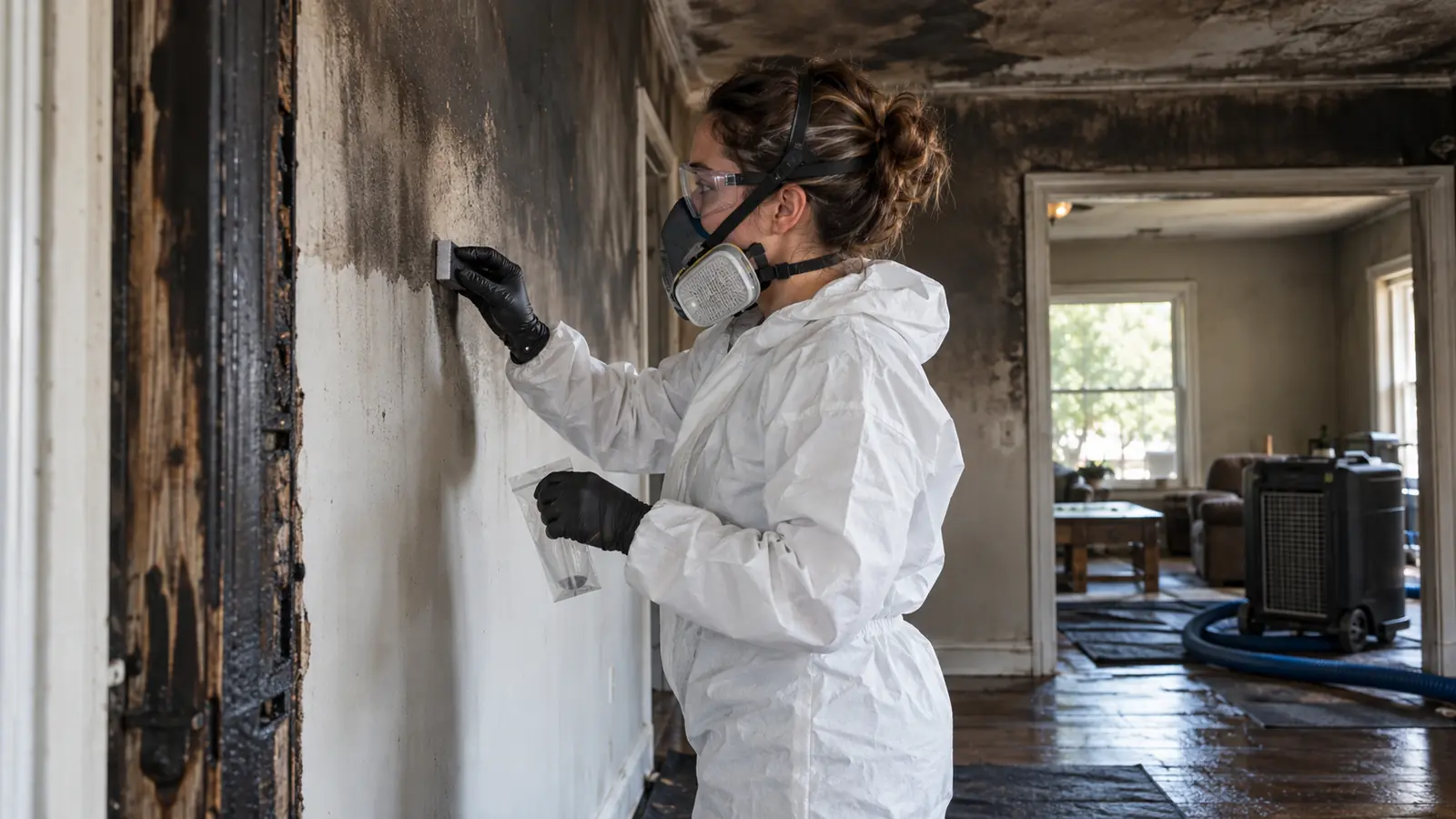
A fire can leave three overlapping problems inside one property: heat damage, smoke and soot residue, and water used during suppression.
The burn area may be only one part of the loss. Smoke can move into adjoining rooms, soot can settle on finishes and contents, and firefighting water can collect beneath flooring or inside walls.
Storm periods can bring lightning and power interruptions, while cooler weather can put heating equipment back into service. Tenant turnover may also expose older smoke odors or hidden moisture.
Whatever caused the incident, early decisions should protect people, document conditions, and reduce secondary damage.
For homeowners, business owners, and property managers across older neighborhoods, commercial corridors, and multi-tenant properties, effective recovery means treating fire, smoke, soot, and water as connected but different problems.
Why Fire Damage Continues After the Flames Are Out
Residue, moisture, damaged materials, and exposed building openings can keep affecting the property after the fire is extinguished.
Smoke and Soot Travel Beyond the Burn Area
Smoke moves through openings and connected spaces, while soot can settle on ceilings, walls, cabinets, furniture, and textiles. Residue may appear in rooms that never touched the flames. Rubbing or washing soot without considering the surface and residue can smear contamination or deepen staining.
Firefighting Water Creates a Second Loss
Water can soak flooring, carpet, drywall, insulation, cabinetry, and contents. It can also move downward or sideways into spaces that look unaffected from above. Once restoration work can begin safely, standing water and trapped moisture need their own assessment.
Openings Can Allow Re-wetting
Suppression activities or the fire itself may leave damaged roofing, windows, walls, or plumbing. Rain or continued leakage can re-wet materials before permanent repairs begin. Temporary protection should only be handled when conditions allow it safely.
What to Do Before You Start Cleaning
The safest early response is controlled because unstable materials, wet electrical areas, soot, and damaged contents can make casual cleanup risky.
Wait for Reentry Clearance
Do not enter simply because the smoke has cleared. Use post-fire safety guidance and wait until fire authorities allow reentry. Watch for weakened floors, damaged ceilings, exposed wiring, standing water, and unstable building components. Do not casually restore electricity or operate damaged equipment.
Document Before Moving Items
Photograph affected rooms, soot, waterlines, damaged finishes, appliances, flooring, walls, ceilings, and contents when it is safe. Keep notes about where smoke traveled and where firefighting water collected. Before discarding property, confirm what documentation your insurer requires because procedures vary by policy.
Avoid Spreading Soot
Limit traffic between damaged and unaffected spaces. Avoid wiping soot with ordinary household cleaners before the surface and residue are evaluated.
Fire-damaged belongings require careful handling because soot and ash can scratch fragile surfaces or become embedded through unnecessary touching.
If smoke, soot, and firefighting water affect multiple rooms or building materials, The Best Restoration can help.
What Does Fire Damage Restoration Involve?
Fire restoration coordinates immediate damage control, moisture management, residue removal, cleaning, and repairs in an order suited to the loss.
Assessment and Damage Control
What is fire damage restoration? It is more than removing burned debris. A fire damage restoration service can begin with an inspection of fire and smoke damage, protection of unaffected areas, and planning for the work ahead.
The scope should distinguish what is burned, smoke-affected, wet, cleanable, repairable, or likely to need replacement.
Water Removal and Drying
Firefighting water can become an immediate priority because wet materials may swell, warp, delaminate, stain, or develop other moisture-related damage.
Extraction, dehumidification, and air movement may be used as conditions require. A fire, water, and smoke loss after lightning shows why these damage types should be evaluated together rather than as unrelated projects.
Smoke, Soot, and Odor Cleaning
Cleaning methods need to match the surface, residue, and material condition. Soot on painted drywall is different from residue on upholstery, finished wood, metal, or electronics.
Improper agitation or moisture can worsen staining. The principles behind removing soot from fire-damaged walls also show why surface-specific methods matter.
Repairs and Restoration
After drying and cleaning, goals are addressed, and repair decisions can move forward. Depending on the loss, work may involve drywall, carpet, finishes, or structural areas.
Avoid covering wet, unstable, contaminated, or heavily damaged assemblies simply to make the property look finished.
Why Smoke Odor and Hidden Moisture Need Separate Decisions
Odor can remain after visible soot is gone, while moisture can remain after standing water disappears.
Smoke odor can be absorbed into porous materials and linger beyond the burn area. Smell can help identify affected zones, but it cannot establish the full cleanup scope. HVAC pathways, soft furnishings, cabinets, and enclosed spaces may need attention depending on exposure.
Moisture creates different concerns. Water can remain beneath carpet, under flooring, inside lower wall sections, or around cabinets. Persistent dampness can contribute to odor, swelling, corrosion, finish failure, and mold concerns.
If visible mold or questionable contamination appears, avoid aggressive DIY disturbance and consult qualified professionals.
Guidance on returning after fire damage reinforces the need to look beyond charred materials and consider smoke, ash, soot, and other lingering effects before normal repairs resume.
Common Mistakes That Can Increase Secondary Damage
Avoidable problems often begin when cleanup is too aggressive, or repairs start before conditions are fully evaluated.
- Entering before clearance. Structural, electrical, heat, and water hazards may remain.
- Wiping soot with a wet rag. Some residues can smear or become harder to remove.
- Turning on HVAC equipment immediately. An exposed system may redistribute residue.
- Ignoring firefighting water. Wet carpet, wall cavities, insulation, and flooring may require separate drying decisions.
- Painting over smoke staining or odor. Finish work should follow appropriate cleaning and drying.
- Discarding contents too quickly. Document damage and confirm insurer requirements first when safety permits.
- Assuming one room is the whole loss. Smoke and water can travel beyond the visible burn area.
A structured professional fire damage repair process helps separate assessment, drying, cleaning, and repair decisions so unfinished damage is not hidden by later work.
When Professional Fire Restoration Is the Lower-Risk Choice
Professional evaluation becomes more important when damage crosses rooms, building systems, shared spaces, or several material types.
Consider professional help when:
- Smoke or soot affects several rooms or shared HVAC pathways.
- Firefighting water reaches walls, ceilings, carpet, flooring, or cabinets.
- Electrical components, plumbing, appliances, or structural materials were exposed to heat or water.
- Odor persists after basic ventilation and safe surface cleanup.
- The property has unstable materials or areas that cannot be inspected safely.
- A commercial or multi-tenant property needs coordinated access, drying, cleaning, documentation, and repairs.
If you are searching for fire damage restoration near me, focus on whether the scope addresses smoke, soot, water, affected materials, and repairs together.
At The Best Restoration, we provide 24/7 emergency fire and smoke damage restoration and can address water dry-out, smoke and soot removal, cleaning, sanitizing, and restoration work.
Frequently Asked Questions
What is fire damage restoration?
Fire damage restoration is the coordinated process of addressing damage left by flames, heat, smoke, soot, and firefighting water. It may include assessment, water removal and drying, residue cleaning, odor treatment, damaged-material decisions, and repairs. The scope depends on how far each type of damage traveled.
What does fire damage restoration involve after firefighters leave?
The process starts only after appropriate reentry and safety clearance. The property can then be assessed for fire, smoke, soot, water, and material damage before cleaning or repairs begin. Water removal, drying, residue cleanup, sanitizing, and restoration work may follow as conditions require.
Can smoke damage rooms that were not burned?
Yes. Smoke can move through doorways, openings, connected spaces, and mechanical pathways before settling on surfaces away from the fire. That means a room without visible flame damage may still have soot, odor, or residue. Inspection should consider adjacent and connected areas rather than only the burn location.
What should you do if soot is covering walls or furniture?
Avoid aggressive wiping or using a general household cleaner immediately. Soot characteristics and surface materials can affect which cleaning method is appropriate, and the wrong approach can smear residue or worsen staining. Limit handling until the affected materials can be evaluated.
Why is there water damage after a property fire?
Fire suppression can introduce significant moisture into flooring, walls, ceilings, carpet, insulation, cabinets, and contents. Damaged plumbing can create additional water problems. Visible puddles may disappear while moisture remains inside layered or concealed materials.
Can firefighting water create mold concerns?
Moisture left in porous or concealed materials can create conditions that support mold growth. The risk depends on how wet the materials become, how long moisture remains, ventilation, temperature, and the materials involved. Hidden moisture should therefore be addressed as part of the overall fire recovery process.
Should you turn the HVAC system on after a fire?
Avoid automatically operating equipment that may have been exposed to heat, smoke, soot, or water. Running an affected system may redistribute residue or create an electrical concern. Have questionable equipment and affected building systems evaluated by qualified professionals before normal use resumes.
Can you clean smoke odor without removing damaged materials?
Sometimes cleaning and odor treatment may be appropriate, but the answer depends on what absorbed the smoke and how severely it was affected. Porous materials can retain odor differently from hard surfaces. Heavily damaged, wet, or contaminated materials may need a different restoration decision.
What should property managers document after a multi-unit fire?
Document affected units, common areas, water migration, visible soot, damaged finishes, building-system concerns, and access restrictions. Record photographs, communications, and actions taken before significant cleanup or disposal when safe. Shared walls, ceilings, corridors, and HVAC pathways may require coordinated evaluation.
Does insurance always cover fire damage restoration?
Coverage depends on the individual policy, cause of loss, exclusions, deductibles, limits, and claim requirements. Contact your insurer promptly and ask what documentation it expects before discarding damaged property. Avoid assuming that any particular cleaning, repair, or replacement item is covered until coverage is confirmed.