
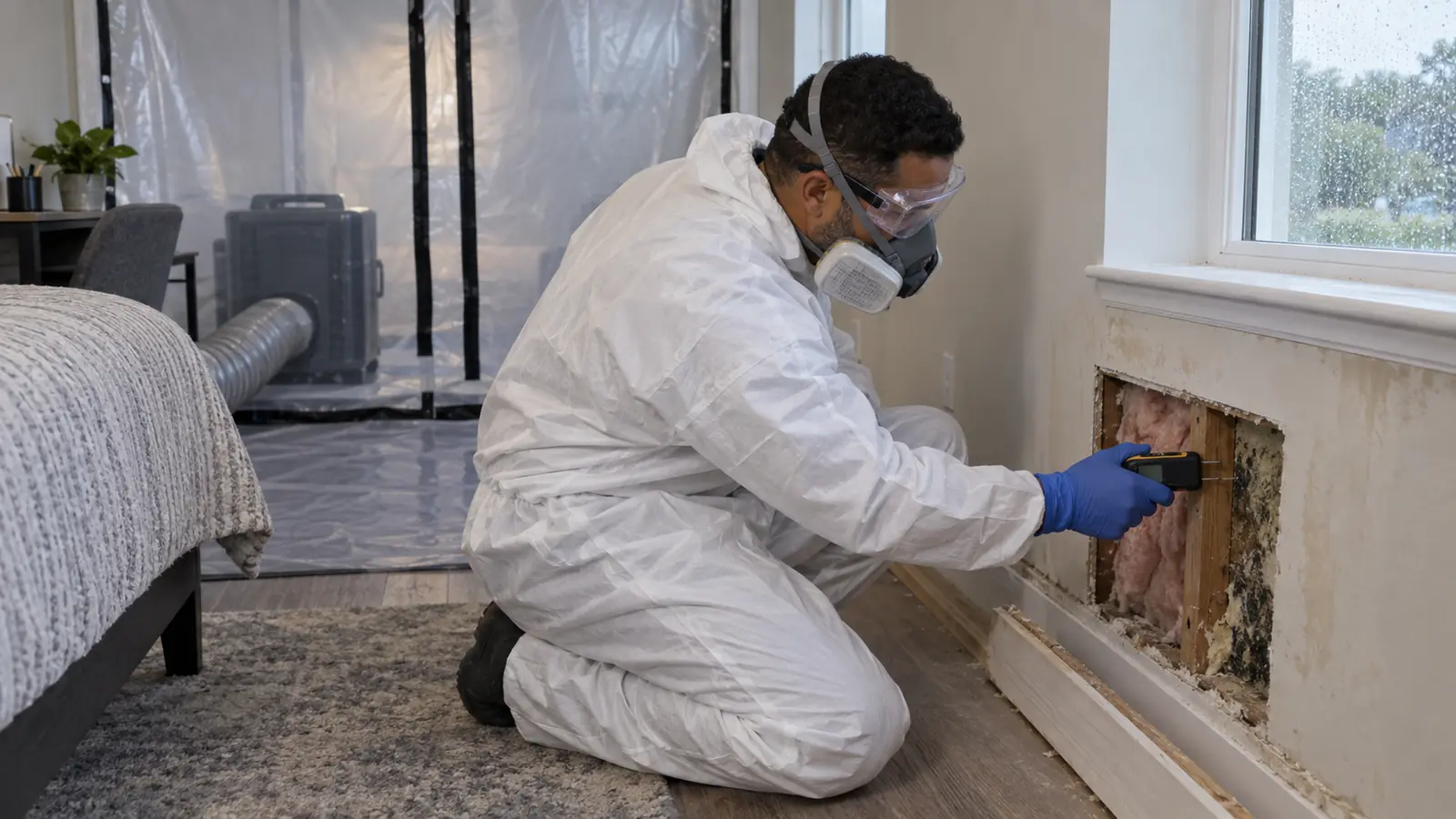
A room can smell normal before a storm, turn musty after heavy rain, and seem better when the weather clears. That cycle can signal moisture inside materials you cannot see.
Wind-driven rain, roof leaks, drainage problems, and HVAC condensation can leave drywall, carpet pad, cabinets, insulation, or flooring damp after the surface appears dry.
In older homes, commercial corridors, multi-tenant properties, and seasonally occupied spaces, the source may sit behind a finish or inside a low-airflow area.
Surface cleaning cannot correct a wet wall cavity, damp carpet pad, leaking roof detail, or saturated cabinet base. Effective mold removal starts with the moisture problem.
Why Musty Rooms After Heavy Rain Deserve Attention
The timing of the odor can help you trace moisture before cosmetic damage becomes more disruptive.
Rain Can Reactivate Hidden Wet Areas
Heavy rain may expose weak points around roofing, windows, doors, exterior penetrations, drainage areas, and lower walls. A small leak can wet porous materials without producing standing water. When those materials become damp again, a musty odor may return.
The EPA’s mold and moisture guidance centers mold control on moisture control. Cleaning a visible patch without correcting the water source leaves the condition that allows growth to develop.
Odor May Travel Away From the Source
A musty smell near a register does not prove the duct is the source. Damp insulation, a ceiling cavity, a mechanical closet, carpet, or a return-air pathway may be involved. Musty air after a storm can therefore require tracing both airflow and moisture.
Surface Cleaning Only Reaches the Surface
Paint, drywall paper, carpet backing, wood, insulation, and fabric can absorb moisture. Cleaning the visible face does not address the water behind these materials. If odor returns after another rain, investigate the moisture path instead of masking the smell.
What to Do Before You Scrub, Spray, or Paint
Controlled inspection helps you avoid spreading suspected growth or hiding an unresolved water problem.
- Look for an active source. Check accessible roof stains, window edges, plumbing connections, HVAC condensate areas, cabinet bases, and flooring transitions.
- Limit disturbance. Do not aggressively scrub, sand, cut, or tear into materials with visible or suspected mold before you understand the extent.
- Be cautious with air movement. Do not aim fans across visible mold or questionable contaminated material.
- Check adjoining spaces. Inspect closets, cabinets, baseboards, and rooms that share walls, flooring, or mechanical pathways.
- Document the pattern. Photograph stains, swelling, peeling finishes, damp edges, and areas where odor strengthens after rain.
- Follow safe cleanup practices. The CDC mold cleanup guidance emphasizes personal protection during mold cleanup after water events.
If a recurring musty odor follows rain or a prior water loss, The Best Restoration can help address mold remediation and connected water damage. We provide mold remediation, water cleanup, water extraction, and restoration services. Call 352-505-3321 to discuss the affected area.
Why Surface Cleaning Does Not Solve Hidden Mold
The visible spot may be only one part of a larger moisture pathway through porous or concealed materials.
Porous Materials Hold Moisture and Odor
Drywall, carpet pad, unfinished wood, insulation, paper products, and furnishings can hold moisture below the surface. The carpet may feel normal while padding or subflooring remains damp.
Similar conditions can develop with hidden mold in closets, cabinets, and behind furniture, where restricted airflow and stored contents conceal damp materials from routine cleaning.
Closed Spaces Slow Drying
Closets, sink bases, utility rooms, furniture backs, wall cavities, and mechanical spaces receive less airflow than open rooms. A musty odor that becomes stronger after opening a cabinet or moving furniture is a reason to inspect the surrounding wall, baseboard, flooring, and contents.
Cosmetic Covering Can Hide the Problem
Painting, caulking, or installing new finishes over damp or mold-affected material can hide symptoms without correcting the source. Staining, swelling, odor, or recurring growth can follow. Repair decisions should come after moisture control, appropriate cleaning or removal, and drying.
What Professional Mold Remediation Focuses On
The objective is to control the moisture source and affected materials rather than to make the room look clean temporarily.
Find and Control the Moisture
Evaluation starts with where water entered, where it traveled, and whether materials remain damp. Rain-related moisture may overlap with plumbing leaks, condensate problems, roof openings, or drainage issues.
Contain and Address Affected Materials
A professional mold remediation plan may use containment to limit cross-contamination while affected materials are addressed. Hard surfaces and porous materials do not respond to moisture or cleaning in the same way.
Dry Before Closing Repairs
Drying should address connected building materials, not only room air. Replacing trim, closing walls, installing flooring, or repainting before moisture is controlled can conceal the reason the room smelled musty.
How Heavy Rain Changes the Moisture Pattern
Repeated wetting can keep materials from reaching stable dry conditions between weather events.
Repeated rain can create a cycle of wetting, partial drying, and re-wetting. Moisture may move beyond the original entry point along framing, flooring edges, insulation, or porous finishes.
Cooling systems can complicate the picture. Condensation near ducts, air handlers, cold surfaces, or poorly ventilated spaces can add moisture after exterior rain stops. Guidance on mold after weeks of rain reinforces the value of connecting odor and material changes to the water path.
Property managers should compare neighboring units, shared walls, plumbing chases, common ceilings, and HVAC zones when reports appear after the same weather event.
Signs the Problem May Be Larger Than Surface Cleaning
Recurring odor plus changes in finishes or materials can indicate moisture outside the area you can wipe clean.
Watch for:
- A musty odor that returns after cleaning or the next rain.
- Baseboards that swell, separate, stain, or feel soft.
- Paint that bubbles, peels, or changes color.
- Carpet edges that stay damp or develop a recurring odor.
- Flooring that cups, lifts, loosens, or feels soft.
- Cabinet bases or furniture backs that smell damp.
- Odor that becomes stronger when the HVAC starts.
- Visible growth outside the original water stain.
When water has moved through lower walls or flooring, hidden moisture in walls and flooring should be considered before damaged finishes are covered or replaced.
When Professional Help Is the Lower-Risk Decision
Escalate when moisture is concealed, growth is extensive, contamination is uncertain, or safe access requires disturbing building materials.
Professional evaluation is appropriate when the source cannot be found, odor keeps returning, visible growth affects several materials, water enters wall or floor assemblies, or electrical and structural concerns are present.
It can also help when multi-tenant properties need coordinated containment, drying, documentation, and access decisions.
If you are comparing the best mold remediation near me, look beyond surface treatment. Ask how the moisture source will be investigated, how affected areas will be contained, which materials can be cleaned or may need removal, and how drying will be handled before repairs.
At The Best Restoration, we use a mold-removal process that includes containment, stopping growth, removal, and measures intended to reduce fresh growth.
Frequently Asked Questions
- Why does a room smell musty only after heavy rain?
Rain can reactivate a roof leak, exterior water entry, damp wall cavity, or other moisture source that becomes less noticeable during dry weather. Odor may become stronger as damp porous materials absorb moisture again. A recurring weather-linked smell deserves a moisture investigation rather than repeated deodorizing. - Does a musty odor always mean mold is present?
No. A musty odor is a moisture warning sign, not a diagnosis of mold type, location, or extent. Damp carpet, insulation, wood, stored contents, or HVAC components can also contribute to odor. The practical first step is locating and correcting the moisture source.
- Can I clean visible mold and consider the problem solved?
Only when the moisture source and affected material have also been addressed appropriately. A wiped surface can look clean while drywall, padding, insulation, or wood remains damp behind it. Recurring staining or odor suggests the investigation should extend beyond the visible patch.
- Where should I look for hidden moisture after repeated rain?
Check accessible areas around windows, roof stains, baseboards, carpet edges, cabinets, plumbing chases, closets, mechanical rooms, and exterior-wall furniture. Look for swelling, peeling finishes, staining, dampness, or odor changes. Avoid opening walls or disturbing suspected growth when the extent is unclear. - Should I run fans in a room that smells musty?
Air movement can support drying in appropriate conditions, but it is not automatically safe around visible mold or contaminated material. A fan directed across suspected growth may move particles into cleaner areas. Determine the source and condition of affected materials before using aggressive airflow. - Do I need mold testing when I can already see mold?
Testing is not automatically necessary for every visible mold problem. Sampling may be useful when the source, extent, or cleanup question requires additional information, but collection and interpretation should be handled by experienced professionals. Moisture correction remains essential regardless of the mold type. - Can mold return after a room has been cleaned?
Yes, if the moisture condition that supported growth remains. A recurring roof leak, damp wall cavity, condensate problem, or wet flooring layer can create another cycle of odor or visible growth. Prevention depends more on moisture control than on repeated surface treatment. - Can the HVAC system make a musty room smell worse?
It can. The system may move odor from a damp mechanical area, ceiling cavity, return pathway, wet insulation, or another connected space. A smell that becomes stronger when the blower starts is a useful pattern to document, but it does not prove mold is inside the ductwork. - What should property managers inspect after several days of rain?
Compare reported units with adjoining rooms, shared walls, ceiling areas, plumbing chases, HVAC zones, and common corridors. Document water stains, swelling, odors, tenant reports, and prior leak history. Multi-unit patterns can reveal a shared moisture source that a single-room cleaning would miss. - How should I evaluate the best mold remediation near me?
Focus on the proposed process rather than a promotional label. Ask how moisture will be located, how affected areas will be contained, how material-removal decisions are made, and how drying fits into the scope. Verify the credentials required for the work and make sure the plan addresses the source as well as visible growth. - When should I call a mold specialist instead of continuing DIY cleaning?
Consider qualified help when odor repeatedly returns, the source remains hidden, several materials are affected, or accessing the problem requires opening walls or flooring. Professional assistance is also appropriate when water contamination, electrical hazards, or structural concerns complicate the area. Avoid disturbing conditions you cannot evaluate safely.