
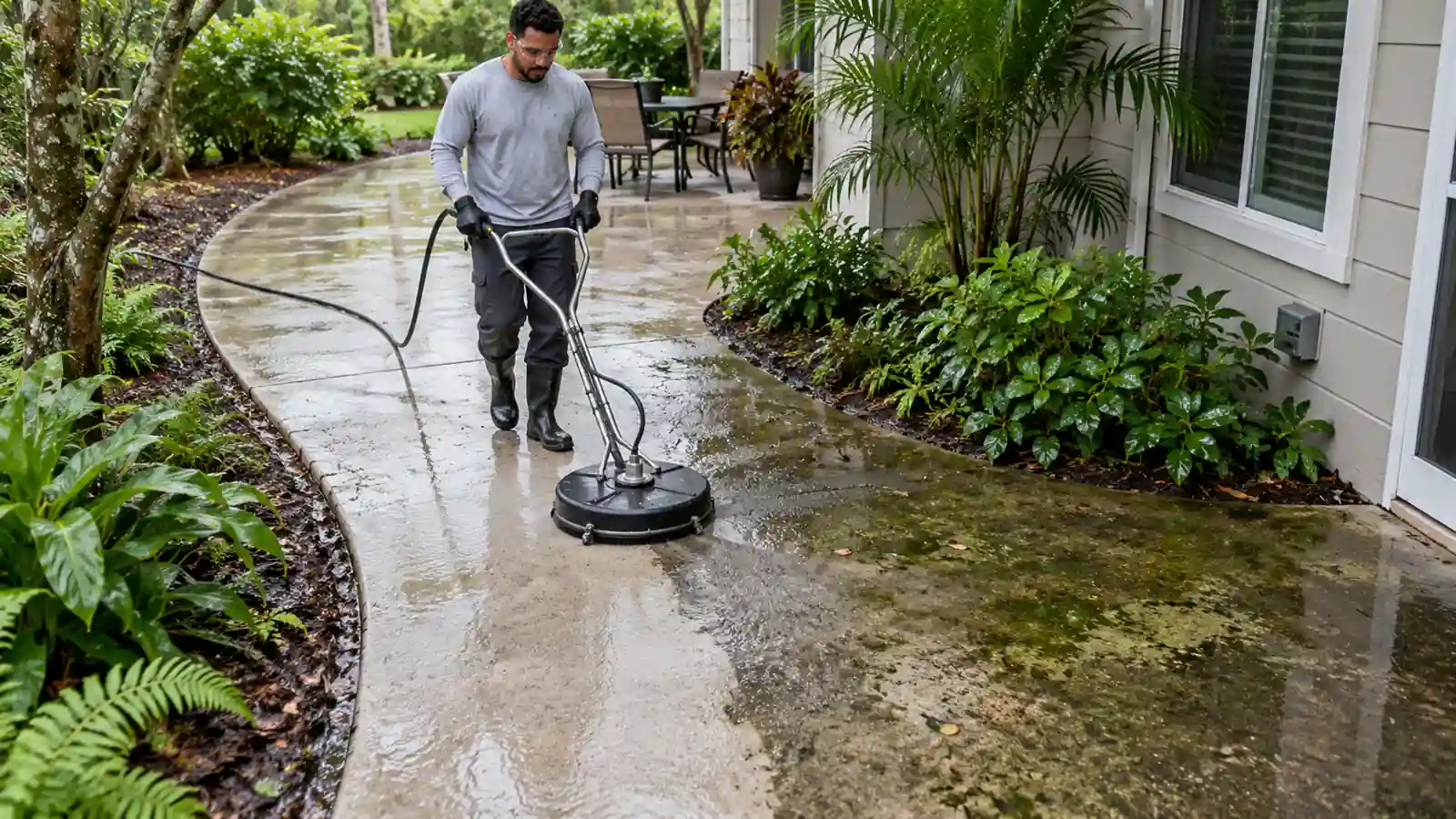
After weeks of wet weather, exterior buildup rarely appears in one neat place. Shaded walkways stay damp. Concrete develops dark runoff tracks. Siding collects grime below rooflines and around splash zones. Patios and lanais can show pollen, soil, leaf residue, and green or black surface growth.
For homeowners, business owners, and property managers, the goal is not maximum pressure. It is to identify the surface, understand the stain, remove buildup, and avoid driving water into joints, cracks, openings, or damaged materials.
Why Weeks of Wet Weather Change Exterior Cleaning
Repeated moisture can make ordinary dirt harder to separate from mildew, organic film, and runoff staining.
Damp surfaces collect more buildup
Concrete, masonry, siding, and outdoor hard surfaces can stay damp longer where shade, poor drainage, or repeated rainfall limits drying. Dirt and pollen mix with moisture and organic debris, making discoloration more noticeable.
Cleaning frequency should follow actual buildup rather than a rigid calendar. Guidance on how often exterior pressure washing makes sense also treats weather exposure and surface condition as practical triggers.
Runoff creates repeat stains
Check where water travels. Downspouts, roof edges, low spots, landscape borders, driveway joints, and areas below fixtures can develop recurring stains. Washing may improve the surface without correcting why the same area keeps getting wet.
Inspect the Surface Before You Start Washing
A short inspection can prevent a cleaning job from becoming a surface, moisture, or finish problem.
Before setting up equipment, check:
- Surface material, including concrete, brick, painted siding, pavers, stone, wood, tile, or grout.
- Cracks, loose mortar, failing paint, damaged caulk, weak grout, or open joints.
- Nearby outlets, fixtures, doors, windows, vents, and water-entry points.
- Drainage direction so runoff does not move toward clean areas or building openings.
- Whether staining is surface buildup or a sign of a deeper moisture problem.
Our residential and commercial pressure washing can address exterior cleaning needs involving homes, concrete driveways, patios, and lanais.
At The Best Restoration, we can help when wet-weather buildup leaves mildew, grime, pollen, or stubborn exterior stains across multiple surfaces. Call 352-505-3321 to discuss pressure washing for your property and the surfaces that need attention.
Match the Cleaning Method to the Surface
Concrete, brick, painted finishes, and decorative materials do not respond to pressure in the same way.
Walkways, patios, and driveways
Concrete is durable, but careless technique can leave etched spots or uneven bands. Clear loose debris first. Test an inconspicuous area, keep the wand moving, and avoid concentrating the stream in one spot.
Painted siding and exterior finishes
Use restraint around painted surfaces, trim, joints, and wall penetrations. Excessive force can lift weak coatings or push water behind exterior assemblies.
Brick and masonry
Brick and mortar deserve extra care because damaged joints and porous masonry can admit water. These brick pressure-washing precautions reinforce the need to inspect cracks and mortar and avoid excessive pressure.
How to Clean Mildew, Walkways, and Exterior Stains?
Work from diagnosis to cleaning so the visible buildup does not distract from the moisture pattern behind it.
- Identify the stain. Separate loose dirt, pollen, leaf marks, mildew-like growth, oil, and runoff deposits when possible.
- Clear debris first. Remove leaves, furniture, mats, and loose material that block an even cleaning path.
- Protect sensitive areas. Keep water away from vulnerable electrical components and avoid spraying into vents, open joints, windows, or doors.
- Test the method. Start conservatively on a small area before increasing cleaning intensity.
- Clean in controlled passes. Keep distance and movement consistent to reduce streaking and surface marks.
- Let the surface dry. Remaining discoloration may need another method or evaluation for an underlying moisture source.
When mold or mildew-like growth is involved, moisture control matters as much as surface cleaning. The EPA’s mold and moisture guidance recommends cleaning mold from hard surfaces with detergent and water and drying completely.
Pressure Washing Grout and Bathrooms Is Different
Indoor tile assemblies create water-control and damage risks that do not exist on an open concrete walkway.
Is pressure washing grout a good idea?
Pressure washing grout can be risky when joints are cracked, deteriorated, unsealed, or separating. High pressure may remove loose material or force water into weak areas.
These tile and grout mildew warning signs can help distinguish routine discoloration from recurring moisture concerns.
What about pressure washer bathroom cleaning?
A pressure washer bathroom setup is different from exterior washing. Overspray, drainage, electrical exposure, caulk, tile adhesive, grout condition, and nearby finishes all matter.
A grout power washer approach can be too aggressive when the assembly is compromised. If you are considering pressure washing shower walls or floors, review the limitations around pressure washing bathroom tile first.
Routine tile and grout cleaning may be more appropriate than high-pressure washing indoors.
Common Pressure-Washing Mistakes After Wet Weather
Most avoidable problems come from excessive force, ignored water pathways, or treating every stain the same way.
Avoid these mistakes:
- Starting at maximum pressure without testing.
- Holding a concentrated stream in one place.
- Washing directly into cracks, mortar gaps, siding laps, vents, windows, or door seals.
- Using pressure to compensate for the wrong cleaner or method.
- Ignoring slippery runoff on walkways.
- Working around questionable electrical conditions.
- Using gasoline-powered pressure washers indoors or in enclosed areas.
- Assuming every black or green stain can be diagnosed by color alone.
Pressure washers can cause serious injuries, electrical hazards, and carbon monoxide risks when used incorrectly.
Follow the CDC’s pressure-washer safety guidance, keep the spray away from people, and follow the equipment manufacturer’s instructions.
Know When Cleaning Should Pause for Moisture Investigation
Repeated exterior staining can point to a leak, drainage defect, or concealed moisture rather than a simple cleaning problem.
Pause routine washing if you find soft materials, moisture-related peeling, open wall joints, active leaks, persistent musty odor, or water entering the building. Adding more water can complicate an unresolved moisture problem.
Across older homes, multi-tenant properties, commercial corridors, and seasonal visitor districts, exterior drainage, HVAC condensation, plumbing, and building-envelope issues can overlap.
Clean after the moisture source is controlled when water is actively reaching materials that should remain dry.
When Professional Pressure Washing Makes Sense
Professional cleaning can help when surface types vary, buildup covers a large area, or access and runoff are difficult to control.
Suitable exterior cleaning may include concrete driveways, patios, lanais, and other sturdy surfaces. The method should match each material and its condition. Mildew-like growth, pollen, dirt, and stubborn stains may require different approaches within the same property.
Frequently Asked Questions
Should I pressure wash immediately after several days of rain?
You do not need to rush simply because the rain stopped. First, check drainage, active leaks, loose materials, and surfaces that are still unusually wet. Cleaning works better when you understand whether the staining is ordinary buildup or evidence of a continuing moisture problem.
Can pressure washing remove mildew from concrete?
Pressure washing can remove visible surface buildup from suitable concrete. However, cleaning the discoloration does not correct standing water, shade, poor drainage, or another moisture source that allows it to return. Let the concrete dry after cleaning and monitor recurring problem areas.
Can a pressure washer damage a concrete walkway?
Yes. Concrete is durable, but concentrated pressure held too close or too long can create visible marks or uneven cleaning. Decorative, deteriorated, repaired, or newer surfaces may require additional caution. Test a small area and maintain consistent movement.
Is pressure washing painted siding safe?
It depends on the condition of the coating and wall assembly. Loose paint, failed joints, damaged caulk, vents, windows, and other openings need extra care. Excessive pressure can remove weak finishes or force water into areas that were not intended to become wet.
Is pressure washing grout better than scrubbing it?
Not automatically. Grout condition matters more than cleaning speed. Cracked, weak, deteriorated, or poorly bonded grout can be damaged by concentrated pressure. For many indoor tile areas, controlled tile and grout cleaning is more appropriate than treating the surface like exterior concrete.
Is pressure washer bathroom cleaning recommended?
A pressure washer bathroom project requires much more caution than outdoor washing. Overspray can reach electrical components, cabinetry, drywall, caulk, and other moisture-sensitive materials. Drainage also must handle the added water without allowing it to migrate into surrounding assemblies.
Can I use a pressure washer for bathroom shower cleaning?
Pressure washing shower surfaces may be possible in limited circumstances, but it is not a routine substitute for appropriate tile and grout cleaning. Failed caulk, weak grout, loose tile, or compromised waterproofing can allow water to travel where it should not.
Is a grout power washer safe for old tile?
Older tile assemblies should be inspected before concentrated pressure is used. Grout can deteriorate, crack, or separate over time, while older caulk and adhesives may also be vulnerable. Cleaning should not introduce water behind a finish simply to remove surface discoloration faster.
Why do walkway stains return after pressure washing?
Recurring stains often follow recurring conditions. Shade, drainage patterns, landscape debris, irrigation, roof runoff, and low spots can keep the same area damp. Pressure washing cleans the surface, but controlling the moisture pattern helps reduce repeated buildup.
Can pressure washing remove every exterior stain?
No single method removes every stain. Dirt, pollen, organic growth, oil, rust-colored deposits, paint, and mineral staining behave differently. Identifying the stain before increasing pressure reduces the risk of damaging the surface while chasing discoloration that requires another cleaning method.
When should I avoid DIY pressure washing?
Pause when you find electrical hazards, unstable access, badly deteriorated materials, active water intrusion, extensive damaged grout, loose mortar, or surfaces you cannot identify. Large mixed-surface properties can also be difficult to clean consistently without sending runoff into already-finished areas.